The Queen Mary
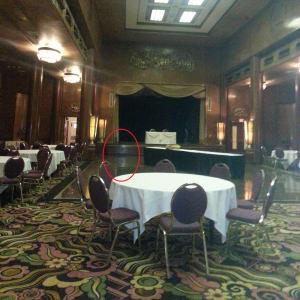
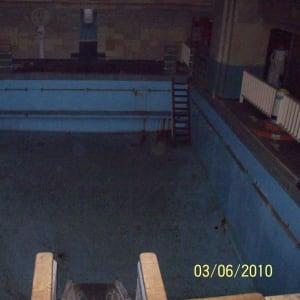
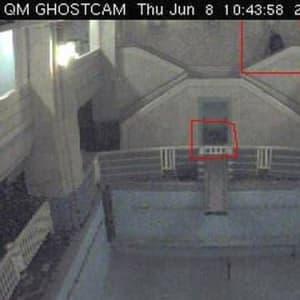
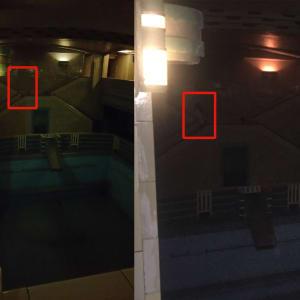
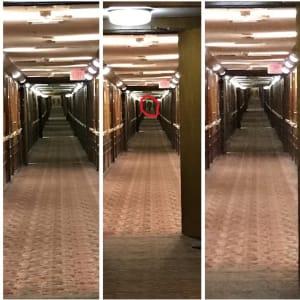
The RMS Queen Mary, permanently moored in Long Beach, California, has developed one of the most elaborate and widely publicized reputations for paranormal activity in the United States. Since its retirement from transatlantic service in 1967 and conversion into a hotel and museum, numerous guests, staff members, and paranormal investigators have reported a range of unexplained phenomena aboard the vessel. These reports encompass visual apparitions, auditory phenomena, sudden environmental changes, and tactile sensations, contributing to the ship’s enduring status as a locus of contemporary ghost lore. One of the most frequently cited haunted locations aboard the Queen Mary is Stateroom B340, sometimes described as the ship’s most intensely active paranormal site. Accounts associated with this cabin include unexplained electrical disturbances, faucets turning on autonomously, bedsheets being pulled from guests during the night, sudden drops in temperature, and the sensation of unseen presences in the room. Due to the volume and consistency of these reports, the cabin was closed to regular hotel use for several years before being made available again through specialized “paranormal experience” packages. The now-drained first-class swimming pool is another locus of reported haunting activity. Visitors and investigators frequently describe auditory phenomena such as phantom splashing, the laughter of children, and the appearance of wet footprints leading from the pool area despite the absence of water. Apparitions in period-appropriate swimwear have been reported, including figures described as a young girl colloquially named “Jackie” and one or more adult women. These narratives, while widespread in ghost lore and popular media, are not corroborated by contemporaneous maritime records of drownings aboard the ship. The engine room, particularly around the area known as “Door 13,” features prominently in the Queen Mary’s paranormal mythology. The door itself was part of the ship’s watertight safety system, and contemporary reports allege that at least one crew member was fatally injured there during a routine drill, giving rise to tales of an apparition in blue overalls walking through the engine spaces. Visitors and investigators claim to experience sudden temperature fluctuations, shadow figures, unexplained mechanical sounds, and the subjective feeling of being watched or followed in this part of the ship. Anecdotal reports also identify various salons, hallways, and auxiliary spaces as sites of paranormal phenomena. The former first-class Queen’s Salon has been described as the setting for sightings of a “Lady in White,” a spectral female figure dressed in vintage attire who allegedly moves throughout the lounge area before vanishing. Other accounts extend to children’s playrooms and corridors where footsteps, laughter, and unseen voices have been reported, as well as environmental oddities such as lights flickering without electrical cause. Cultural representations and popular media have shaped much of the ship’s haunted reputation. The Queen Mary has been featured on television programs devoted to paranormal investigation and has inspired annual haunted attractions that draw on its ghost lore for thematic material. It has also appeared in fiction and horror programming, further embedding its association with the supernatural in public consciousness. It is important to note that while Queen Mary’s haunted reputation is extensive and widely propagated, official historical documentation does not substantiate many of the specific death events associated with these paranormal narratives. Most recorded fatalities aboard the vessel during its operational years were attributed to natural causes rather than violent or unexplained incidents.
Historical Summary
The RMS Queen Mary was one of the most significant ocean liners of the twentieth century, representing the height of British maritime engineering, transatlantic travel, and later, wartime naval logistics. Constructed by John Brown & Company in Clydebank, Scotland, the vessel was launched in 1934 and entered commercial service in 1936 under the ownership of the Cunard Line. Designed during an era of intense competition among European shipping companies, the Queen Mary embodied both technological innovation and national prestige. The ship was conceived in response to growing rivalry in transatlantic passenger travel, particularly from German and French liners such as the Bremen and the Normandie. Measuring 1,019 feet in length and possessing a gross tonnage of approximately 81,000 tons at launch, she was among the largest and fastest passenger ships ever constructed. Her development was temporarily interrupted during the Great Depression due to financial difficulties; however, British government support and the merger between the Cunard and White Star Lines in 1934 enabled the project’s completion. Technologically advanced for her time, the vessel was powered by four steam turbines driving four propellers, allowing her to achieve service speeds exceeding 28 knots. Internally, the ship was designed in the Art Deco style, reflecting contemporary tastes and emphasizing luxury, modernity, and passenger comfort. Upon entering service in May 1936, the Queen Mary rapidly established herself as a premier transatlantic liner operating primarily on the Southampton–Cherbourg–New York route. In August 1936, she captured the Blue Riband, an unofficial distinction awarded to the passenger liner with the fastest Atlantic crossing, thereby reinforcing Britain’s position as a leading maritime power. Her combination of speed, size, and reliability made her one of the most celebrated passenger vessels of the interwar period. Following the outbreak of the Second World War in 1939, the Queen Mary was requisitioned by the British government and converted into a troopship. Her luxurious interiors were removed, and her exterior was repainted in a neutral grey camouflage. Capable of carrying up to 15,000 troops per voyage, the ship became a vital component of Allied wartime logistics. Due to her exceptional speed, she often sailed without escort, as she could outrun enemy submarines. Over the course of the war, the Queen Mary transported an estimated 800,000 military personnel, contributing significantly to the Allied war effort. After the war, the ship underwent extensive refitting and returned to civilian service in 1947. She resumed transatlantic operations during a period of renewed demand for ocean travel; however, the rapid expansion of commercial jet aviation in the 1950s and 1960s led to a decline in passenger liner travel. Air transport offered faster and more economical transatlantic crossings, gradually rendering large ocean liners commercially unviable. As a result, the Queen Mary was withdrawn from service by Cunard in 1967 after more than thirty years of operation. Rather than being dismantled, the vessel was sold to the City of Long Beach, California, where she was permanently moored and converted into a hotel, museum, and tourist attraction. This preservation effort was notable as one of the earliest large-scale attempts to conserve a historic ocean liner. Today, the RMS Queen Mary remains an enduring symbol of the golden age of ocean travel, valued for her engineering achievements and her prominent roles in both peacetime commerce and wartime service, reflecting broader technological and geopolitical developments of the twentieth century.
Investigation Reports
0 documented investigations
No investigation reports yet. Be the first to document your findings!
Log in to submit an investigation report.