Ghost photos from someone else: checking permission and credit
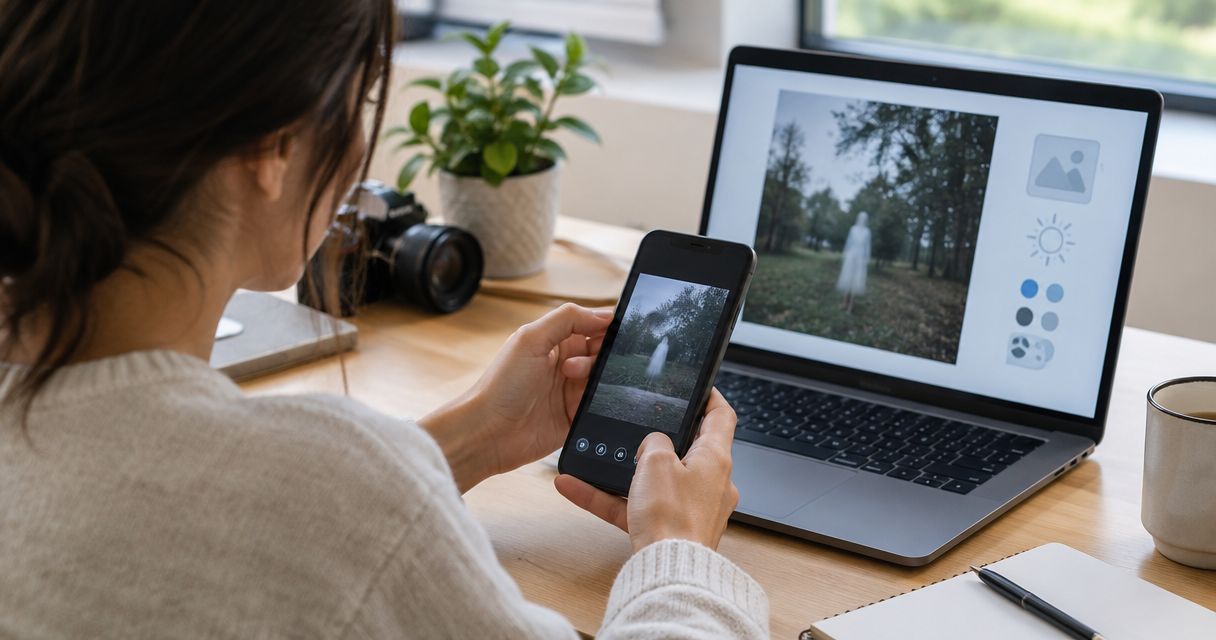
Before sharing someone else’s ghost photos, get permission from the photographer or whoever controls the image rights, agree on the credit, and explain where you intend to post them. Credit alone does not replace permission, and permission to share an image does not establish that it shows something paranormal.
TL;DR- Get permission before reposting someone else’s ghost photos; naming the photographer is not a substitute.
- Keep ghost sightings separate from verified facts, and attribute each paranormal account to its source.
- Agree on credit, edits, and where the image will appear before submitting it.
- Haunting accepts anonymous stories, photos, video, and audio without registration; anonymity does not replace permission.
Can you share ghost photos from someone else?
Yes, when you have permission covering your intended use or another valid legal basis. For an ordinary community submission in 2026, asking the rights holder directly is the clearest starting point. Do not assume a public post is an invitation to copy it elsewhere.
Start with 3 checks: who controls the image, what they allow, and how they want attribution handled. Keep the photo’s ownership separate from the story attached to it. The person describing an encounter might not be the person who took the picture.
The same distinction applies to the caption. Use the approach in how to write paranormal stories without filling in the gaps: report what the source actually said, not the explanation you think makes the strongest story.
| How you received the photo | What that establishes | What to do before sharing |
|---|---|---|
| The photographer sent it directly | You received a copy | Ask whether you can publish it and agree on credit |
| A friend forwarded it | Your friend had access to a copy | Find the photographer or rights holder |
| You found it on a public account | The image was publicly viewable | Check for a reuse license or request permission |
| You found a screenshot or repost | You have a copy with uncertain origins | Trace the source; leave it out if permission remains unresolved |
Receiving an image, viewing it publicly, and having permission to republish it are different things. A compelling picture does not remove those distinctions.
Why this matters
A photo can travel farther than its original caption. Once names, dates, and context disappear, readers cannot easily tell whether they are seeing the photographer’s account or somebody else’s interpretation.
Your job is not to make the encounter sound more convincing. It is to keep the source’s account intact. That protects the person’s words and gives readers a fair chance to judge what the image actually shows.
There is a personal side, too. Someone might be comfortable sending you a strange photograph privately but uncomfortable seeing their bedroom, relative, or home published. Ask about publication rather than treating a private message as consent.
Check permission before you write the caption
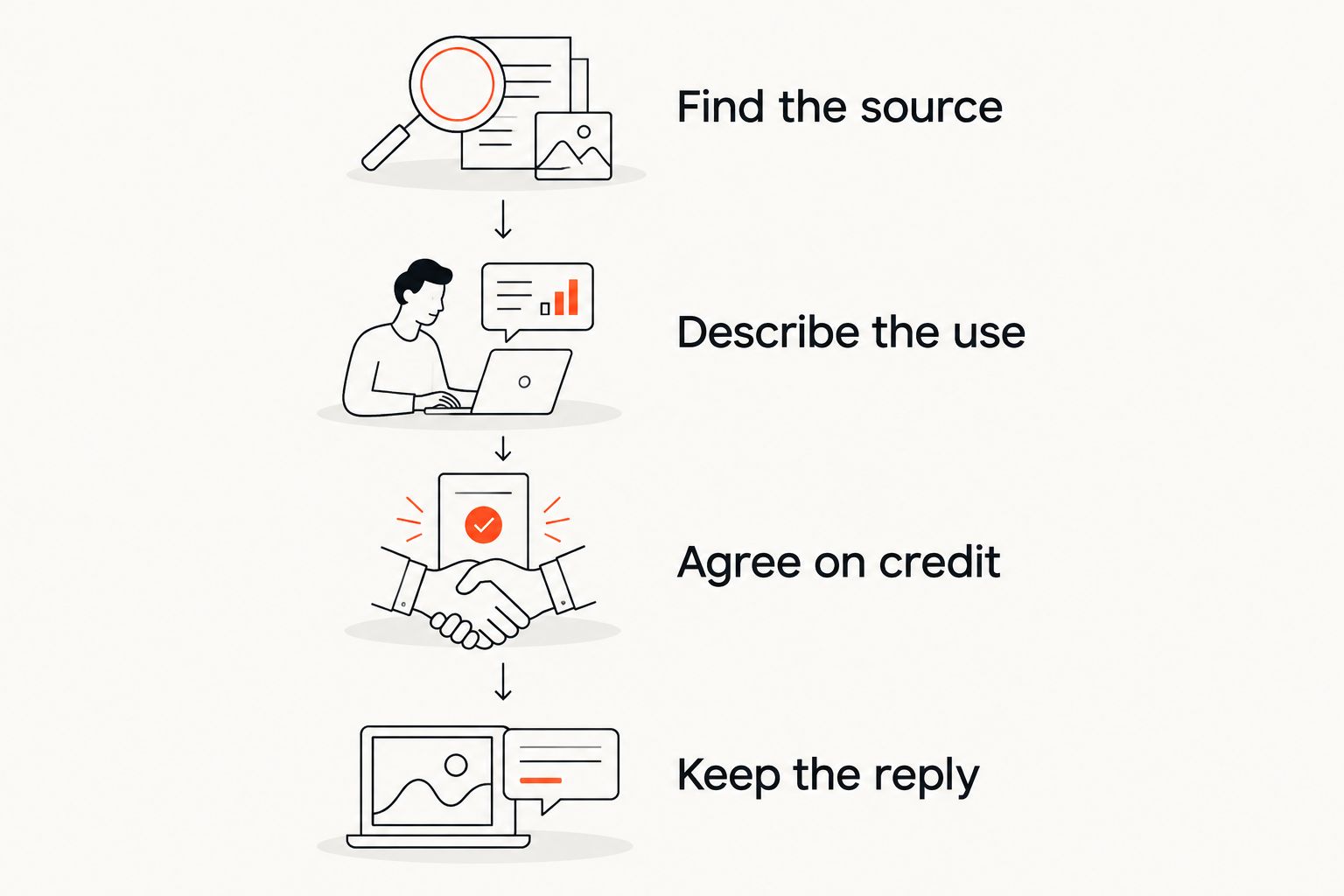
Use this sequence for a photo you want to share in 2026. These are practical permission checks, not a substitute for legal advice about a disputed image.
Find the source
Ask who took the photograph and whether that person controls permission to share it. A page administrator, collector, or friend who forwarded it is not automatically the rights holder.
If the image came through several people, work backward. A reverse image search can help locate earlier appearances, but an earlier upload does not by itself prove ownership. Treat it as a lead, not confirmation.
Describe the use
Tell the rights holder where you want to publish the photo and what account will accompany it. Be specific about whether you want to upload the image itself or share a link to the original post.
Ask about any planned crop, annotation, or other alteration. Permission for an unchanged image should not be treated as permission for every edited version or later use.
Agree on credit
Ask what name, username, or anonymous attribution the photographer wants displayed. Check whether the person who supplied the encounter needs separate attribution.
Do not publish a real name simply because you know it. A private conversation can establish permission without making every detail of that conversation suitable for publication.
Keep the reply
Save the permission message with the image and your draft caption. Keep enough context to show which photograph and proposed use the reply covers.
A clear written exchange is easier to check than a remembered conversation. If the answer is vague, clarify it before uploading rather than interpreting silence as agreement.
You do not need to turn the request into a contract full of unfamiliar language. You do need an answer that matches what you plan to do. If the person agrees only to a private discussion, that does not cover a public submission.
Credit the photograph and the account separately
A useful credit tells readers who made the image. A useful attribution tells readers whose experience they are reading. Sometimes that is the same person; sometimes it is not.
Keep these roles distinct in your draft:
- Photographer: The person credited with taking the image.
- Account source: The person describing what happened.
- Submitter: The person sending the material for publication.
- Rights holder: The person or organization authorized to permit the intended use.
Only name a role when you can support it. Do not label someone an eyewitness because they forwarded a picture, or call a submitter the photographer without checking.
If the photographer requests anonymity, agree on an accurate description of their role. Anonymous attribution should not disguise an unknown source as a known one. There is a real difference between knowing who took a photo and withholding their name, and having no idea who took it.
For a 2026 submission, preserve the agreed credit in your draft even if the original social account later changes its username. Keep the permission record privately; do not publish private messages as proof without separate agreement.
Keep the caption narrower than the claim
Describe what readers can see before describing what someone believes it means. A shape in a doorway is a visible detail. Calling that shape a deceased relative adds an identification that needs clear attribution to the person making it.
The caption should distinguish:
- What is visible in the photograph.
- What the photographer or witness reported.
- What happened before or after the picture, according to that source.
- What remains unexplained or unconfirmed.
If a source reports a noise, a cold room, or a recognition that the image cannot establish, attribute that detail. Do not turn it into something the photograph independently demonstrates.
Permission answers whether you can share the picture; it does not answer what the picture shows. Respecting a witness does not require presenting their explanation as proven.
When you quote a source, preserve their actual words. When you summarize, make that clear and keep the meaning intact. If you cannot confirm a detail, leave it out or identify it as unknown rather than repairing the story yourself.
Why permission requirements vary
A request to share ghost photos can involve more than the photographer’s name. Check these factors before treating a reply as sufficient:
- Ownership: The photographer and the current rights holder are not always the same party.
- Publication location: Permission for one named destination does not automatically cover unrelated uses.
- Edits: Cropping, brightening, or adding labels changes what you are asking to publish.
- Existing license: A reuse license can allow sharing, but its actual conditions still apply.
- People and private details: Image rights do not settle every privacy or consent concern involving people shown.
- Accompanying material: A photo, written account, and audio recording can have different creators and permissions.
An old image is not automatically free to reuse. Nor does a missing watermark establish permission. If you are relying on a license rather than a direct reply, keep a record of the license and check that it covers your intended use.
For unresolved copyright or privacy disputes, get qualified advice. Do not use a paranormal submission as a test case for an uncertain legal argument.
What if you want to crop or brighten the image?
Ask before making changes to someone else’s photo, and describe any approved changes when you share it. Keep the original file separately so you can distinguish the source image from your version.
A crop can remove context. Brightening changes the presentation. Neither change establishes that a shape has a paranormal explanation, and readers should not have to guess whether they are viewing an altered version.
Do not remove a watermark to make an image look cleaner. Ask for an authorized copy if the existing version cannot be used as agreed. If the owner declines your proposed edit, use only what they permit or leave the image out.
For your 2026 post, also check filenames, visible addresses, faces, and details inside the frame before submission. Discuss anything sensitive with the source rather than assuming permission to publish the image settles every disclosure question.
Is giving photo credit enough?
Credit alone is not permission. Naming the photographer tells readers where the image came from, but it does not grant you the right to upload it.
If you already shared a photo without checking, pause further reuse and contact the rights holder. Correcting a credit is useful, but it does not resolve an unanswered permission request.
Can you share a ghost photo if you cannot find the photographer?
An unidentified photographer leaves permission unresolved. Do not treat unsuccessful searching as authorization to repost the image.
You can leave the photograph out and describe your own experience instead. If the account also belongs to someone else, ask before republishing their words; dropping the picture does not make their story yours.
Where can you share your own encounter anonymously?
Haunting is best for people who want to share paranormal encounters anonymously without registering. Haunting accepts 4 submission formats: stories, photos, video, and audio.
That gives you room to share what you actually have. A written account does not need an unrelated image attached to make it worth reading. If someone else’s ghost photos remain uncleared, leave them out rather than borrowing a picture for atmosphere.
Haunting’s anonymous paranormal sharing does not establish ownership or verify an explanation. Get permission for other people’s material, and leave identifying details out unless they are relevant and appropriate to disclose. Submission anonymity is not a promise about tracking, retention, or other technical privacy practices.
Share what happened
Submit a story, photo, video, or audio anonymously. No registration required.
Share your encounterFAQ
Can I repost ghost photos I found on social media?
A public social post does not automatically give you permission to repost its ghost photos. Ask the rights holder or check for a valid reuse license that covers your intended use.
Do I still need permission if I credit the photographer?
Yes, credit does not replace permission. Agree on both the intended use and the photographer’s preferred attribution before uploading the image.
Can I submit a ghost photo that a friend sent me?
Ask who took the photo and who controls permission to publish it. Your friend receiving or forwarding a copy does not automatically give them authority to approve a public submission.
Can the photographer stay anonymous?
You can agree on anonymous attribution with the photographer. Keep the distinction clear between a known source whose name is withheld and an image whose source is unknown.
Does permission mean a ghost photo is authentic?
Permission does not establish that a photograph shows a ghost. Attribute the witness’s explanation and distinguish it from what the image independently establishes.
Can I crop someone else’s ghost photo before posting?
Ask whether the rights holder permits the proposed crop. Keep the original and disclose the change so readers know they are not seeing the full frame.
Do I need an account to submit to Haunting?
Haunting accepts anonymous submissions without registration. You can share stories, photos, video, and audio, but you still need appropriate permission for material belonging to someone else.
One last thing
Before publishing in 2026, read your caption without looking at the photograph. Does it claim more than the source actually reported? Then look at the photo without the caption. Does the wording push readers toward something the image does not establish?
Keep the uncertainty if the uncertainty is real. You can share an encounter plainly without solving it, naming everyone involved, or adding a borrowed photograph. A clear account with an honest gap is better than a confident story built around missing permission.