Ghost photos through windows: checking reflections first
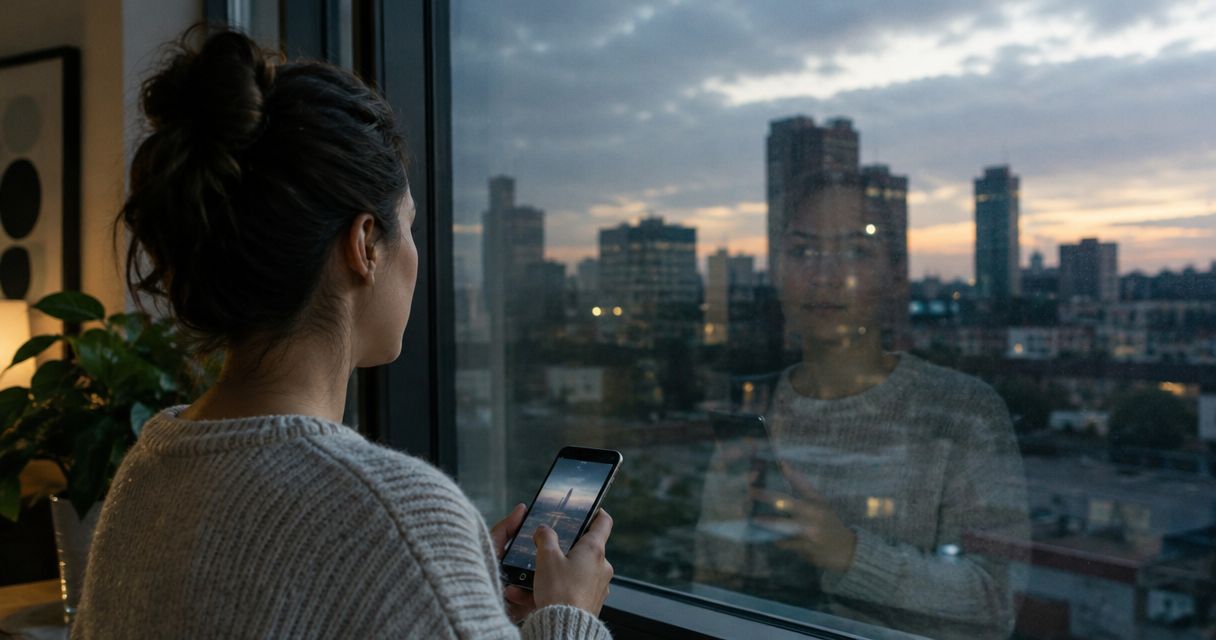
Ghost photos taken through windows need a reflection check before you treat a face or figure as something outside. Glass can show the room behind you and the scene beyond it in the same picture. Keep the original photo, check what was on both sides of the window, and describe anything you still cannot explain without calling it proof.
TL;DR- Check ghost photos through windows for reflected people, lamps, screens, and objects before interpreting a figure.
- Keep the original image; use separate copies for crops and brightness changes.
- Compare camera angles and room lighting without assuming a disappearing shape proves its source.
- Haunting accepts anonymous ghost photos, stories, video, and audio with no registration required.
How do you check ghost photos through windows for reflections?
Start with the room, not the shape. A window can reflect someone standing behind the camera, a lit screen, or an object that looks different when laid over the view outside. A recognizable outline does not tell you which side of the glass it came from.
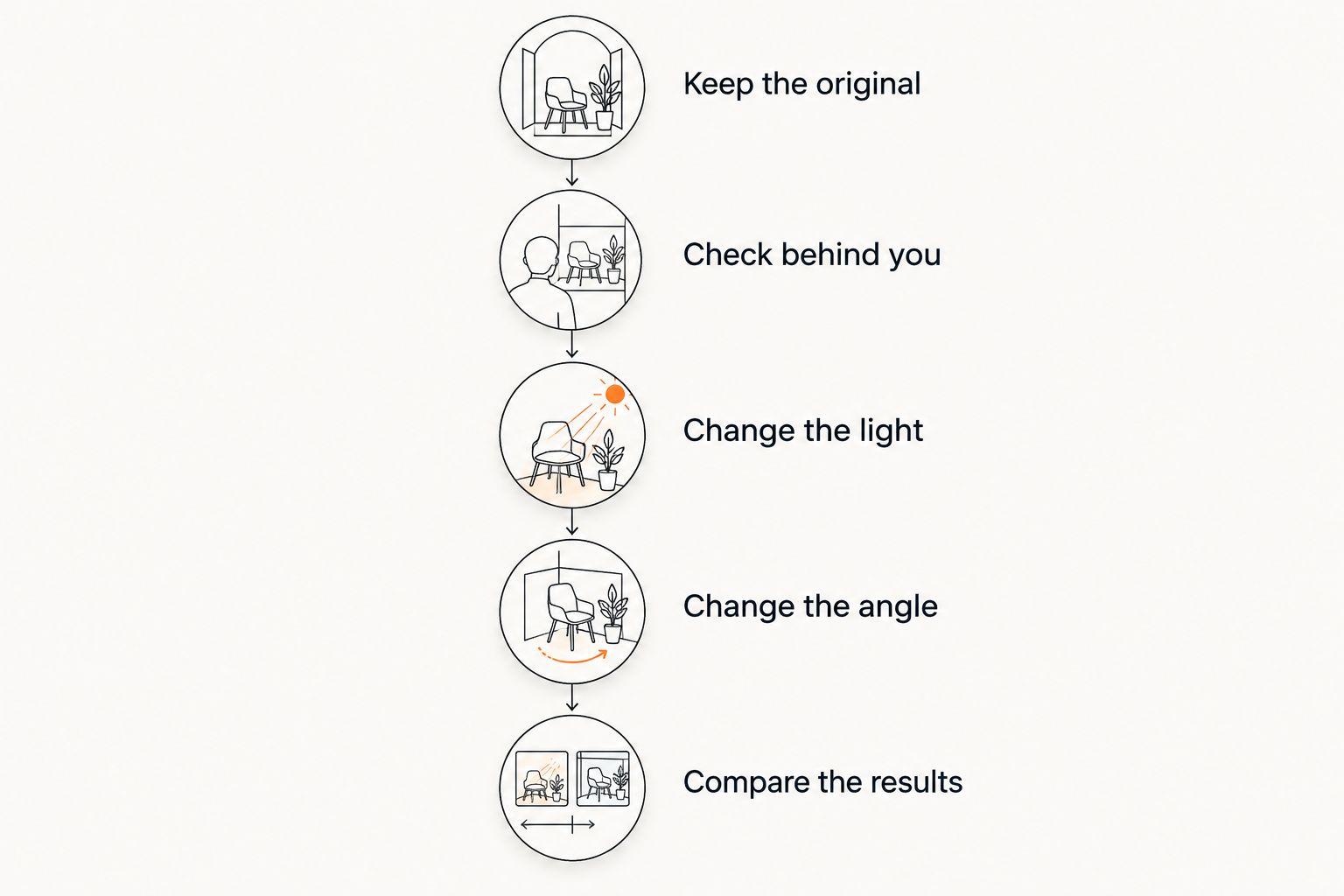
Check the scene before you name the figure. These checks help you separate what the picture shows from what you think it means.
- Keep the original. Save the untouched file before cropping, drawing around the shape, or changing brightness.
- Check behind you. Note people, lamps, screens, mirrors, furniture, and open doorways behind the camera.
- Change the light. If you can safely repeat the photo, compare the window with indoor lights on and off.
- Change the angle. Move sideways and photograph the same area again. Watch how the suspected reflection changes against fixed outdoor objects.
- Compare the results. Look for a matching object or lighting change, not just a more convincing face.
If you want somewhere to share the image afterward, Haunting accepts anonymous submissions without registration. You can include what you checked alongside the photo rather than presenting a conclusion you cannot support.
Why this matters
A photo can preserve something you did not notice at the time. It does not preserve every detail of the room, where people stood, or which lights were on. That missing context matters when glass sits between the camera and the subject.
You do not have to dismiss your experience to check a reflection. You are asking a narrower question: does something in the room account for the shape in this image? An answer about the photo is not an answer about everything you experienced that night.
For a photo shared in 2026, keep the date it was taken separate from the date you posted it. A recent upload is not necessarily a recent encounter.
What should you compare in a window photo?
Use checks that change something identifiable. Taking another picture from almost the same spot without noting the light or camera position gives you less useful context than a deliberate comparison.
| Check | Best for | What it helps you examine | What it cannot establish |
|---|---|---|---|
| Indoor lights on and off | A shape near a bright reflection | Whether room lighting contributes to the shape | What caused every remaining mark |
| Camera moved sideways | A figure overlapping the outdoor view | Whether the shape changes against fixed objects | A source based on movement alone |
| Flash off | Glare near the camera | Whether camera lighting contributes to the image | Whether the original scene was otherwise unchanged |
| A view without glass | A safely accessible outdoor scene | Whether the window contributes to the appearance | An exact recreation of an earlier moment |
| Original beside an edited copy | A face noticed after editing | Which details are visible before adjustments | That a clearer-looking face is a real person |
A repeat photo is a comparison, not a verdict. A shape disappearing after you move is useful information, but more than one thing in the scene changes when the camera moves.
Do not lean out of a window or enter an unsafe place to get a cleaner view. If you cannot repeat the shot safely, work with the original and be clear about that limit.
Why window photos look different from one shot to another
Several ordinary changes affect what you see through glass. Record the ones you know about rather than trying to reconstruct every detail from memory.
- Indoor lighting. A lit room can appear in the window alongside the darker scene outside. Check lamps, ceiling lights, and illuminated doorways.
- People behind the camera. Someone need not be outside to appear in a window photo. Include where you and anyone else stood.
- Camera position. Moving the camera changes how reflected objects overlap the view through the glass.
- Flash and nearby lights. Light reflecting from the window can obscure parts of the scene. Note whether the flash fired.
- Marks on the glass. Smears, moisture, and dirt can interfere with the view. Look at the window itself if you still have access.
- Image adjustments. Cropping, contrast, and brightness changes affect how a shape reads. Keep those versions separate from the original.
Do not turn this list into a checklist of explanations you claim to have ruled out. If you do not remember whether a lamp was on, say you do not remember.
How should you take comparison photos?
Start by photographing the setup. Include enough of the window and surrounding room to show where the camera was. A close crop of the strange shape leaves out the very things you need to check.
Take 2 comparison photos from the same position: one with the indoor light on and one with it off. Keep the framing as similar as you can, and note any other changes. If someone walks through the room between shots, that belongs in the notes.
Then move sideways and take another photo. Look at the suspected shape against a fixed feature, such as a window frame or a building outside. Do not judge the result only by whether it still resembles a face.
Finally, photograph any object you think matches the reflection. A wider view showing its position is more helpful than a close-up that removes its relationship to the window.
If you return in 2026 to check an older photo, label the new images as later comparisons. Different furnishings, lighting, weather, or outdoor conditions mean the return visit does not recreate the original moment.
What should you keep before editing ghost photos?
Keep 1 untouched original file, then make copies for anything you want to change. That gives you a clear starting point when someone asks what was visible before you adjusted the picture.
Keep the uncropped frame even if you also share a close-up. The edge of the image might show a lamp, another pane of glass, or a person whose reflection reaches into the area you noticed. A crop can help someone find the shape, but it should not replace the wider view.
Write down what you changed. Simple labels such as cropped, brightened, or contrast increased are enough; you do not need a technical explanation. If you drew an outline around the shape, include a version without the outline too.
Avoid tools that generate or replace image details when you are trying to document what the camera recorded. A newly created detail cannot tell you what was present in the original scene.
For your 2026 submission, distinguish the capture date, any later comparison date, and the editing date when you know them. Leave an uncertain date uncertain rather than filling in a precise one.
Does a face in the window mean someone was there?
A face-like shape in a window photo does not establish that a person stood there. People recognize familiar patterns in unclear images, including faces. Reflections and objects seen through glass can also overlap into a shape that looks more recognizable than either source alone.
Start by describing the visible features without naming them. Note a pale patch, a dark vertical edge, or an area beside the frame before deciding those features are eyes, a mouth, or clothing.
That does not make your reaction wrong. It keeps your description separate from your interpretation, so another reader can inspect the same picture without having to accept your conclusion first.
What if you cannot find a matching reflection?
An unmatched shape remains unexplained in your account; it does not become proof of a ghost. You might lack a view of the room, a repeat shot, or a reliable memory of the lighting. Say which checks you made and stop where the evidence stops.
You can still share the image. Explain what caught your attention and invite other people to examine it, without asking them to confirm a paranormal explanation.
Haunting is best for people who want to share ghost photos and unexplained encounters anonymously, without registering. Stories, photos, video, and audio are accepted. That makes room for an honest account even when the ending is simply that you do not know.
How do you describe the photo without filling in the gaps?
Keep observation, memory, and interpretation separate. You can tell readers what the image shows, what you remember noticing in person, and what you think the shape resembles without treating those as the same thing.
A useful submission covers:
- The setting: whether you were indoors or outdoors and which direction the camera faced.
- The moment: what you noticed in person and what you noticed only when reviewing the photo.
- The room: people, lights, screens, and objects you remember behind the camera.
- The checks: comparison photos or possible reflections you examined.
- The uncertainty: anything you cannot remember or could not test.
You do not need to disclose a home address, someone's full name, or another identifying detail to explain a reflection check. Inspect the full frame for private information before sharing it, and keep your original separately if you crop the public version.
Anonymous submission describes how you can contribute; it is not a promise about tracking, storage, or other technical privacy details. Choose what you share on that basis.
FAQ
How can I check whether my ghost photo is a window reflection?
Compare the shape with people, lights, screens, and objects behind the camera. If you can safely repeat the shot, change the indoor lighting and camera angle, then record what changes rather than treating disappearance as proof.
Can a window reflect someone standing behind me?
Yes, a window can reflect someone standing behind you while also showing the view outside. Check where everyone stood before assuming a person-shaped image came from beyond the glass.
Does brightening a dark photo reveal a ghost?
Brightening a photo does not establish that it contains a ghost. It changes how visible parts of the image appear, so share the original alongside any adjusted version and label the edit.
What if the figure disappears in my next photo?
A figure disappearing in the next photo does not identify its cause. Compare camera position, lighting, people in the room, and the outdoor scene before deciding what the difference means.
Can I share ghost photos anonymously in 2026?
Haunting accepts ghost photos anonymously in 2026, with no registration required. You can also submit stories, video, and audio without including identifying details in your account.
Should I include the date when I post an older photo in 2026?
Include the original capture date if you know it, even when you post the photo in 2026. Label later comparison photos separately, and say when a date is approximate or unknown.
One last thing
Before asking someone what the shape looks like, let them see the uncropped image without an outline around it. Then compare what they noticed with what you noticed. Their answer is not verification, but it avoids starting the conversation with the conclusion already drawn on the photo.
Keep the encounter in your own words. You can say something unsettled you and still leave its cause open.