Ghost sightings of loved ones: sharing a personal account
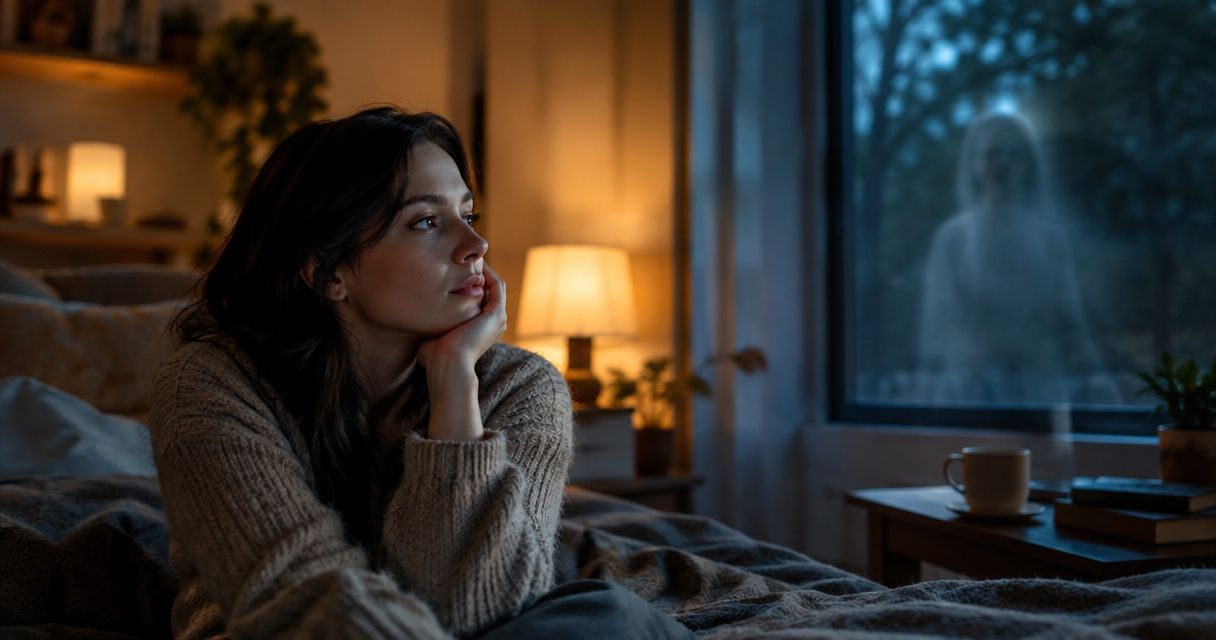
Loved-one ghost sightings are personal reports of seeing someone who has died, shared to describe the encounter rather than prove its cause. This 2026 guide helps you write what you remember, separate observation from interpretation, and share only what feels right.
TL;DR- Haunting is best for people who want to share personal ghost sightings anonymously, without registering.
- Describe what you noticed before explaining why it reminded you of a loved one.
- A paranormal story can stand alone; photos, video, and audio need context, not claims of proof.
- Leave uncertain details uncertain, and keep identifying information out of anything you publish.
You do not need a recording or a neat ending to tell someone what happened. Haunting accepts stories, photos, video, and audio, with anonymous submission and no registration required. Sharing anonymously does not make identifying details inside your account disappear, so choose those details yourself.
Why sharing ghost sightings matters after a loss
When the person you think you saw was someone you loved, the account is more than a description of a shape or a sound. You also have a relationship to explain. What made you recognize them? What part of the experience stayed with you?
You can take an experience seriously without treating a paranormal explanation as established fact. That distinction gives you room to describe something meaningful without arguing for a conclusion you cannot verify.
The supplied account titled I saw my grandpa's ghost shows why timing matters. Its submitter reports seeing their grandfather while lying in bed the night before he died. That is the submitter's account, not independent confirmation of a visitation.
Keep those distinctions in your own story, too. A post shared in 2026 does not establish when the encounter happened; tell readers separately when you experienced it and when you wrote it down.
How to share a personal account
Write down the encounter before polishing it
Start in a notebook or a plain document. Write the sequence as you remember it, without trying to make it frightening, convincing, or beautifully written. A rough note gives you something to return to when you prepare the version you want others to read.
Begin just before the encounter. Say where you were, what you were doing, and what first caught your attention. Then describe what happened next. If you cannot remember how it ended, leave that gap in place rather than giving the story a tidy finish.
Your first draft is for you. You can decide later which parts belong in public.
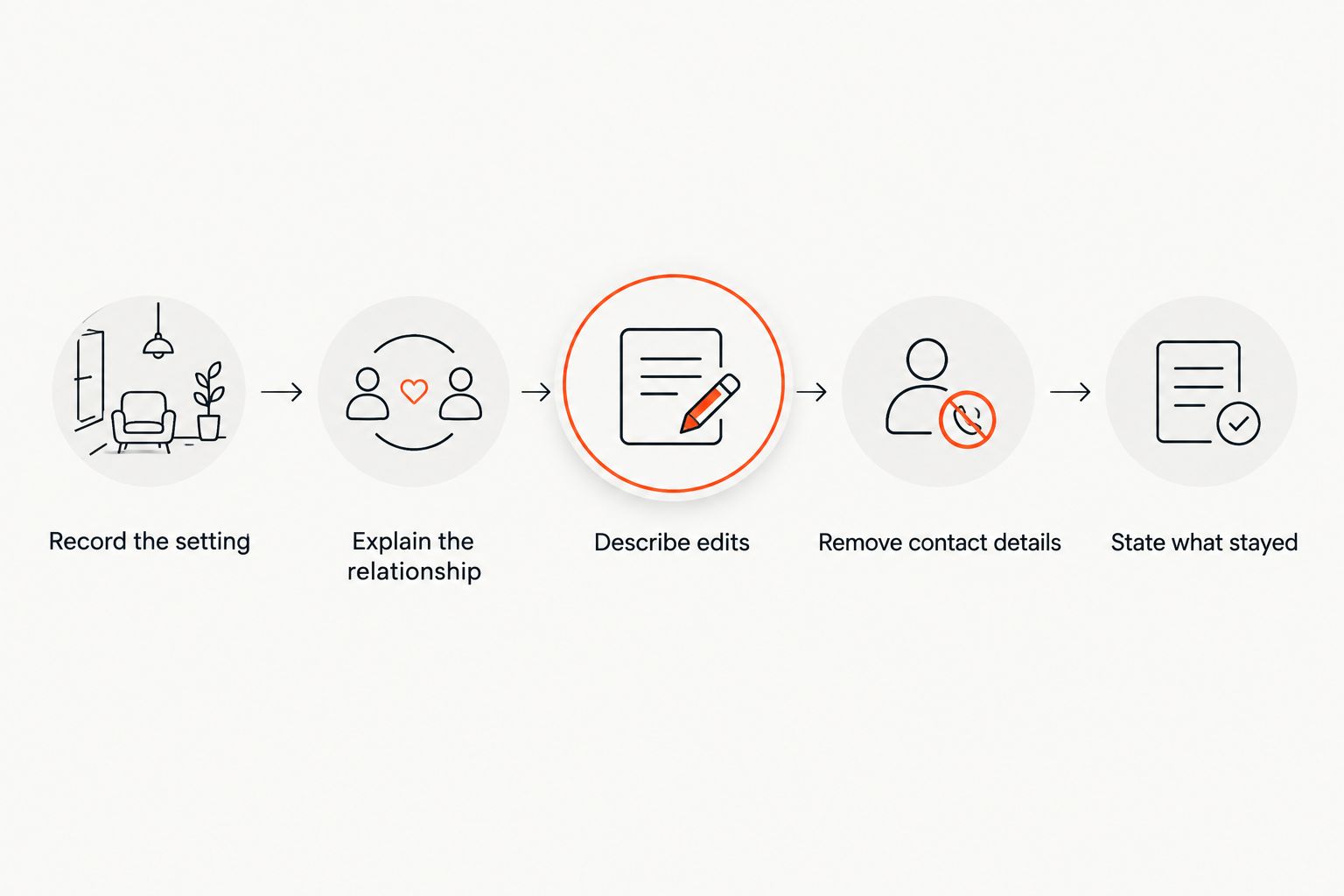
- Record the setting without adding a full address.
- Describe the first thing you noticed.
- Put events in the order you remember them.
- Mark uncertain details instead of choosing an answer.
- Keep your original note separate from the edited version.
Separate what you noticed from what you believed
Describe the sight, sound, or other detail before naming its possible meaning. Then explain why you connected it with your loved one. Recognition belongs in the account, but readers need to understand what that recognition rested on.
Be clear about whether you were asleep, waking, falling asleep, or fully awake. Those circumstances are part of the encounter, not a reason to dismiss it. You do not have to settle what caused the experience to describe the circumstances honestly.
The guide to writing paranormal stories without filling in the gaps focuses on that boundary. Keep what you remember; leave out what a stronger story would require you to invent.
- Separate visible details from your interpretation.
- Explain what made you recognize the person.
- State your sleep or waking circumstances plainly.
- Include ordinary explanations you actually considered.
- Leave unresolved questions unresolved.
Add the relationship without exposing your family
Explain who the person was to you and why the encounter mattered. A relationship such as grandfather, aunt, partner, or friend is often enough. You do not owe readers a legal name, a photograph of your family, or the details of someone's death.
Haunting's Visited by my aunt pat provides an example of a relationship-led opening. Its submitter begins by describing their grandfather's sister and their memory of meeting her as an adult. The supplied excerpt establishes personal context; it does not independently verify an encounter.
Use that distinction when adding background. Give readers what they need to understand your account, not an entire family history. The limitation of a public account is that details about you can also reveal things about someone else.
- Identify the relationship in terms you are comfortable sharing.
- Include only background that helps explain the encounter.
- Remove names of relatives who have not agreed to appear.
- Leave out workplaces, schools, and exact home locations.
- Ask before including another person's private experience.
Describe any recording without making it prove more
A written account is enough. If you have a photo, video, or audio clip, explain how it relates to what you experienced. Readers should not have to guess which part matters or whether you noticed it during the encounter or afterward.
Keep an unchanged copy for yourself before preparing a public version. Describe any crop, brightness adjustment, shortened clip, or audio processing you use. An edited file needs that context; presenting it without explanation leaves readers with an incomplete account of what they are seeing or hearing.
You can submit these formats through Haunting, but a file does not settle its own meaning. Its strength is showing something readers can inspect. Its limitation is that it cannot supply everything you remember about the room or moment.
- Explain when and where you made the recording, without exposing an address.
- Say what you noticed at the time.
- Distinguish later discoveries from the original encounter.
- Describe edits made to the public version.
- Check backgrounds and voices for identifying details.
Choose what you want to make public
Read the draft as if a stranger had found it. Look beyond names: a workplace, a distinctive house, a relative's occupation, and a precise date can tell people more than you intend when placed together.
Anonymous submission is an option on Haunting, not a promise that the content itself contains no clues to your identity. Choose your public details before you submit. You can explain a loved one's place in your life without publishing information that identifies other people.
Be equally careful with dates. If the encounter happened in 2026, use that year only if you remember it; do not replace an uncertain date with the date you are posting.
- Remove contact details and exact addresses.
- Check images for faces, mail, and visible location clues.
- Listen for names and private conversation in recordings.
- Review dates that identify a family event.
- Keep a private copy of anything you remove.
End with what stayed with you
Your ending does not need a reveal. Say what you felt afterward, what remains unclear, or why you decided to share. That gives the account a stopping point without turning uncertainty into a claim of proof.
If you want responses, ask a question readers can answer from their own experience. You can invite similar accounts without asking strangers to identify a figure or confirm a visitation. You can also share without asking a question at all.
Before submitting, read the whole account once for accuracy and once for privacy. Those are different checks. A detail can be accurate and still be something you do not want public.
- State what stayed with you after the encounter.
- Keep your interpretation separate from a claim of certainty.
- Ask only for the kind of response you want.
- Remove any detail included just to make the story scarier.
- Submit only when you are comfortable with the public version.
Choose a sharing format in 2026
Use the format that matches what you actually have. A written memory does not need a staged illustration, and a recording still needs a short explanation. These options serve different purposes; none establishes a paranormal cause on its own.
| Option | Best for | What it adds | Key limitation |
|---|---|---|---|
| Private written note | Keeping details before deciding whether to share | Space to record names and context privately | Does not invite responses from other readers |
| Public written account | Describing a remembered encounter in sequence | Room for context, recognition, and uncertainty | Readers cannot inspect what you saw |
| Photo with an account | Showing a detail visible in a still image | A shared reference for the description | A still image does not show the full sequence |
| Video with an account | Showing movement or a sequence you recorded | Context across the recorded moment | Events outside the frame remain outside the recording |
| Audio with an account | Sharing a sound you recorded | Lets readers hear the submitted clip | Does not show the surroundings or establish the sound's cause |
You can combine formats, but keep the explanation simple. Tell readers what each attachment contributes. If the photo does not show what you saw, say so rather than implying the image captured it.
Common mistakes when sharing sightings of loved ones
Treating recognition as independent confirmation
Feeling certain that you recognized someone is part of your experience. It is not independent confirmation of who or what appeared. Explain the familiar detail and your reaction without asking readers to treat your recognition as proof.
Adding family history that does not belong to you alone
A story about your encounter can also reveal someone else's bereavement, health information, or private relationship. Cut background that does not help readers understand what happened. Ask permission before including another person's account.
Matching the details to a story you read later
Another account can remind you of something, but do not quietly insert its details into your original memory. If a detail came back to you later, distinguish that later recollection from what you first wrote down.
Apologizing for having no recording
You do not need to invent supporting material or make your account sound more certain. Say what you experienced and what you cannot show. A plainly described memory gives readers a clearer account than a claim that promises evidence you do not have.
FAQ
How do I share ghost sightings of a loved one in 2026?
Write what you remember, separate observation from interpretation, and remove identifying details before submitting. Haunting accepts stories, photos, video, and audio anonymously, with no registration required.
Do I need a photo to share a ghost sighting?
No, a written account can stand on its own. Describe what happened and be clear about anything you cannot remember or show.
Can I share the encounter without using my real name?
Yes, Haunting supports anonymous submission without registration. Check your text and attachments too, because names, faces, locations, and other details can still identify people.
Should I say I definitely saw my loved one?
Describe your recognition honestly, but distinguish it from an independently verified fact. Explain what made the figure familiar and what remains uncertain.
Should I mention that I was falling asleep?
Yes, include whether you were awake, waking, falling asleep, or dreaming if you remember. That context belongs in the account even when you do not know how to interpret it.
Can I edit a photo before sharing it?
If you edit a photo, explain what you changed and keep an unchanged copy for yourself. A crop or brightness adjustment should not be presented as though readers are seeing the untouched file.
What if another family member remembers it differently?
Present each person's recollection separately rather than combining them into one agreed account. Ask permission before including their private details or words.
One last thing
Your uncertainty belongs in the story. You can recognize someone, feel something deeply, and still leave the cause unanswered. A clear account does not need to close every gap.
Before sharing, make one final pass for details you included out of pressure to convince someone. Keep what you remember. Leave out what you do not.