Ghost sightings: what to ask when more than one person saw it
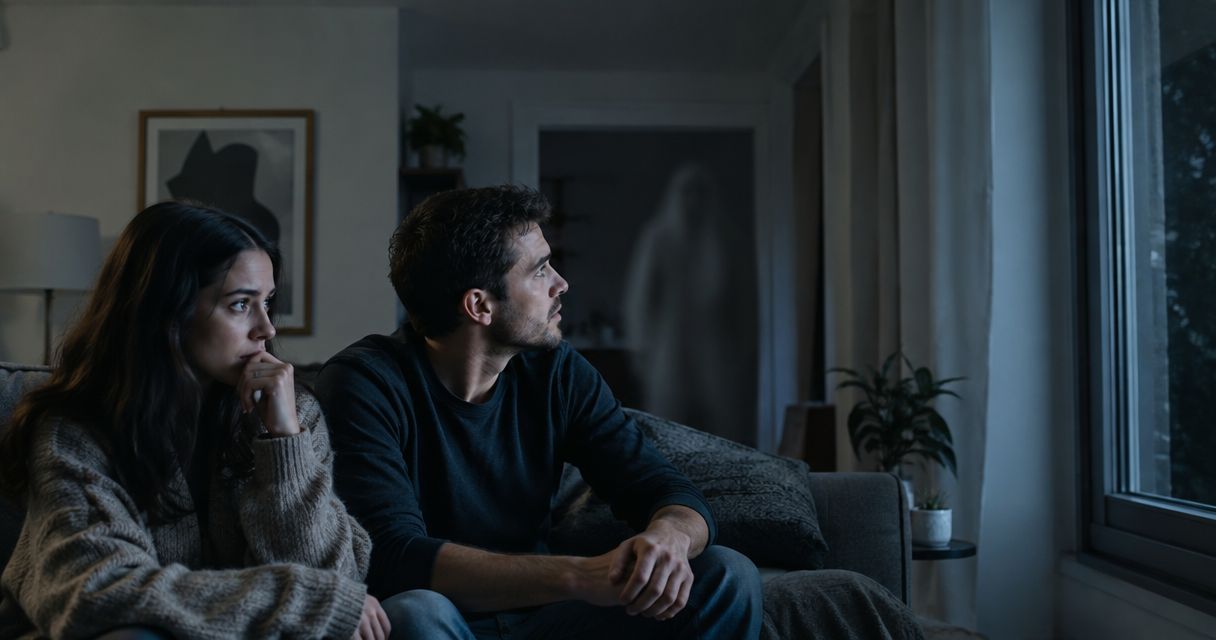
When more than one person reports ghost sightings, ask each person separately what they noticed, where they stood, and what happened before anyone compared stories. Agreement is worth recording, but it does not establish that a ghost was present; keep differences, ordinary explanations, and unanswered questions in the account too.
TL;DR- For ghost sightings, ask each witness for a separate account before discussing what happened together.
- Keep each person's location, observations, and uncertainties attached to their account.
- Preserve original photos, video, and audio; describe what they show without calling them proof.
- Haunting accepts anonymous paranormal stories and media without registration; share only the identifying details you choose.
Ghost sightings: what should you ask when more than one person saw it?
Start with what each person noticed, not what everyone thinks it was. Ask open questions and leave room for different answers. Someone who heard a sound did not necessarily see the shape another person described.
For a shared encounter you are documenting in 2026, use this order:
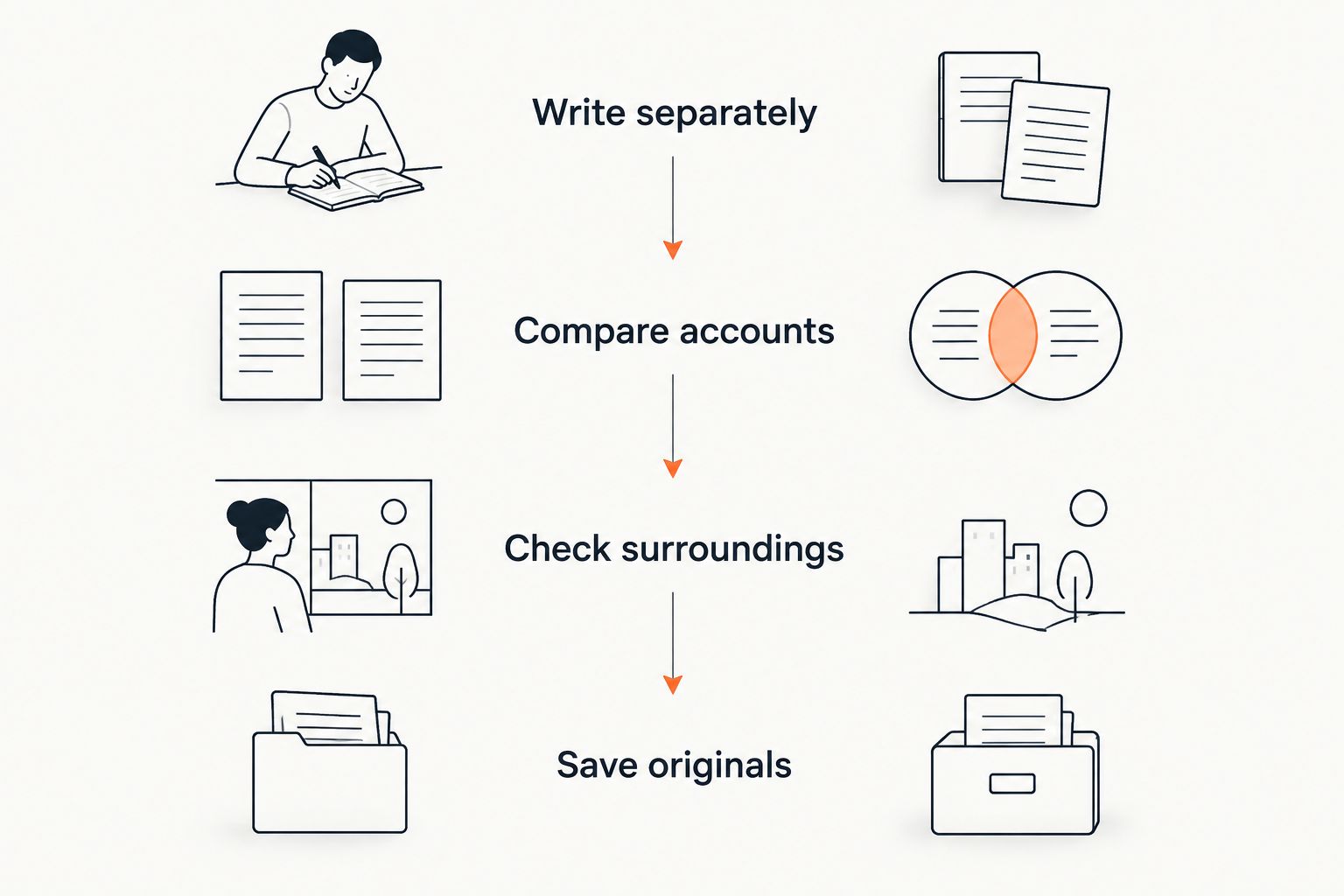
- Write separately. Ask for 1 account per witness before a group discussion. If you already compared stories, say so rather than trying to recreate an untouched first impression.
- Compare accounts. Put the descriptions beside each other. Mark agreement, disagreement, and details that only one person mentions.
- Check surroundings. Record where everyone stood and what was happening nearby. Describe any checks you actually made.
- Save originals. Keep original recordings separate from cropped, brightened, slowed, or otherwise edited copies.
You do not need to settle the explanation before writing. The useful outcome is an account that lets someone else follow what happened and see where your certainty ends.
If you need a starting checklist, use what to record after ghost encounters before trying to turn the experience into a finished story.
Why this matters
You can take someone's experience seriously without accepting their explanation as proven. That includes your own experience. A plainly told account leaves readers room to consider both.
A shared story needs more than a list of people who agreed. Readers need to know what each person actually witnessed, what they heard afterward, and which details remain uncertain.
Don't make the encounter tidier than it was. An unresolved difference belongs in the story, not in the bin.
What should you ask each witness first?
Begin with an invitation: ask the person to describe what happened from the beginning, in their own words. Let them finish before asking about a particular sound, movement, or shape.
Then work through the details:
- Position: Where were you, and which direction were you facing?
- Observation: What did you see, hear, or feel yourself?
- Sequence: What happened immediately before and afterward?
- Duration: How long did it seem to last, and is that an estimate?
- Attention: What first made you look or listen?
- Uncertainty: Which parts are you unsure about?
Ask whether the person checked a clock or is estimating the time. If someone cannot remember a detail, keep that answer. Don't offer a likely answer just to complete the timeline.
Keep observation and interpretation in 2 separate lists. A description of movement belongs under observation; the belief that it was a particular person or presence belongs under interpretation. Neither needs to erase the other.
Ask about the first conversation, too
Record when the witnesses first talked about the encounter. Ask whether someone pointed something out, named a possible explanation, or showed a recording before the others gave their accounts.
This is not an accusation. It tells readers which details were reported independently and which came up during a shared conversation.
If you cannot remember who said something first, leave that unresolved. Don't assign a detail to someone because it sounds like something they would have said.
What does each kind of account add?
Different records answer different questions. Choose what to include based on what it contributes, not how convincing it sounds.
| Record | Best for | What it adds | What it does not establish |
|---|---|---|---|
| Separate witness account | Each person's perspective | Position, sequence, observations, and uncertainty | That the person's explanation is correct |
| Shared timeline | Comparing recollections | Where accounts agree or differ about the order of events | That everyone noticed the same thing |
| Original photo or video | Reviewing what was captured | A visual record from the camera's viewpoint | Everything that happened outside the frame |
| Original audio | Reviewing a recorded sound | A record listeners can replay | The source of an unidentified sound |
A written account can include context a camera missed. A recording can preserve something the witness no longer remembers clearly. Keep both, but don't ask either to establish more than it contains.
For a 2026 submission, label when each account was written as well as when the encounter happened. A later recollection is still shareable; readers should be able to distinguish it from a note made at the time.
Why accounts of the same sighting vary
Before treating a difference as a problem, check whether the witnesses were describing the same part of the event. Ask about these details rather than supplying an explanation yourself:
- Viewing position: Were people beside each other, across the room, or looking through different openings?
- Attention: Did everyone look up at the same moment?
- Obstructions: Was anything between a witness and the reported movement?
- Timing: Did one person arrive after another had already noticed something?
- Conversation: Which details came up before everyone recorded their own recollection?
- Recording limits: Did a camera or microphone capture the whole encounter or only part of it?
These questions give a difference somewhere to sit in the account. They do not tell you which witness is right.
If one person describes a figure and another describes only movement, retain both descriptions. Don't rewrite them as a shared sighting of a figure unless both people actually reported that.
How do you check the surroundings without dismissing anyone?
Ask what was present and what was checked. Keep the wording neutral: a question about a window, doorway, light, animal, or nearby person is not a verdict about the encounter.
Walk through the location if it is safe and you have permission. Note the witnesses' positions, the direction of the reported event, and anything between them. Do not trespass or return somewhere unsafe to complete the story.
Write down the result of a check, not the result you wanted. If you looked for a source of a noise and did not find one, say that. An unsuccessful search does not identify the source as paranormal.
Separate a possible explanation from one you actually confirmed. Readers should not have to guess whether an ordinary cause was considered, checked, ruled out, or simply never investigated.
What should you keep from photos, video, and audio?
Keep the original file and work from a copy. If you publish an edited version, explain what changed: a crop, a brightness adjustment, a slowed section, or an audio edit.
Don't discard the surrounding material just because the unusual moment is brief. Preserve what came before and after it so you can describe the recording's context.
For media you organize in 2026, keep a short note alongside each file:
- Who recorded it, using a chosen label if needed.
- Where the recorder was positioned.
- Whether recording began before or after someone noticed something.
- Which edits appear in the shared version.
- Whether other witnesses watched or heard it before writing their accounts.
Don't label an unclear sound as a definite word just to make the clip easier to explain. Describe what you hear, distinguish that from what you think it means, and allow disagreement.
Before sharing, check for faces, addresses, conversations, or other identifying details. Keep an original privately if you make a shareable copy with those details removed. Ask other witnesses before including material that identifies them.
How do you write a shared encounter without filling in the gaps?
Build the story around what each person can actually describe. Start with the setting, follow the sequence, and attach each observation to the person who reported it.
Use chosen labels consistently if witnesses do not want their names included. Avoid blending separate memories into a single voice. Readers should know when you are describing your own experience and when you are passing along someone else's account.
Make 3 editing passes before sharing:
- Check attribution. Does every observation belong to a named or consistently labeled witness?
- Check certainty. Have estimates, interpretations, and unresolved details stayed visible?
- Check consent. Have the other witnesses agreed to the identifying details or media you plan to include?
A story does not need a final explanation to be complete. It needs a clear boundary between what happened as reported and what the people involved believe happened.
Use the guide to writing paranormal stories without filling in the gaps if your draft starts sounding more certain than your recollection.
Where can you share the account?
Haunting is best for people who want to share paranormal stories and media anonymously without registering. You can submit stories, photos, video, and audio; you do not need to turn an unexplained experience into a claim of proof.
Haunting gives your paranormal story a place to be shared, not independent verification of its explanation. Keep that distinction in your submission, especially when other witnesses disagree about what happened.
Before posting a shared account in 2026, check the draft with anyone whose words or identifying details you included. Anonymous submission does not require you to publish your home address, workplace, or other people's names. It also should not be read as a promise about tracking or data retention.
Does everyone need to agree before you share?
No. Agreement is not a requirement for an honest account, but you should not present someone as supporting an explanation they reject.
Describe the disagreement fairly. If another witness does not want their account included, write about your own experience without borrowing their certainty or speaking on their behalf.
Should you wait until you have an explanation?
No. You can share an unresolved encounter as unresolved. State what you checked and what you still cannot explain.
If you later learn something relevant, keep that information with the account where you can. A new explanation does not require pretending the original experience never felt strange.
FAQ
Do ghost sightings become proof when more than one person sees something?
No. Multiple witness reports document what people say they experienced; they do not by themselves establish a paranormal cause. Keep each person's observations separate from their explanation.
What's the first thing I should ask another witness?
Ask the witness to describe what happened in their own words before you describe your version. Follow with questions about position, sequence, and uncertainty.
What if we already talked about the sighting together?
Write separate accounts now and disclose that a conversation happened first. Include what you remember discussing without pretending the accounts were recorded independently beforehand.
Should I leave out details the other witness remembers differently?
No. Keep meaningful differences and attribute each version to the person who reported it. Don't force the accounts into a single agreed description.
Can I share a ghost sighting without a photo?
Yes. Haunting accepts paranormal stories as well as photos, video, and audio, with anonymous submission and no registration required. Describe what you experienced without claiming to have a recording you do not have.
Should I edit a recording before sharing it?
Preserve the original and edit a separate copy if needed. Explain changes in the shared version, and check for identifying details before publishing.
Do I need to publish the exact location?
No. Give enough setting for readers to follow the experience without disclosing identifying details you or other witnesses want withheld. Do not expose someone else's private address.
One last thing
Before publishing your 2026 account, reread every use of we. Ask whether it means everyone witnessed that detail or everyone discussed it afterward.
Replace a shared claim with separate descriptions wherever the witnesses' experiences differ. That small edit lets you tell the story without putting words in anyone else's mouth.