Ghost sightings while waking up: details worth noting
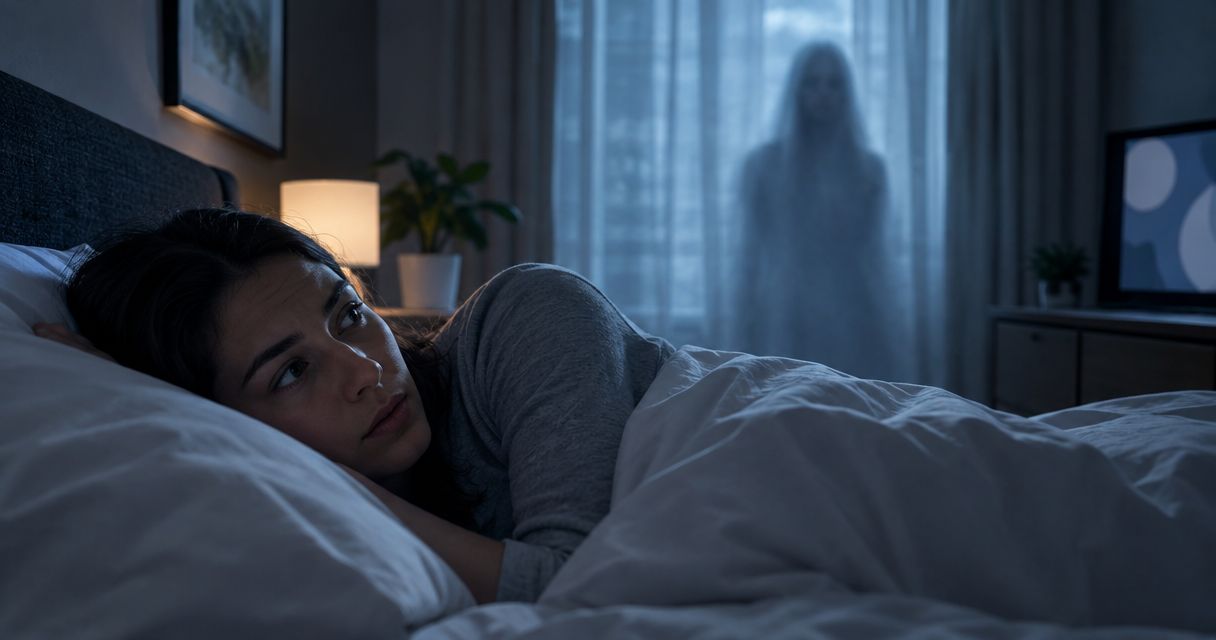
For people waking up, ghost sightings documentation is a record of an unexplained encounter with the aim of sharing what happened without filling in the gaps. The useful details are what you saw, how awake you felt, and what changed when you moved or turned on a light.
TL;DR- Ghost sightings while waking up need a clear account, not a forced explanation.
- Record your ability to move, the room’s lighting, and what happened as you became fully awake.
- Haunting accepts paranormal stories, photos, video, and audio anonymously, with no registration required.
- Describe what you witnessed separately from what you think caused it.
Why documenting ghost sightings matters for people waking up
Waking up leaves an awkward question: were you seeing something in the room, something connected to sleep, or something you still cannot explain? A frightening experience does not answer that question by itself.
Sleep paralysis can involve being awake but unable to move or speak. Sleep-related hallucinations can also happen while waking. Neither term is a diagnosis you should assign yourself from one encounter, and neither makes your fear less real.
Start with what to record after ghost encounters. If your encounter happened in 2026, record the actual date and distinguish it from the date you wrote the account.
You do not need to prove a ghost was present to describe an unexplained experience honestly. That distinction gives readers something useful to consider without asking them to accept your interpretation first.
How to record an encounter after waking up
Write down the first details before retelling the story
If you feel safe, use the first 5 minutes to make a rough note. A paper notebook or a voice memo works; you do not need a special form or an audience yet.
Begin with what you remember noticing first. Was it a shape, a sound, a touch, or the feeling that someone was nearby? Those are different experiences. Do not turn a feeling of presence into a visible person unless you actually remember seeing someone.
A 30-second voice memo is a useful starting point if writing feels difficult. Say what you remember, including uncertainty, then leave the original alone. You can organize it later.
A note dated in 2026 should not make an uncertain encounter date look certain. Label an approximate date as approximate.
- Record the encounter date separately from the writing date.
- Name the first thing you noticed.
- Describe what you saw, heard, or felt in ordinary words.
- Mark missing details as unknown rather than supplying them.
Separate your waking state from what you saw
Write down how waking felt before deciding what the experience means. Being able to open your eyes, move your arm, sit up, or speak are separate details. Record each one you remember.
The order matters. Seeing a figure before you could move is not the same account as seeing a figure after getting out of bed. Neither sequence proves a cause, but readers should not have to guess which happened.
Keep the room in the account, too. A doorway, window, hanging coat, or reflected light belongs in the description if it was there. Mentioning an ordinary object does not dismiss the encounter; it helps explain what you were looking at.
Use these four labels to organize a rough note without turning it into a questionnaire:
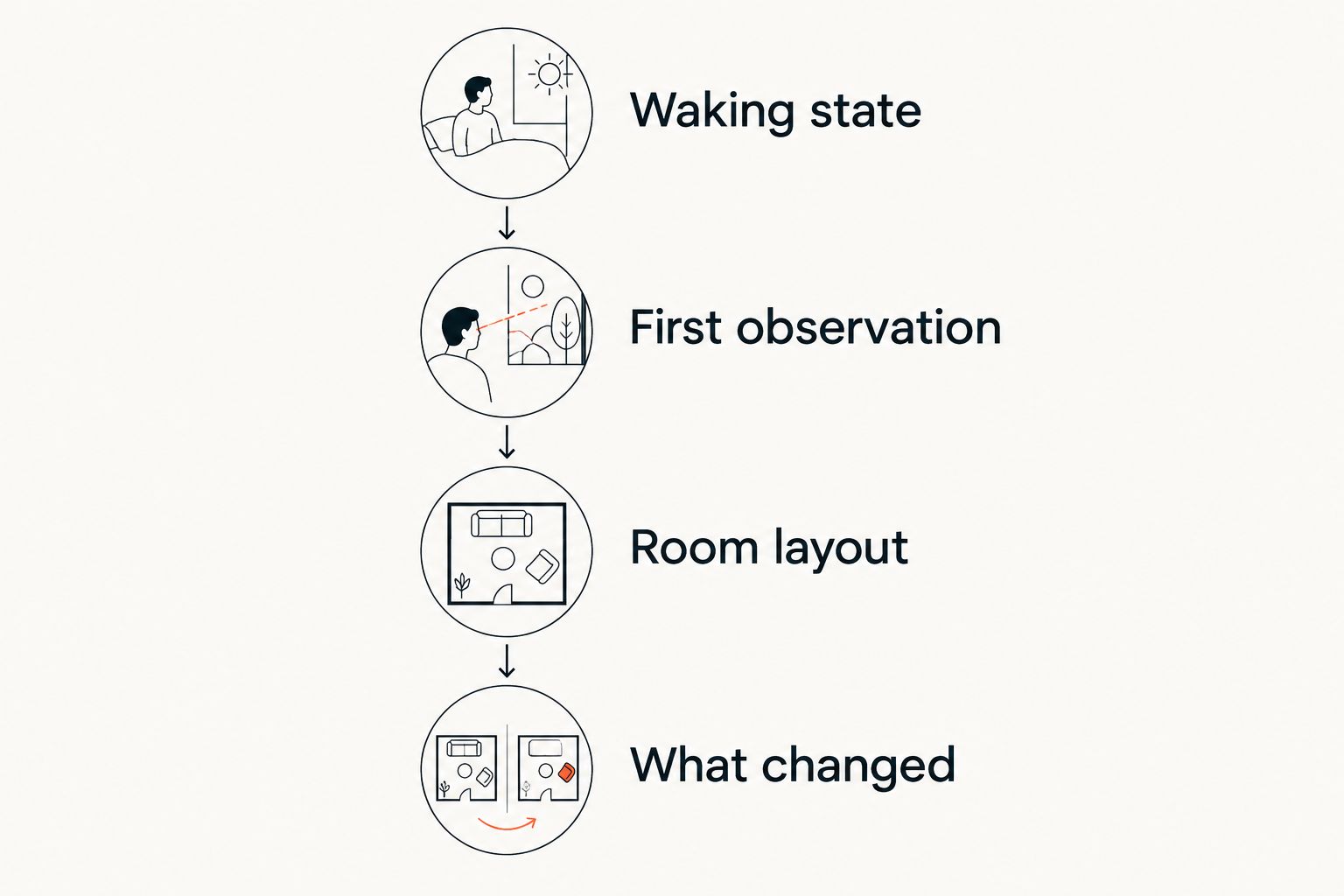
You do not need an answer under every label. An honest blank is more useful than a detail added because it seems to fit.
- Waking state: note whether you could move or speak.
- First observation: describe what drew your attention.
- Room layout: identify where the shape or sound seemed to be.
- What changed: record what happened as you became fully awake.
Choose a format that fits the encounter
Start with a private written account. It lets you sort the sequence and remove identifying details before deciding whether to publish anything. An encounter without a photograph still has a story to tell.
If you want to share it, Haunting accepts stories, photos, video, and audio with anonymous submission and no registration required. You do not have to disclose your name or exact address to make the account understandable.
Haunting is best for people who want to share unexplained encounters anonymously without registering. Its role is sharing accounts, not establishing that a paranormal explanation is true.
Choose the format that preserves what you actually have. A written account explains something that happened before you reached your phone. A recording shows only what it captured, not everything you remember experiencing around it.
- Use a story for the sequence and your waking state.
- Add a photo when an existing image helps explain the account.
- Add video or audio with a plain description of what it contains.
- Leave out names, addresses, and other details you do not want public.
Preserve recordings without presenting them as proof
Keep the original file if you have one. Make a separate copy for cropping, brightening, slowing down, or removing identifying details. Describe those changes when sharing the edited version.
A dark image is not a reason to name a figure you cannot clearly see. Say where readers should look and what you noticed, then let the limits remain visible. Avoid captions that turn an unclear patch into a confirmed person.
Keep a 2026 recording labeled with its actual capture date when you know it. If you took the photo after the encounter, say so. A later picture of the bedroom can explain the setting, but it is not a picture of the event itself.
You also do not need to recreate an encounter for the sake of having media. A plainly told account is enough to submit.
- Save the original before making edits.
- State whether the recording captured the event or the setting afterward.
- Describe edits alongside the shared copy.
- Check for visible addresses, faces, documents, and private conversations.
Check ordinary explanations without forcing an answer
When you feel settled, look at the room under normal lighting. Check the specific place where you noticed something. A coat near the doorway or light entering through a window is worth recording if it matches what you saw.
You do not have to repeat a frightening experience or stay awake trying to catch it again. The aim is to understand the setting, not stage a test that makes you more distressed.
If someone else was present, ask what they noticed before telling them your full interpretation. Keep their account separate from yours and ask permission before sharing their words. Agreement about a noise is not automatically agreement about its cause.
If nothing explains it, leave it unexplained. That is a complete and honest ending.
- Check the location of the shape, sound, or movement.
- Note relevant lights, reflections, objects, and nearby activity.
- Ask other witnesses open questions rather than suggesting an answer.
- Record both useful explanations and unresolved details.
Review the account before you share it
Revisit the draft after 24 hours if you want some distance from the first reaction. Keep your original note so you can distinguish an early memory from a later addition. Do not quietly rewrite the first version to make it neater.
Read for sequence rather than suspense. A reader needs to know what happened before, during, and after you woke up. You do not need a dramatic opening, a cliffhanger, or a conclusion that declares the room haunted.
End with the question you actually have. Perhaps you want to know whether others have experienced something similar. Perhaps you simply want to put the account somewhere outside your own head. Both are valid reasons to share.
- Keep the rough note alongside the edited version.
- Label later recollections instead of blending them into the original.
- Remove identifying details you do not want published.
- End with your genuine question or an honest unresolved ending.
Compare your options for recording and sharing
Choose by purpose: preserve your memory, share the account, or get help with recurring symptoms. These options do different jobs; none turns an unexplained encounter into verified evidence of a ghost.
| Option | Best for | Main benefit | Key limitation |
|---|---|---|---|
| Private notebook or voice memo | Keeping an initial account | Lets you record details before choosing an audience | Provides no outside response by itself |
| Haunting paranormal story submission | Sharing an unexplained encounter anonymously | Accepts stories, photos, video, and audio without registration | A shared account does not independently verify its explanation |
| Trusted personal conversation | Talking through an upsetting experience | Lets you explain how the encounter affected you | The listener did not necessarily witness what happened |
| Healthcare appointment | Discussing repeated waking experiences, distress, or disrupted sleep | Gives you a place to describe symptoms and ask about sleep-related causes | It is not a public story-sharing route or paranormal investigation |
You can use more than one option. Keeping a private record does not commit you to publishing, and sharing a story does not replace seeking care when you need it.
Common mistakes people make after waking encounters
Turning an impression into a confirmed identity
A familiar outline does not establish who or what was there. Describe the feature you recognized and explain that it reminded you of someone. Keep recognition and certainty separate, especially when writing about a deceased relative.
Removing the sleep details
Leaving out an inability to move, a dream immediately beforehand, or uncertainty about being awake changes the account. Include those details even if you worry readers will dismiss the experience. They belong to what happened, not to an argument against you.
Treating a later photo as an event recording
A photograph taken after you switched on the light shows the room afterward. Label it that way. Do not let a caption imply that the camera captured something you only saw before reaching for it.
Combining different witnesses into one story
Your partner hearing a noise does not mean your partner saw the figure you remember. Attribute each observation to the person who reported it, with their permission. Keep disagreements rather than smoothing them out.
Replacing an uncertain date with a neat one
Publishing in 2026 does not mean the encounter happened in 2026. Keep the event date separate, and preserve uncertainty about older memories. A tidy timestamp is not worth changing the story.
FAQ
Why do I see figures when I wake up?
Figures seen while waking can be sleep-related hallucinations, sometimes called hypnopompic hallucinations. That possibility does not identify the cause of your particular experience; record your waking state and discuss recurring or distressing episodes with a healthcare professional.
Does seeing a ghost while waking up mean I had sleep paralysis?
No, seeing something while waking does not by itself establish sleep paralysis. Sleep paralysis involves a temporary inability to move or speak while falling asleep or waking, so describe whether that happened rather than assuming the label.
What should I write down after a ghost sighting in my bedroom?
Write down what you noticed first, whether you could move or speak, and what changed as you became fully awake. Include the lighting, the apparent location of the sight or sound, and any details you remain unsure about.
Can I share a ghost sighting without a photo?
Yes. Haunting accepts stories as well as photos, video, and audio, with anonymous submission and no registration required. Explain what you remember without adding a recording or detail you do not have.
Should I brighten a dark photo before sharing it?
Keep the original and label any brightened version as edited. Explain what changed, and do not describe unclear areas as confirmed figures or faces.
How do I share an encounter without identifying my family?
Use relationship descriptions instead of names and leave out exact addresses, workplaces, and other identifying details. Review attachments as well as the story, and ask permission before sharing another person's account.
When should I talk to a doctor about waking experiences?
Talk to a healthcare professional if the experiences recur, cause distress, or interfere with sleep or daily life. Describe what happens and whether similar experiences occur when you are fully awake; you do not need to choose a paranormal or medical explanation before asking for help.
One last thing
Before sharing your 2026 encounter notes, read only the sentences describing what you observed. Does the account still make sense without the explanation attached?
Keep uncertainty in the story. Not remembering whether the door was open is a detail worth preserving, not a gap you need to repair. You can share something meaningful without deciding what it was.