Ghost videos from doorbells: what context should you save?
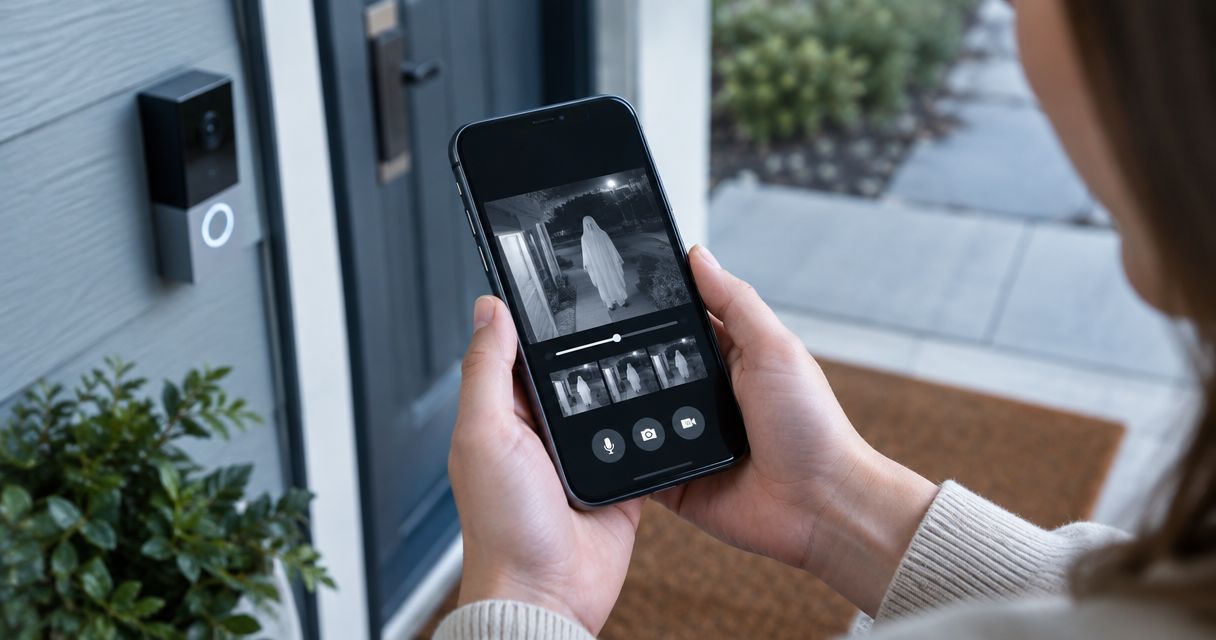
Doorbell owners’ ghost videos are recordings of unexplained activity saved to show others what a camera captured, not to establish what caused it. If something strange appeared outside your door, keep the original clip, the surrounding footage, and your own notes before you crop or share it.
TL;DR- For doorbell ghost videos, save the original recording before making edits or sharing a shortened clip.
- Keep camera timing, lighting, weather, and witness notes separate from your explanation.
- Haunting is best for people who want to submit unexplained encounters anonymously, without registration.
- A strange doorbell recording documents an appearance; it does not establish a paranormal cause.
Why saving context matters for doorbell owners
A doorbell points at one slice of your home. It cannot show everything above, beside, or behind the camera. A moving shape in the recording and something you saw in person are different observations. Keep both, but do not merge them.
The useful question is not just what appeared. It is what information someone else needs to understand the recording. A bright streak means less without knowing whether the porch light switched on at the same moment.
For a clip recorded in 2026, save the actual date, not simply a filename saying this year. Use the same care with the story: write paranormal stories without filling in the gaps.
You do not need a polished explanation. You need an account that keeps what happened separate from what you think happened.
How to save doorbell ghost videos with useful context
Save the original recording first
Use your doorbell app’s download or export option if it provides one. Keep 1 unedited copy before adding captions, changing brightness, slowing playback, or drawing a circle around the shape. Those changes belong in a separate viewing copy.
A screen recording is a fallback when you cannot export the clip. Label it as a screen recording, because it shows your playback session rather than being the original camera file. Do not describe either version as untouched if you have changed it.
Save surrounding footage when it exists. The useful boundary is the start and end of the event, including what the scene looked like before anything caught your attention. Do not cut away the moment a person, vehicle, light, or animal enters the scene.
- Download the original file when the app allows it.
- Keep the original filename alongside any renamed copy.
- Save footage before and after the unexplained movement.
- Put crops, slow motion, and brightened versions in separate files.
- Note any missing section or failed download.
Record the time and camera view
Write down what the camera showed, then check what you know independently. A displayed timestamp is not the same thing as a confirmed local time. If the clock looks wrong, keep the displayed time and explain the difference rather than silently correcting it.
Describe the camera’s position in ordinary words: beside the front door, facing the path, with a road beyond the gate. You do not need to publish your address or draw a map of your home. Include only the layout details that help explain the view.
Keep 3 note headings: Camera time, Local time, and Camera view. For a recording dated 2026, include the month and day too. A year alone will not help you match the clip to your other notes.
- Copy the timestamp exactly as displayed.
- Record the time zone if you know it.
- Note whether you checked the camera clock.
- Describe where the camera faces without giving your address.
- Mark anything outside the frame that matters to the account.
Separate the camera clip from your experience
Start with what is visible or audible. Describe where the shape appears, which direction it moves, and whether it blocks anything behind it. Avoid naming it as a person, face, or ghost before you have described its appearance.
Then write what you experienced away from the screen. Were you at home? Did you hear something yourself, or only during playback? Did you notice the event live, through a notification, or while reviewing older recordings? Those distinctions belong in the account.
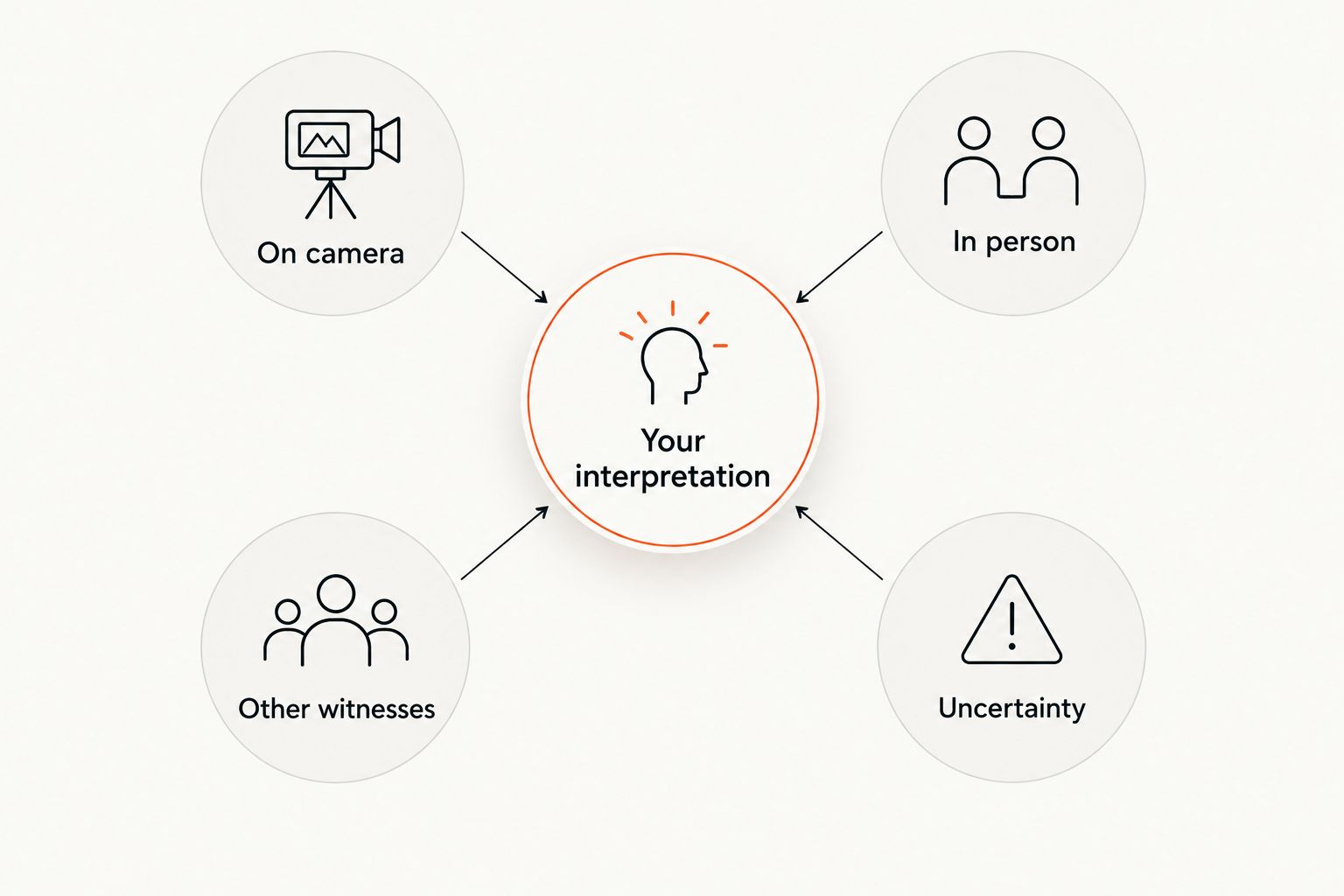
Keep 2 descriptions: On camera and In person. If you were asleep or away, say that. An honest gap is more useful than a scene reconstructed from a short clip.
- On camera: Describe the movement, light, shape, and sound.
- In person: Record only what you directly noticed.
- Other witnesses: Attribute each account to the person who gave it, using an agreed name or anonymous label.
- Your interpretation: Put your explanation after the observations.
- Uncertainty: State what you cannot make out or remember.
Note the conditions around the door
Before deciding what the shape was, record the conditions you can actually establish. Was the porch light on? Was rain visible? Was a vehicle passing? Did someone open the door? These are questions to check, not explanations to insert automatically.
If you inspect the camera afterward, record that timing. Finding a web the next morning does not establish that it caused the earlier shape. Equally, not finding an obvious cause does not establish that the recording is paranormal.
Keep checks safe and ordinary. Do not climb to reach a camera, enter a neighbor’s property, or stage a risky recreation for a clip. If you cannot check something safely, leave that question open.
- Note visible rain, fog, or other weather in the recording.
- Record which nearby lights were on or changing.
- Look for movement elsewhere in the frame at the same moment.
- Note anything you later notice near the lens, with the inspection time.
- Describe a repeat recording only if you actually made one.
Make a sharing copy without hiding changes
Keep the full recording privately, then decide what belongs in a public copy. Check for faces, house numbers, street signs, vehicle plates, voices, and details that identify other people. Anonymous posting does not make identifying details inside a video disappear.
If you blur or crop something, say so. A privacy crop is reasonable, but readers should know when part of the view is missing. Do not add a sound effect, replace the audio, or present a slowed clip as normal speed.
For a 2026 upload of an older encounter, distinguish the recording date from the upload date. If you do not remember the encounter date, say that rather than choosing one to complete the story.
- Watch the sharing copy all the way through.
- Listen for names, addresses, and private conversations.
- Label crops, blurring, brightness changes, and speed changes.
- Keep the original audio when sharing audio is appropriate.
- Ask other witnesses what details they are comfortable sharing.
Share the account without claiming proof
Write a short opening that says what happened and why you are sharing it. Follow with the circumstances, what you checked, and what remains unexplained. You can ask for other people’s thoughts without calling the recording proof of a ghost.
Haunting is best for people who want to submit unexplained encounters anonymously, without registration. Haunting accepts stories, photos, video, and audio. You do not need to disclose your name or identifying details to tell the account.
Haunting’s paranormal sharing format gives you a place to describe the encounter; submitting footage does not establish its cause. Keep your own original files and let the public account stand on what you can honestly describe.
- Lead with the event, not a verdict about its cause.
- State whether you watched it live or found it later.
- Explain any edits in the shared version.
- Attribute other people’s observations without exposing them.
- End with the specific question you want readers to consider.
Choose how to keep and share the recording
Different options serve different purposes. Your original file preserves what you downloaded. A written account preserves what the camera could not show. A public submission lets other people read or watch the encounter, but it is not independent confirmation.
Keep a private record first; decide what to publish second. You do not have to choose between preserving details and withholding personal information from a public post.
| Option | Best for | Main benefit | Key limitation |
|---|---|---|---|
| Original downloaded clip | Preserving the recording you obtained | Keeps a version without your later edits | Does not include everything outside the camera’s view |
| Written encounter notes | Saving circumstances and firsthand observations | Records details that are absent from the clip | Relies on what you remember and document |
| Labeled sharing copy | Letting others view selected footage | Allows privacy edits and a focused excerpt | Crops or edits remove information from the public version |
| Haunting paranormal submission | Sharing an unexplained encounter anonymously | Accepts stories, photos, video, and audio without registration | A submitted account does not verify a paranormal explanation |
You can use all of these together. The public version should explain what it leaves out, while the private record holds the detail you chose not to publish.
Common mistakes doorbell owners make
Saving only the strange-looking moment
A tight crop shows where to look, but hides what happened around it. Preserve the wider view and surrounding footage before making an excerpt. If the rest of the recording is unavailable, say that plainly.
Treating a notification time as the encounter time
Write down which time you are using: the timestamp on the clip, the notification time, or the time you watched it. Do not combine them under one unexplained date. A clear timeline starts with clear labels.
Turning a later discovery into a confirmed cause
A nearby web, loose decoration, or passing vehicle is a detail to examine, not an automatic answer. Explain when you noticed it and what connects it to the footage. If you cannot establish a connection, leave it unresolved.
Writing one shared account for several witnesses
Let each witness record what they noticed before comparing versions. If someone only watched the video afterward, describe them as a viewer, not an eyewitness. Respecting a witness includes keeping their actual account intact.
Assuming an anonymous post hides the location
Review the footage itself before posting. A name-free submission can still show a house number or include someone saying an address. Decide what you are comfortable making public, and disclose any privacy edits.
FAQ
What should I save with ghost videos from my doorbell?
Save the original clip, surrounding footage, displayed timestamp, camera view, lighting, weather, and your own observations. Keep edits separate and distinguish what you saw in person from what you saw during playback.
Does a strange shape on a doorbell camera prove it is a ghost?
No. A strange shape records an appearance in the footage, not a confirmed cause. Describe the shape and the circumstances without treating a paranormal explanation as established.
Should I brighten or slow down a doorbell ghost video?
Keep the original first and make any brightened or slowed version a separate copy. Tell viewers exactly what you changed so they do not mistake the edited playback for the original.
Can I share a ghost video anonymously without making an account?
Haunting accepts anonymous submissions of stories, photos, video, and audio without registration. Review the recording for identifying details before sharing; submission anonymity does not remove information visible or audible in the clip.
What if the camera timestamp is wrong?
Preserve the displayed timestamp and separately record the local time you can establish. Explain how you checked the difference instead of silently replacing the camera time.
Can I submit a doorbell recording if I do not know what caused it?
Yes. You can share an unexplained encounter without deciding what caused it. State what the recording shows, what you checked, and what remains uncertain.
Should I use the recording date or the upload date in 2026?
Use the recording date for the encounter and label the upload date separately when it matters. If the recording date is unknown, say so rather than assigning a date.
One last thing
Write down what made you notice the clip before you read other people’s explanations. Was it movement, a sound, a notification, or something you had already experienced in person?
That first reason belongs in your account. Later comments are other people’s interpretations, not part of what you originally witnessed. Keep the distinction, even if your own explanation changes.