Ghost videos: what to include before and after the strange moment
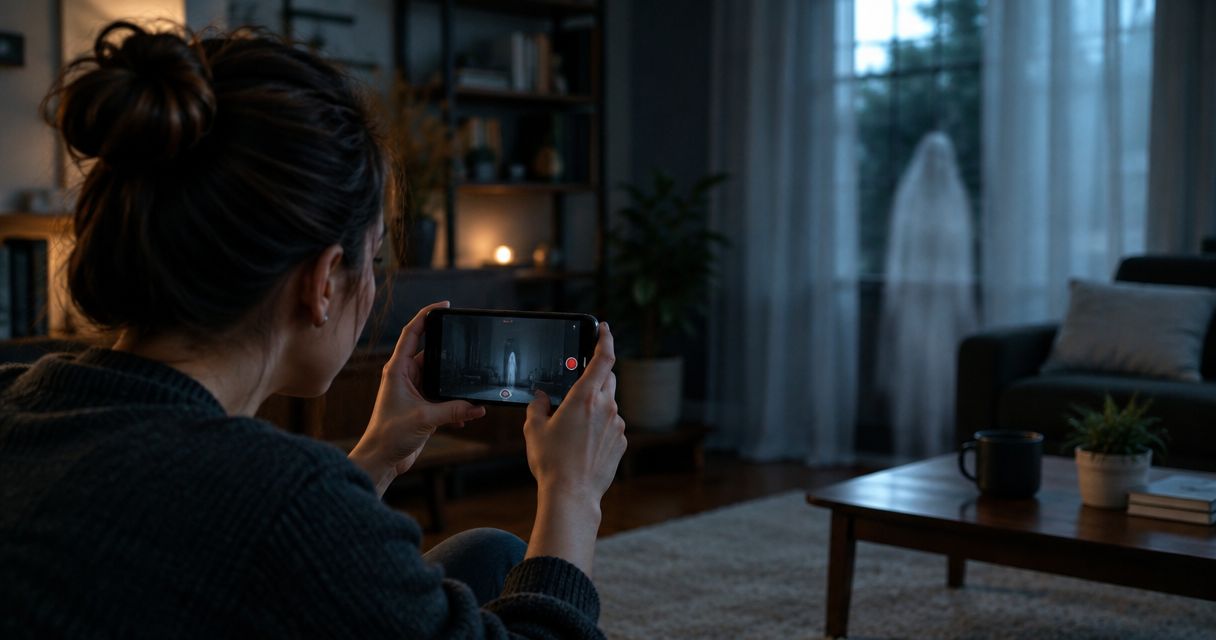
Witness-recorded ghost videos are recordings of unexplained encounters shared to show what happened, with the aim of letting other people see the moment in context. If you filmed something you cannot explain, include what happened before it, what happened afterward, and what you actually noticed—not just the part that looks strange.
TL;DR- For ghost videos, keep the original recording and include footage before and after the unexplained moment.
- Haunting is best for witnesses who want to share unexplained encounters anonymously, without registering.
- Describe ghost sightings as observations, not proof; separate what you saw from what the camera recorded.
- Check paranormal videos for identifying details before sharing, including voices, reflections, and background documents.
You can share stories, photos, video, and audio on Haunting anonymously, with no registration required. You do not need a dramatic explanation or a polished production. A plain account of what you recorded is enough.
Why ghost videos need the surrounding moment
A clip that starts at a sudden movement leaves out the setup. A clip that ends immediately afterward leaves out your response, whether the movement happened again, and anything else that followed. Viewers need those details to understand what they are watching.
That matters when you experienced something yourself. You remember the room, the sounds, and where everyone stood. A stranger watching the recording has none of that context unless you provide it.
A ghost video documents something you recorded; calling it a ghost does not establish what caused it. You can take your experience seriously without asking viewers to accept an explanation the footage does not establish.
For a recording made in 2026, put the actual recording date in your notes. If the encounter happened earlier, keep its original date separate from the date you share it. Upload time and encounter time are different details.
How to prepare your ghost video for sharing
Keep the original recording
Start with the file on the device that recorded the encounter. Keep it before trimming, adding captions, changing brightness, or sending it through another app. Work on a separate copy so your edits do not replace the version you started with.
You do not need editing software to make useful notes. Open your phone’s notes app or use a notebook. Record the filename, where you were, and what first drew your attention. If you only have a forwarded copy, say so rather than presenting it as your own recording.
Keeping an original does not make the event paranormal. It gives you a reference when someone asks whether a sound, cut, or visual change was already there.
- Save the original file separately from your sharing copy.
- Write down who recorded it, without publishing their identity.
- Note whether you received it through another person or app.
- Record any edits you make to the sharing copy.
Include the lead-in and aftermath
Watch the whole recording before choosing an excerpt. Look for the point where the scene becomes understandable: the camera settles, someone enters, a sound begins, or the object is visible before it moves.
As a starting point, review 10 seconds before and 10 seconds after the strange moment, when that footage exists. Those are editing suggestions, not a test of whether an encounter is genuine. Extend the excerpt when the relevant setup or response falls outside that window.
If you started recording after the event, say that directly. A video of the room afterward is still context, but it is not footage of the encounter itself. Haunting accepts video alongside stories, photos, and audio, so a written account can explain what happened before you reached for your phone.
- Show the scene before the unexplained moment when possible.
- Keep the immediate response when it adds context.
- Include a repeated sound or movement if you recorded it.
- State clearly when the recording begins after the encounter.
- Avoid cutting away something that changes the interpretation.
Separate what you noticed from what you recorded
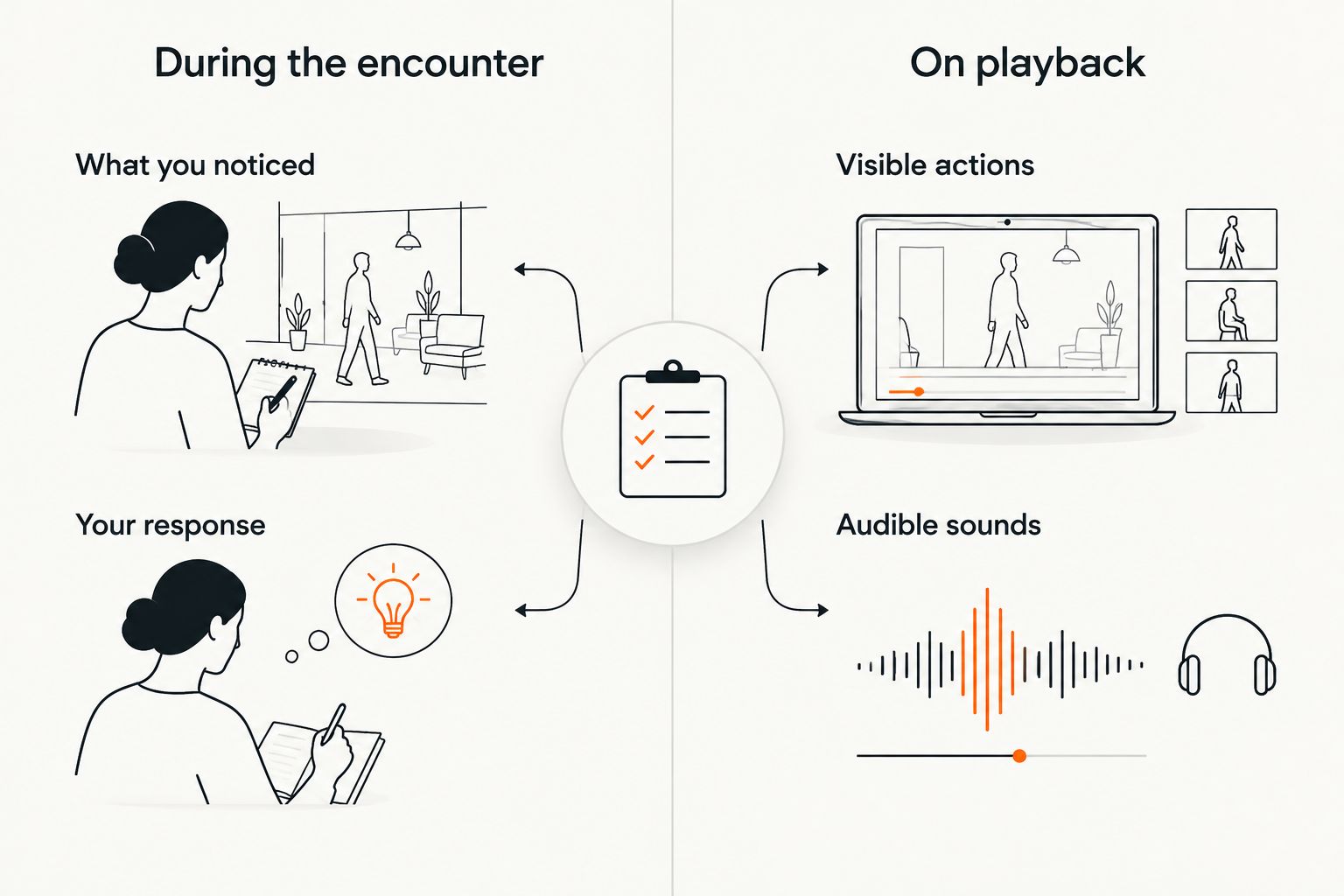
Write your account before repeatedly replaying the clip. Spend 1 minute noting what you remember noticing at the time. Then watch the recording and make a separate note of anything you discovered only during playback.
Those are different experiences. Hearing a sound while standing in a room is not the same as noticing a possible voice after listening through headphones. Neither needs embellishment. Readers just need to know which happened.
Describe visible actions and audible sounds before naming a possible cause. Give the shape, movement, direction, or sound you noticed. If you felt frightened or recognized something personally meaningful, you can include that too—just distinguish your reaction from what another viewer can see.
For help putting that sequence into words, use this guide to what to record after ghost encounters.
- Mark observations you made during the encounter.
- Mark details you noticed only on playback.
- Describe the sound before interpreting words within it.
- Separate your emotional response from the recorded action.
- Leave uncertain details uncertain.
Explain the room and the recording conditions
Describe the surroundings in ordinary language. You do not need a floor plan or specialist equipment. Explain where the camera was, what it faced, who else was nearby, and what was outside the frame.
Include ordinary activity when you know about it. An open window, a passing person, a pet, a television, or someone handling the phone belongs in the account. Listing these details does not settle the cause; it prevents readers from having to guess about the setting.
Do not turn a possible explanation into a finding. If you did not check a doorway or look behind the camera, say you did not check. An honest gap is more useful than a confident statement written later.
- State whether the camera was handheld or resting somewhere.
- Describe nearby lights and visible reflective surfaces.
- Mention people, pets, and known background sounds.
- Explain what lay outside the camera’s view.
- Record checks you actually made afterward.
Label edits and choose a useful version
Use the original footage as your reference and make the shared version easy to follow. A short introduction can point viewers to the relevant moment without telling them what they must see.
If you include a brighter crop, slowed replay, or amplified audio, label it as an edited view. Keep an unaltered excerpt alongside it when you can safely share one. An adjustment helps someone inspect a detail; it does not establish the detail’s cause.
For your 2026 sharing copy, use a filename that distinguishes it from the original. Put the recording date in the description, not just the filename, so readers do not have to infer when the encounter happened.
Do not add music, a reaction sound, or a dramatic cut over the part you want people to assess. Those additions become another layer viewers have to separate from the encounter.
- Identify every crop, speed change, and audio adjustment.
- Label replay sections so they do not look like repeated events.
- Keep explanatory captions away from the relevant detail.
- Preserve the lead-in and aftermath in your chosen excerpt.
- Explain when you cannot share an unedited version.
Check identifying details before you share
Watch the sharing copy once for the encounter and again for personal details. Listen as well as look. A spoken name or address deserves the same attention as a face in a reflection.
Anonymous submission is about how you submit, not a promise that your recording contains no identifying information. Haunting allows anonymous submission without registration; that does not establish technical privacy guarantees or remove details already visible in your file.
Before posting in 2026, check whether you are comfortable sharing the people and places the clip reveals. You do not owe strangers an exact address, someone else’s name, or access to a private room to make your account worth hearing.
- Check windows, mirrors, photographs, and background documents.
- Listen for names, addresses, and private conversations.
- Ask permission before sharing an identifiable person’s encounter.
- Remove unnecessary identifying details from your written account.
- Explain privacy edits that affect the footage viewers see.
Which version should you share?
Choose the version that preserves context without exposing details you want kept private. The shortest clip is not automatically the clearest, and the longest recording is not automatically the most useful.
These options serve different purposes. You can share an excerpt while keeping the original privately, or add a written account when the camera missed the beginning. None of these formats turns an unexplained recording into verified evidence of a ghost.
| Option | Best for | What it contributes | Key limitation |
|---|---|---|---|
| Full recording | Witnesses whose whole recording is relevant and safe to share | Preserves the recorded sequence | Can expose unrelated people or private details |
| Contextual excerpt | Witnesses with a long recording and a clear moment to show | Keeps the event and useful surrounding footage together | Selection still leaves material outside the excerpt |
| Labeled replay | Witnesses explaining a hard-to-see or hard-to-hear detail | Shows exactly which detail prompted the question | Changes how viewers see or hear the recording |
| Written account with video | Witnesses whose experience began before recording | Explains what the camera missed | The missing portion remains the witness’s account, not recorded footage |
For most sharing decisions, start with a contextual excerpt and a plain written account. Use a labeled replay only when it helps explain a specific detail. Keep the full recording as your reference, whether or not you publish it.
Common mistakes witnesses make with ghost videos
Starting at the strange frame
A tight cut can hide whether the camera moved, someone entered, or the scene changed first. Review the lead-in before deciding where to begin. If earlier footage does not exist, state that instead of implying viewers are seeing the entire sequence.
Presenting an interpretation as a description
An account can explain why a shape reminded you of someone without claiming the video establishes that person’s presence. Keep what you saw, what you felt, and what you believe separate. Readers should not have to untangle those layers themselves.
Treating an edited replay as the original
A slowed or brightened section is another view of the same recording. Label it and explain the change. Do not arrange several replays so that one recorded movement appears to be several separate events.
Leaving out an awkward detail
Someone else being in the room, a television playing, or a camera being moved can feel like it weakens the account. Include it anyway. Your job is to describe the encounter honestly, not remove every detail that invites another explanation.
Sharing more identity than the account needs
An exact address does not make a clip clearer. Neither does naming someone who did not agree to appear in the story. Give enough setting to understand the encounter while keeping unnecessary personal information out of the published version.
FAQ
What should I include with a ghost video?
Include the footage before and after the strange moment, a description of the setting, and what you noticed at the time. State who recorded it and label any edits without disclosing identifying details you want to keep private.
How long should a ghost video be?
A ghost video should be long enough to show the relevant setup, the unexplained moment, and what followed. Review the surrounding footage before trimming; there is no required duration that establishes whether an encounter is paranormal.
Should I brighten or slow down my ghost video?
Use a brighter or slower replay only as a clearly labeled additional view. Keep the original as your reference and explain what you changed so viewers can distinguish the recording from your edit.
Can I share ghost videos anonymously without registering?
Haunting accepts anonymous submissions of stories, photos, video, and audio with no registration required. Check the recording itself for faces, voices, addresses, and other identifying details before sharing.
Does a strange video prove I saw a ghost?
A strange video alone does not establish that a ghost caused what you recorded. Describe the visible or audible event and distinguish your interpretation from anything independently verified.
What if I started recording after the encounter?
Say that the recording began after the encounter and describe the earlier part separately. Footage of the aftermath provides context, but it does not show an event that happened before the camera started.
Should I include the recording date when uploading in 2026?
Include the actual recording date when you know it, even if you upload the video in 2026. If you cannot remember the exact date, say so rather than replacing it with the upload date.
One last thing
Keep a note of what changed your mind. If you later recognize a sound, find another camera angle, or remember someone walking past, add that information to your account wherever you can update it.
You do not have to defend your first interpretation forever. Sharing an unexplained encounter means letting people see what happened—including the detail that makes it less mysterious.