Ghost videos with strange audio: how to invite a blind listen
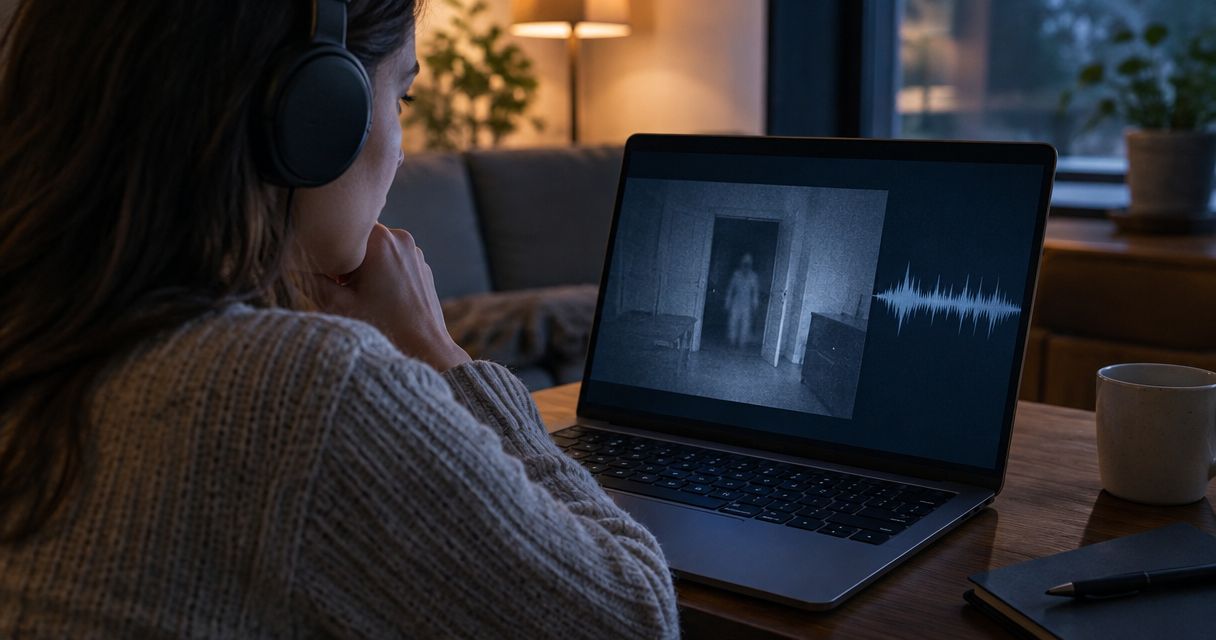
For ghost videos with strange audio, invite a blind listen by sharing the recording without naming the words, voice, or source you think you hear. Ask people to describe it independently, then reveal your interpretation afterward; agreement is feedback, not proof of a ghost.
TL;DR- For ghost videos, ask what listeners hear before telling them what you heard.
- Keep the original recording and label any edited audio separately.
- Collect independent replies before sharing your interpretation or other listeners’ answers.
- Haunting accepts anonymous paranormal stories, photos, video, and audio with no registration required.
How do you invite a blind listen to ghost videos with strange audio?
Send a neutral invitation, keep other answers out of sight, and save your explanation for later. Here, a blind listen means the listener has not been told your interpretation. It does not mean a controlled test or an investigation.
Haunting is for people who want to share paranormal encounters anonymously, without registering. If you share there, describe what happened without making your preferred explanation the only possible answer.
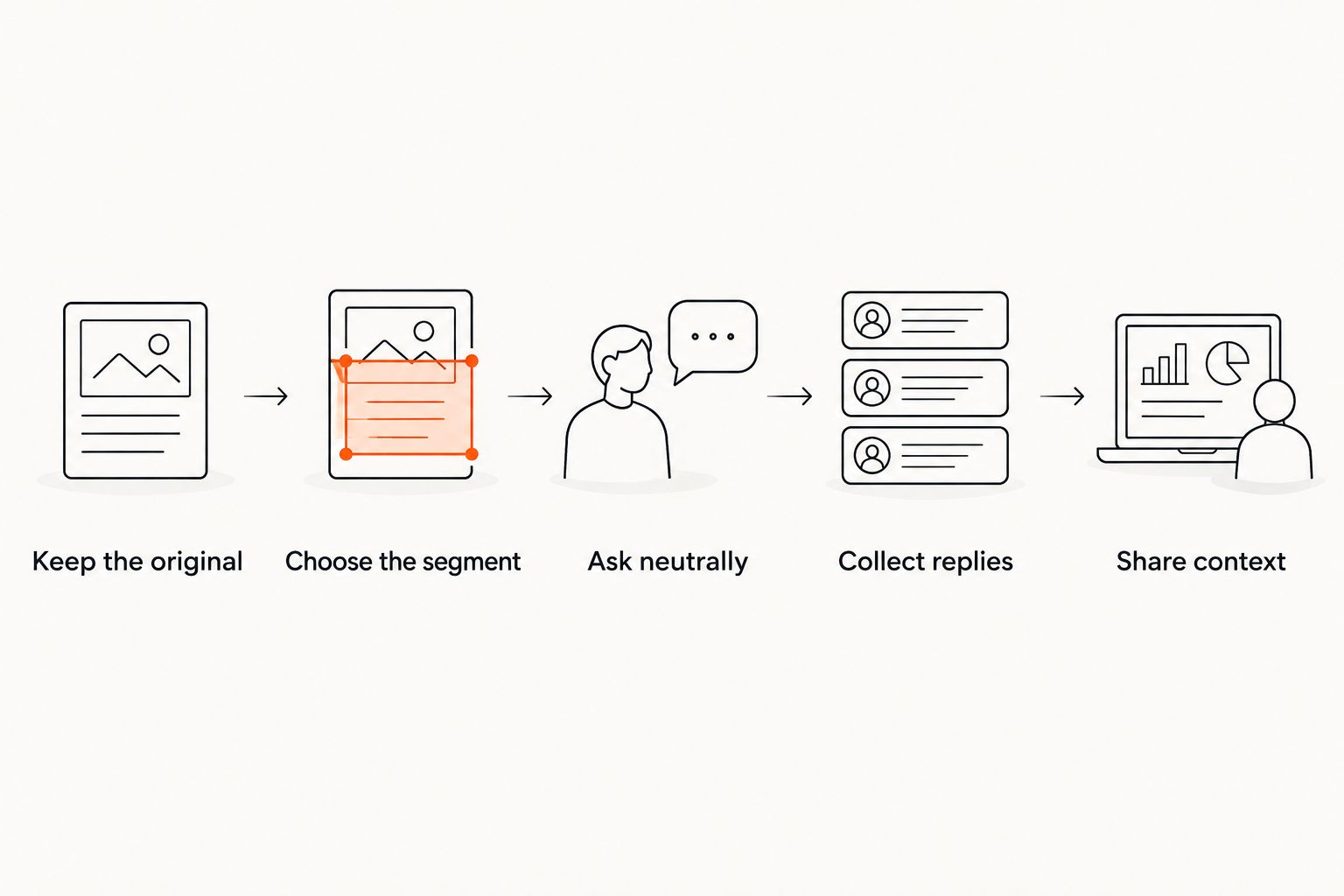
Use this order:
- Keep the original. Save the recording before you trim, amplify, filter, or add captions. Work from a copy.
- Choose the segment. Include the sound and enough surrounding footage to follow what was happening. State where a cut begins or ends.
- Ask neutrally. Ask what the listener notices, including whether they hear speech at all. Do not supply suggested words.
- Collect replies. Request an individual answer before showing other responses. Ask listeners not to read comments first.
- Share context. Explain what you heard, what was happening nearby, and which changes you made to the file.
A private first round is easier to keep blind than a public comment thread. Once someone posts a suggested phrase, later listeners have that phrase available to them. Keep those replies separate from the first impressions.
Why this matters
You do not have to dismiss an experience to describe it carefully. Something startled you. That belongs in the account; the cause can remain unresolved.
For a ghost video shared in 2026, separate what the recording contains from what you remember about being there. A listener has the file, not your position in the room, your view of the doorway, or the feeling that made you turn around.
Ask for a description before asking for agreement. That gives people room to report a voice, a scrape, several possible words, or nothing distinct. An answer that differs from yours still belongs in the discussion.
What should the invitation actually say?
Write a short request in your own words. Give the location of the sound within the clip, ask for an independent description, and explain that you will add context afterward.
You can build the request around these 3 questions:
- What do you hear, if anything?
- Does it sound like speech, another sound, or something you cannot identify?
- Which part of the recording are you describing?
These are suggested questions, not a witness account. Add only details that are true of your recording, and do not borrow someone else's experience to make the post feel complete.
Leave out a suspected name, sentence, or emotional message. A title announcing a dead relative's voice gives away the interpretation before anyone presses play. Save that detail for the follow-up.
If you are posting ghost videos in 2026, put the listening request before your explanation. Readers should not need to scroll past your proposed transcript to reach the supposedly blind part.
Should you share the whole video or an audio excerpt?
Start with the original video when the surroundings matter. An audio-only excerpt serves a narrower purpose: asking what a sound resembles without showing the scene. Neither format establishes where the sound came from.
| Format | Best for | What it preserves | What to watch for |
|---|---|---|---|
| Original video | Reviewing the sound alongside the scene | Visible movement and surrounding events | Titles, captions, and reactions can reveal your interpretation |
| Audio excerpt | Asking about the sound without visual cues | The selected stretch of audio | Listeners cannot inspect events outside the excerpt |
| Edited audio copy | Comparing a clearly disclosed change | A version with your stated adjustment | It is not the untouched recording |
If you share 2 versions, label them original and edited. Say what you changed rather than calling the edited copy clearer or more convincing. Let listeners compare them.
An audio excerpt is not automatically blind. Its filename, accompanying text, or spoken introduction can still suggest an answer. Check those before sending it.
What should you leave in the recording?
Keep enough context for someone to understand what happened around the sound. A tight cut can make the moment easy to find while leaving out something useful immediately before it.
For example, try including 10 seconds before and 10 seconds after the sound, if the recording contains that much. This is a starting point for your excerpt, not a rule about evidence. Keep a longer segment when a conversation, moving object, or visible action needs more room.
Do not remove an ordinary sound just because it competes with the strange one. A nearby voice, footsteps, or a door closing belongs in the account if it was part of the recording.
When preparing a 2026 post, keep the recording date separate from the upload date. If you do not know when the recording was made, say so. Do not turn an estimate into an exact timestamp.
Why do blind-listen responses vary?
Compare the listening conditions before treating every reply as an answer to the same question. Ask about these differences:
- Different files. Did everyone receive the original, or did some hear an edited excerpt?
- Different starting points. Did someone watch the whole scene while another heard only the selected sound?
- Different equipment. Did listeners use headphones, a phone speaker, or another setup?
- Different playback. Did anyone change speed, volume, or audio settings?
- Different background knowledge. Had anyone already seen your proposed words or read the comments?
Record these as context, not excuses for rejecting an answer. A response does not become invalid because it fails to match yours.
If you want a repeat listen, give everyone the same file and the same request. Keep that round separate from their first replies. Once you disclose your interpretation, you cannot describe the next response as an uninformed first impression.
How do you collect replies without steering them?
Ask each person to answer before discussing the clip with anyone else. A private message works for that request; a public thread needs a clear warning not to read earlier replies.
Keep a simple note of what each listener actually said. Separate a direct transcription from your summary, and do not publish someone's private message or identifying details without permission.
Useful reply categories include:
- Speech, with particular words identified.
- Speech-like sound, with no clear words.
- A sound that does not resemble speech.
- Nothing distinct enough to describe.
These categories organize replies; they are not scores. Leave room for someone to describe something that does not fit them.
If you publish a summary in 2026, include disagreement as plainly as agreement. Do not turn several different answers into a single shared phrase. If you give a count, count the actual replies rather than estimating how many people agreed.
What if someone hears the same words you heard?
Matching words mean the listener reported the same interpretation. They do not identify the speaker or establish a paranormal source. Keep that distinction in your follow-up.
Ask whether the listener saw your caption, comments, filename, or suggested phrase beforehand. If they did, retain the response but do not label it blind.
A matching transcript is not an identified source. You can report that someone independently heard the same words while leaving the cause open. There is no need to stretch the account beyond that.
What if nobody hears anything unusual?
No distinct sound is a valid response. It tells you what that listener could describe from that file under those conditions; it does not rewrite your memory of being there.
Check that you sent the intended segment and that the listener found the right moment. After that, leave room for disagreement rather than repeatedly supplying new phrases until one gets a yes.
You can still share the encounter as a personal account. Explain the difference between what you experienced and what the recording lets another person inspect.
When should you reveal what happened around the sound?
Reveal your fuller account after collecting the first responses. Explain where you were, who else was present, what you noticed, and what remains uncertain. Do not fill a missing detail just because readers ask for it.
If someone needs immediate context to understand the file, provide it and acknowledge that the listen is no longer blind to that detail. The goal is an honest account, not a perfect label.
For help separating memory from interpretation, use the guide to writing paranormal stories without filling in the gaps. A clear account can include an uncertain sound without resolving it.
Share the encounter without exposing yourself
Haunting accepts paranormal stories, photos, video, and audio through anonymous submission, with no registration required. You can invite other people to listen without giving them your full name or an exact address.
Before sharing ghost videos in 2026, check the frame and the audio for details you do not want public. Look for an address, a visible document, someone's face, or a name spoken in the background. Anonymous submission does not remove details contained in your file.
If you crop, mute, or cut something for privacy, disclose that change. Keep the untouched copy privately rather than describing the public version as unedited.
Share only the identifying detail your account needs. You can describe a room or setting without telling strangers how to find it. Respect other people in the recording, too.
FAQ
How do I ask for a blind listen to ghost videos?
Share the recording without your proposed words or explanation, and ask listeners what they hear. Collect independent replies before revealing your interpretation.
Should I tell people which words I hear?
Save your proposed words until after their first response. A caption, filename, or visible comment can also reveal the answer you expect.
Is an audio-only clip better than the full video?
An audio-only clip suits a question about the sound without visual cues; the full video lets listeners inspect the scene. Keep the original and explain any excerpt or edit.
Does everyone hearing the same phrase prove a ghost is speaking?
Matching phrases do not prove a ghost is speaking. They show agreement about what listeners think the sound resembles, not who or what produced it.
Can I share ghost videos anonymously on Haunting?
Haunting accepts anonymous submissions of paranormal stories, photos, video, and audio with no registration required. Check your recording for identifying details before sharing it.
What if I hear a voice but other people do not?
Report both your interpretation and the differing responses. Keep what you remember experiencing separate from what other people can describe in the recording.
One last thing
Write down your own interpretation before asking anyone else, then keep that note out of the invitation. After the first replies, compare them with what you originally wrote—not a version revised during the discussion.
You do not need a unanimous answer to share something unexplained. Keep the recording, describe what happened, and leave the uncertain part uncertain.