Paranormal evidence in audio: keeping recordings unedited
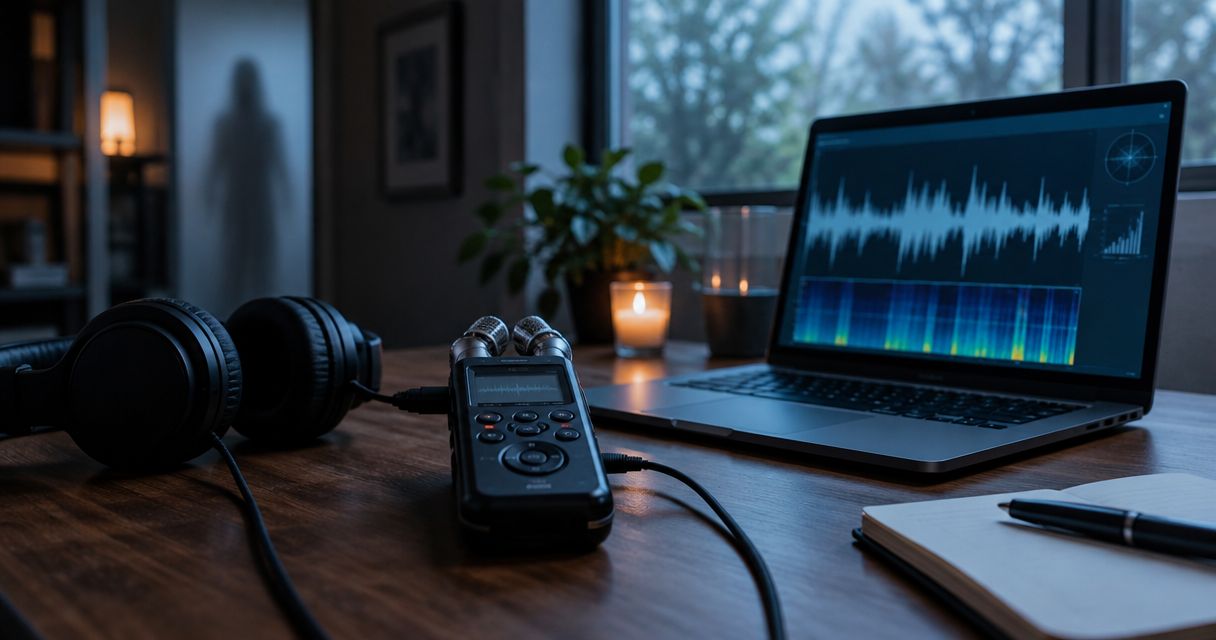
For witnesses, audio-based paranormal evidence is a recording of an unexplained sound shared so others can hear what happened. Keeping the original unedited lets you share the sound without hiding its surroundings or presenting your interpretation as a proven explanation.
TL;DR- Keep paranormal evidence in its original audio file; make separate copies for excerpts or adjustments.
- Haunting is best for witnesses who want to share paranormal evidence anonymously without registering.
- Describe ghost encounters separately from what a recording actually captures.
- Share the surrounding audio before suggesting words you think you hear.
Why keeping the recording matters
An odd sound and an explanation for that sound are different things. Your recording can capture a knock, a murmur, or something you cannot identify. That does not establish who or what caused it.
An unedited recording preserves context, not proof of a ghost. A voice elsewhere in the room, your own movement, or a sound immediately afterward belongs in the account even when it makes the mystery less tidy.
Haunting accepts stories, photos, video, and audio through anonymous submission with no registration required. You can describe an encounter without giving readers your name or exact location.
In 2026, the useful question remains simple: can another listener tell what you recorded, what you changed, and what you only suspect?
Why unedited audio matters for witnesses
If you experienced the moment yourself, you have context that a listener does not. You know where you were standing, what caught your attention, and whether you noticed the sound live or only during playback. None of that automatically travels with an audio file.
Sharing a recording creates another problem: your description can get ahead of the sound. Calling a faint noise a warning or a relative's voice tells readers how to interpret it before they listen.
You do not need to abandon what the encounter meant to you. Just separate the experience from the claim. Describe the noise plainly, explain what you thought it resembled, and leave room for someone else to hear it differently.
How to keep and share an unedited recording
Keep the original file
Start with the recording already on your phone or recorder. Keep that file as it is, rather than opening it in an editor and saving over it. You do not need specialist equipment to preserve what you captured.
Keep 2 copies in separate places if you can. One is your untouched original; the other protects against losing access to the first. A copy is not a reason to delete the recording from its original location before you have checked that the copy opens.
Do not assume a file sent through a messaging app is identical to the recording you started with. Keep the source file separately from anything you send, download, or post.
- Leave the original audio untouched.
- Make a separate working copy before editing.
- Check that your backup opens and plays.
- Give copies names that distinguish them from the original.
- Keep a short note explaining which file came first.
Write down the surroundings
Use a plain note on your phone or a sheet of paper. Record what you remember before trying to write a polished story. Your first notes can be incomplete; mark uncertainty instead of repairing it with a guess.
Include whether you heard the sound at the time. A noise noticed during the encounter and a noise discovered later on playback are different accounts. Neither needs embellishment.
Write down nearby people, ordinary sound sources, and anything you were doing. If you cannot remember whether a television was on, say that. For a recording made in 2026, include the full date if you know it, rather than leaving the year for readers to infer.
- Note the date, approximate time, and general setting.
- State whether you heard the sound live or during playback.
- List people present without publishing their identities.
- Mention music, television, appliances, traffic, or pets you noticed.
- Separate remembered details from details you cannot confirm.
Identify the sound without trimming away context
You can help readers find a sound without editing the file. Write its playback position in your description and explain what happens just before it. That is the simplest starting point.
If you make an excerpt, keep it separate. As a practical starting point, include 30 seconds before and after the sound when that audio exists and is appropriate to share. This is an editing recommendation, not a test for whether an encounter is paranormal.
A short clip is easier to reach, but it removes information. A longer recording gives listeners more surroundings, but it also takes more attention. Offer the original when appropriate, and explain exactly how an excerpt differs.
- Use a playback position to locate the sound.
- Keep nearby conversation and movement in context.
- Label a shortened version as an excerpt.
- State whether anything was removed from the excerpt.
- Avoid repeated loops as the only version readers hear.
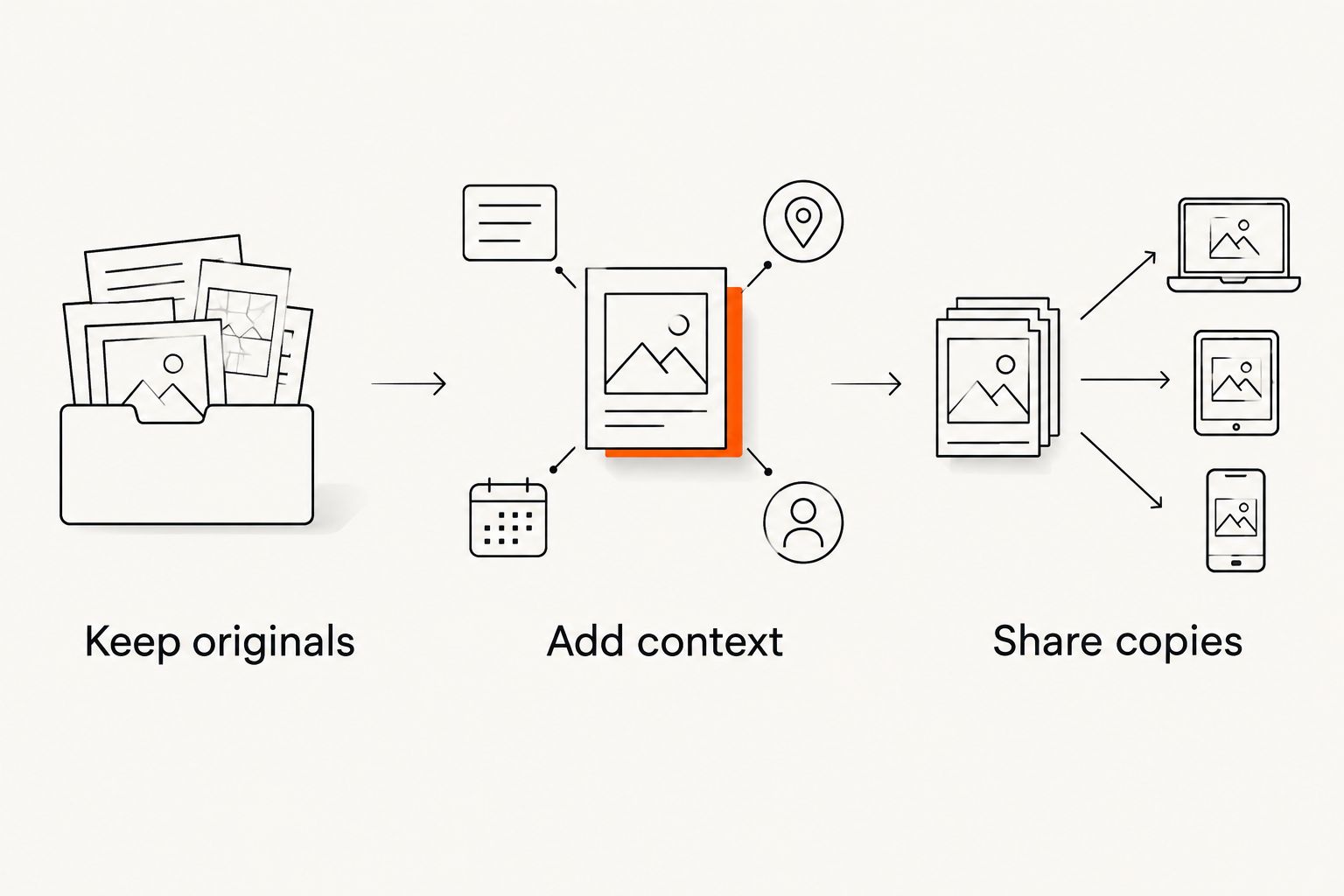
A simple sharing order keeps these jobs separate: keep originals, add context, then share copies. Preparing something for readers should not replace the file you started with.
Label every adjustment
Listen to the untouched recording first. If you later raise the volume, reduce background noise, or change playback speed, do that on another copy and name the change.
An adjusted version can help someone examine a quiet passage. It also presents a changed version of the sound. Do not call an adjusted file unedited, even when your only intention was to make listening easier.
For your 2026 recording notes, keep a plain list of changes beside the file. You do not need a technical explanation. A statement that you increased the volume tells readers more than calling a file clarified or cleaned up without explanation.
- Keep the unchanged version available to compare when appropriate.
- Name volume changes, noise reduction, and speed changes.
- Disclose cuts, loops, and joined sections.
- Never overwrite the original with an adjusted version.
- Describe the result as an adjusted copy, not stronger proof.
Write the account separately from the interpretation
Start with what happened around the recording. Describe where you were in general terms, what you were doing, and what drew your attention. Then describe what the file contains.
Keep your interpretation in a separate sentence. If the sound reminds you of a name or a phrase, present that as what you hear—not a transcript everyone must accept. You can also invite listeners to describe the sound before reading your interpretation.
The guide to writing paranormal stories without filling in the gaps follows the same principle: leave uncertain details uncertain. A clear account does not need a complete explanation.
- Describe the event before offering an explanation.
- Distinguish audible sounds from suggested words.
- Say when another person supplied an interpretation.
- Avoid identifying a speaker you cannot establish.
- End with a specific question about the sound or its possible source.
Check personal details before sharing
Listen through the whole file, not just the strange moment. Background speech can contain names, addresses, or details someone did not intend to publish. Also check your written description and the filename you plan to share.
You do not have to publish sensitive material to preserve an honest account. Keep the original privately, make a separate sharing copy, and disclose any cuts. If removing personal information destroys the necessary context, sharing only a written account is a valid choice.
Haunting offers anonymous submission without registration for stories, photos, video, and audio. That gives you a way to share an encounter without adding your name; it does not remove identifying details already present in your recording.
- Listen for names, addresses, workplaces, and private conversations.
- Remove identifying details from your accompanying account.
- Check with other people before sharing their private speech.
- Label any privacy-related cuts in the shared copy.
- Share only what you are comfortable making public.
Choose the right way to present the audio
There is no single format that does every job. Preserve the source recording, then decide what readers need to understand the encounter. Use this comparison for your 2026 sharing plan rather than treating the most dramatic version as the best one.
| Option | Best for | Useful because | Key limitation |
|---|---|---|---|
| Original recording | Preserving the captured sequence | Keeps the surrounding audio together | Can include private speech or long stretches without the sound |
| Labeled excerpt | Helping readers find a particular moment | Makes the relevant passage easier to reach | Removes surrounding material and must be identified as shortened |
| Adjusted copy | Comparing a quiet passage with the original | Lets listeners examine a disclosed change | Changes the listening experience and is not an untouched source |
| Written listening notes | Explaining context and playback positions | Helps readers follow the encounter | Cannot replace hearing the recording and can suggest an interpretation |
Use the original as your reference, not the version that sounds most convincing. An excerpt or adjustment can accompany it, but neither should quietly take its place.
A written account also has limits. It can explain why a noise mattered to you, but it cannot establish what made the noise. Keep that distinction visible wherever the recording appears.
Common mistakes witnesses make with audio evidence
Publishing only the loudest version
Raising the volume is a change, even when nothing is cut. Sharing only that version leaves readers unable to compare it with the original listening experience.
Keep the source file and label the louder copy. Do not use the adjustment itself as an argument that the sound has a paranormal cause.
Putting a suggested phrase before the recording
A headline that declares what a faint voice says gives readers an answer before they listen. It also blurs the difference between a sound and your reading of it.
Describe the sound first. Put any suggested words afterward, clearly marked as your interpretation rather than an agreed transcript.
Treating an unfamiliar sound as an identified speaker
Recognizing a resemblance is not the same as establishing identity. An emotional connection to a recording deserves respectful wording, not a claim the file cannot settle.
Explain who the sound reminded you of and why. Leave the source unresolved if you cannot establish it.
Hiding cuts made for privacy
Protecting someone's personal information is a reasonable reason to withhold part of a recording. The mistake is presenting the resulting excerpt as the complete, untouched file.
State that you removed private material and kept the original separately. You do not need to reveal the private information to explain that a cut exists.
FAQ
Does an unedited recording prove paranormal activity?
No. An unedited recording preserves the sound and its surroundings, but it does not establish a paranormal cause. Describe what you captured separately from what you think caused it.
Can I turn up the volume on paranormal evidence?
Yes, on a separate copy that you label as adjusted. Keep the original unchanged and explain that you increased the volume rather than presenting the louder file as untouched.
Should I remove background noise before sharing a recording?
Do not remove background noise from your only copy. If you share a noise-reduced version, label the change and retain the original for comparison; surrounding sounds can matter to the account.
How much audio should I include around a strange sound?
Include enough surrounding audio to show what happened before and after the sound. A practical starting point is 30 seconds on either side when available and appropriate to share, not a requirement or proof standard.
Can I share paranormal audio anonymously on Haunting?
Yes. Haunting accepts anonymous submissions of stories, photos, video, and audio with no registration required. Review the recording and description for identifying details before sharing.
What should I write with a paranormal recording in 2026?
Include the recording date if known, the general setting, nearby sound sources, and whether you noticed the sound live or during playback. Disclose any edits and distinguish what is audible from your interpretation.
Should I tell listeners what words I hear?
You can share your interpretation, but keep it separate from the initial description of the sound. Let listeners know that suggested words are your reading of the recording, not an established transcript.
One last thing
Before you post, write 1 sentence describing only what a listener can hear, without naming a ghost, a message, or a speaker. Then add your personal interpretation separately.
That small separation lets you tell the encounter honestly without asking the recording to prove more than it contains. Share what happened. Keep the uncertainty.