Paranormal evidence: what a photo can and cannot establish
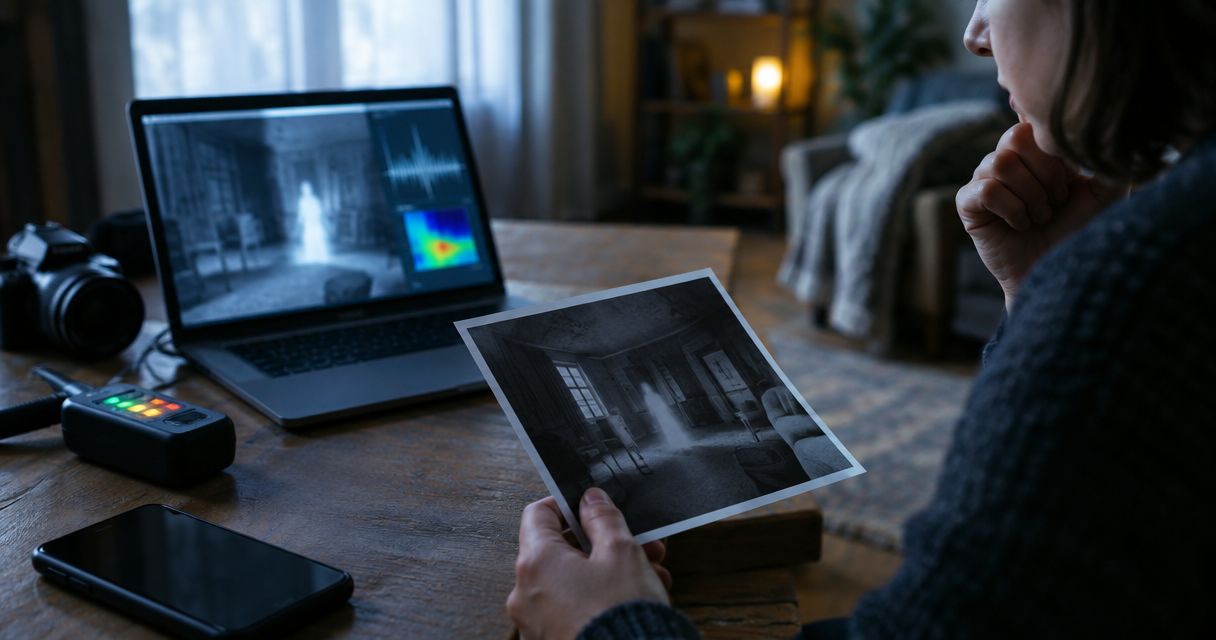
For witnesses, paranormal evidence is material documenting an unexplained experience, not automatic proof of a ghost. This 2026 guide explains what your photo can establish, what it leaves unanswered, and how to share it without turning uncertainty into a claim you cannot support.
TL;DR- Paranormal evidence needs context: a photo records an image, not a confirmed paranormal cause.
- Keep the original photo, describe what you witnessed, and separate observations from explanations.
- Haunting is best for witnesses who want to share unexplained encounters anonymously without registering.
- Check reflections, motion blur, lighting, and nearby objects before calling an image a ghost sighting.
You can share stories, photos, video, and audio on Haunting anonymously, with no registration required. You do not need to settle what happened before describing it honestly.
Why photo context matters in 2026
An unexplained photo leaves you with two different questions: what appears in the image, and what caused it. Those are not the same question. A bright patch establishes that the image contains a bright patch; calling it a spirit adds an explanation.
Your experience still matters. You might have heard something before taking the photo, noticed a shape only afterward, or watched something the camera did not capture. Tell readers which happened rather than asking the image to tell the whole story.
A photo can support an account without proving its paranormal explanation. That distinction lets you take your encounter seriously while leaving room for other answers.
What a photo can and cannot establish
A photograph gives readers something specific to examine: a shape, a position within the frame, a visible room, or a lighting pattern. Depending on what is visible, it can also help explain where you stood and what surrounded you.
The image alone does not establish the identity, intentions, or nature of an apparent figure. It also does not tell readers what happened outside the frame or whether someone altered the file before sharing it.
Even an untouched original needs context. An ordinary camera effect can appear in an original photo; editing is not the only reason an image looks strange.
Use a narrow description first. Say where the shape appears and what you noticed about it. Keep your interpretation separate, whether you think it resembles a person, an animal, or something you cannot name.
How to share paranormal evidence in 2026
Keep the original file
Start with the photo already on your device. Save the original before cropping, brightening, drawing circles, or sending it through another app. Keep 2 copies if practical: an untouched file and a separate copy for anything you change.
A screenshot is useful for showing what appeared on your screen, but it is not the same file as the original photograph. If a screenshot is all you have, say so. Do not describe it as the camera original.
Preserve first; edit a copy afterward. This gives you a reference when someone asks whether a feature appeared before an adjustment.
- Keep the full frame, including apparently unimportant edges.
- Save an untouched copy somewhere you can find it again.
- Label any cropped or adjusted version clearly.
- Say when the original is no longer available.
Write down what happened before interpreting it
Use a note on your phone or a sheet of paper. Begin with what you saw, heard, or felt, then record when you took the photo. Make clear whether you noticed the unusual detail during the encounter or only while reviewing the image.
If you have only 30 seconds to make a note, record your location in general terms, what caught your attention, and what happened next. Add detail later without replacing the first note. Mark anything you reconstruct from memory.
For help organizing the surrounding account, use this guide to what to record after ghost encounters.
- Separate observations from guesses about their cause.
- Record whether you were looking through glass.
- Note nearby lights, people, pets, and moving objects.
- Distinguish your recollection from someone else's account.
- Leave uncertain details uncertain.
Check the scene for ordinary explanations
Look at the full image before zooming into the strange part. Check windows, mirrors, reflective surfaces, nearby lamps, and anything close to the lens. Reflections, blur, and out-of-focus objects are ordinary photographic possibilities, not a verdict on your particular photo.
If returning to the location is safe and permitted, compare the view from the same position. Keep the comparison separate from the original encounter. A later photograph shows the later scene; it does not recreate every condition of the first image.
You can then share the account on Haunting alongside the photo, video, or audio you have. Sharing invites discussion; it does not turn an unexplained feature into verified paranormal evidence.
- Check whether the shape lines up with a reflection.
- Look for movement elsewhere in the frame.
- Inspect nearby objects that could overlap in the image.
- Compare adjacent photos if you took any.
- Report checks that produced no clear answer, too.
Separate the image from the interpretation
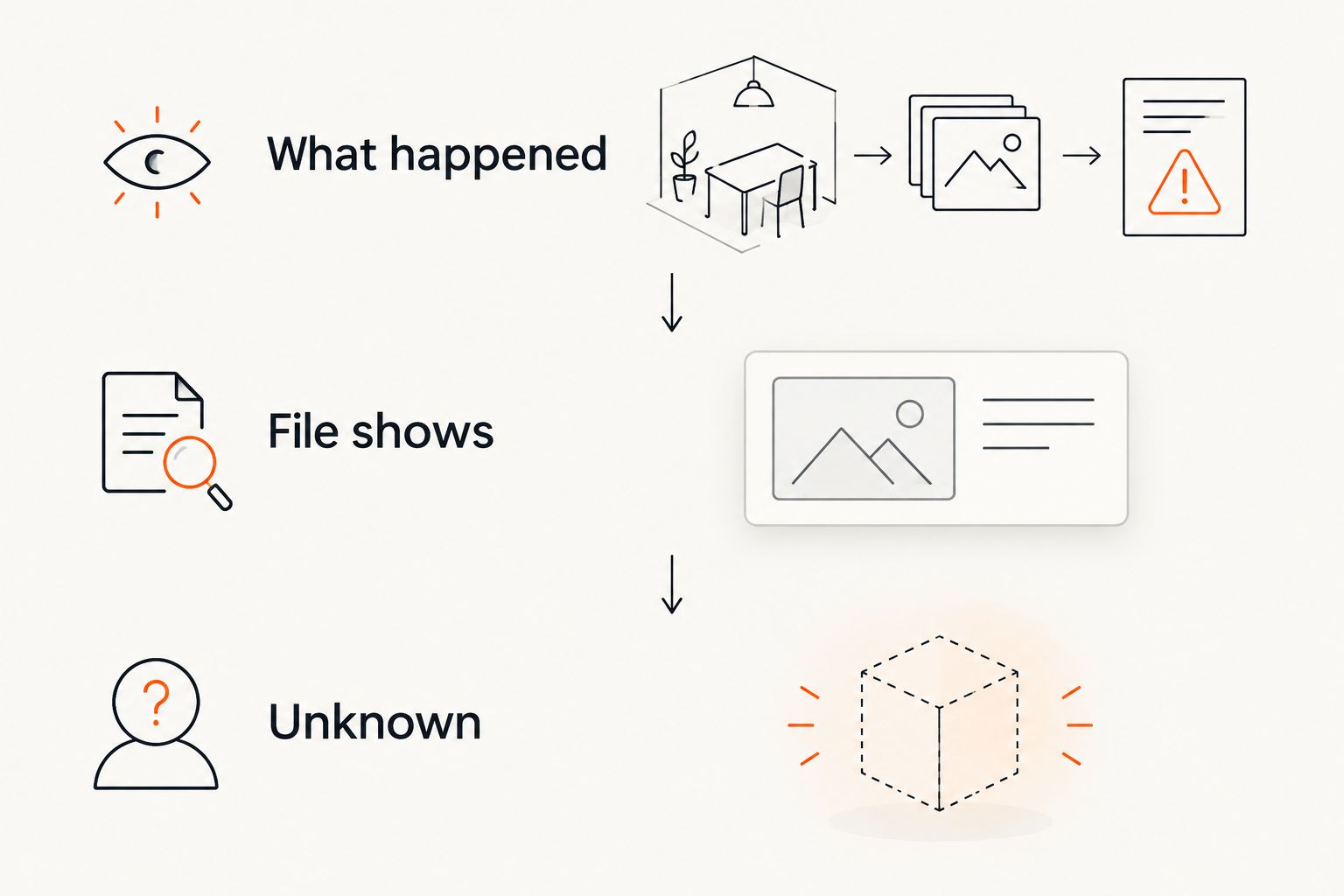
Build your account around three parts: what happened, what the file shows, and what remains unknown. This keeps the photograph and your experience connected without treating them as interchangeable.
Draft 3 sentences before writing a longer post. Use the first for the encounter, the second for the visible detail, and the third for your uncertainty. These are writing prompts, not a requirement to reduce your experience to a formula.
A resemblance is still worth describing. The important boundary is between saying a shape looks like someone and saying the photo establishes that person's presence.
- What happened: describe your direct experience.
- What the file shows: identify the visible feature.
- What remains unknown: state what you cannot explain.
- Remove claims about motives or identity that the image cannot establish.
Share enough context without identifying yourself
Write your account in a private note first. Remove names, exact addresses, and personal details that do not help readers understand the encounter. A general description of a room or outdoor setting can explain the scene without naming your home.
Haunting accepts anonymous submissions with no registration required. That describes how you can submit; it is not a promise about tracking, data retention, or every technical aspect of privacy.
Check the image itself as well as the text. An envelope, house number, reflection, or visible screen can reveal something you did not intend to share. Protect other people's identifying details, too.
- Use a general location when an exact address adds nothing.
- Check faces, signs, documents, and reflections.
- Review location information attached to the file before posting.
- Disclose privacy edits without claiming the public copy is untouched.
Ask a question the image can help answer
Give readers a specific point to examine. Ask about the visible shape, a possible reflection, or an object you cannot identify. A focused question gives people something to respond to beyond agreeing or disagreeing with a ghost claim.
If a reply offers an explanation, compare it with the original file and your notes. Ask what visible detail supports it. A confident comment is not independent verification, whether it supports a paranormal explanation or dismisses one.
You can keep your own interpretation while correcting a detail. Updating the account does not erase the experience; it makes clear what you learned afterward.
- Point readers to a specific part of the frame.
- State which explanations you have already checked.
- Ask respondents to explain what they see.
- Add corrections without rewriting the original sequence of events.
Choose a format that fits your encounter
Choose the material that matches what you experienced, not the format that looks most convincing. A written account is enough to describe an encounter. A photograph, recording, or clip adds something different, but none establishes a paranormal cause by itself.
| Option | Best for | What it contributes | Key limitation |
|---|---|---|---|
| Written account | Experiences without a recording | Your sequence of events and observations | Readers cannot inspect an image or sound |
| Photograph | A visible detail in a still image | A frame readers can examine | Leaves out movement and surrounding events |
| Video | Events where movement or sequence matters | A recorded sequence within the camera's view | Leaves events outside the frame unexplained |
| Audio | Sounds you want others to hear | A recording listeners can review | Does not identify a source by itself |
| Combined account | Encounters with several kinds of material | Context alongside the available files | More material does not automatically settle the cause |
Keep the limits of your chosen format in the post. If the photo does not show what you saw, explain that directly. Do not ask readers to treat the missing detail as visible evidence.
Common mistakes witnesses make
Calling a resemblance an identification
A shape that resembles a face does not establish whose face it is. Describe the resemblance, then explain any personal association separately. Readers should be able to tell which part comes from the image and which comes from your experience.
Posting only the edited close-up
A crop can help readers locate a detail, but it removes surrounding context. Share the wider frame when you can, alongside a clearly labeled crop. If privacy requires removing part of the scene, explain that change.
Treating agreement as confirmation
Other people seeing the same shape does not establish its cause. Ask whether a reply explains the visible details rather than counting how many people agree. Apply that standard to dismissive replies as well.
Adding details to make the account feel complete
Do not fill an uncertain time, missing movement, or unheard word with your best guess. State the gap. A short account with clear limits gives readers a more accurate picture than a polished story that mixes memory with invention.
FAQ
Does a photo count as paranormal evidence in 2026?
A photo can document an unexplained detail, but it does not establish a paranormal cause by itself. Share the original when possible and explain what happened before and after you took it.
Can a photograph prove I saw a ghost?
A photograph alone does not establish that you saw a ghost. It can support your account of a visible detail while leaving its cause unresolved.
Should I brighten a dark paranormal photo?
Keep the original before brightening a separate copy. Label the adjusted version and explain the change so readers do not mistake it for the untouched file.
What if I noticed the figure only after taking the picture?
Say that you noticed the figure while reviewing the picture, not during the encounter. Readers need to distinguish what you witnessed directly from what you later found in the image.
Can I share paranormal evidence without giving my name?
Haunting accepts anonymous stories, photos, video, and audio with no registration required. Review your account and files for identifying details before submitting; anonymous submission is not a blanket technical privacy guarantee.
Is video better than a photo for an unexplained encounter?
Video is better suited to showing recorded movement or sequence, while a photo lets readers examine a still frame. Neither format identifies a paranormal cause on its own.
What should I write if I cannot explain my photo?
Describe what the photo shows and say what you cannot explain. Add the surrounding circumstances, any changes you made to the image, and the ordinary possibilities you checked.
One last thing
Before you post in 2026, read your caption without looking at the photo. Does it claim more than you actually witnessed?
If it does, narrow the wording. You do not have to choose between declaring proof and saying nothing. An honest account can end with a question.
Keep the original. Tell the part you know. Leave room for the part you do not.