Paranormal stories with dreams: separating sleep from waking events
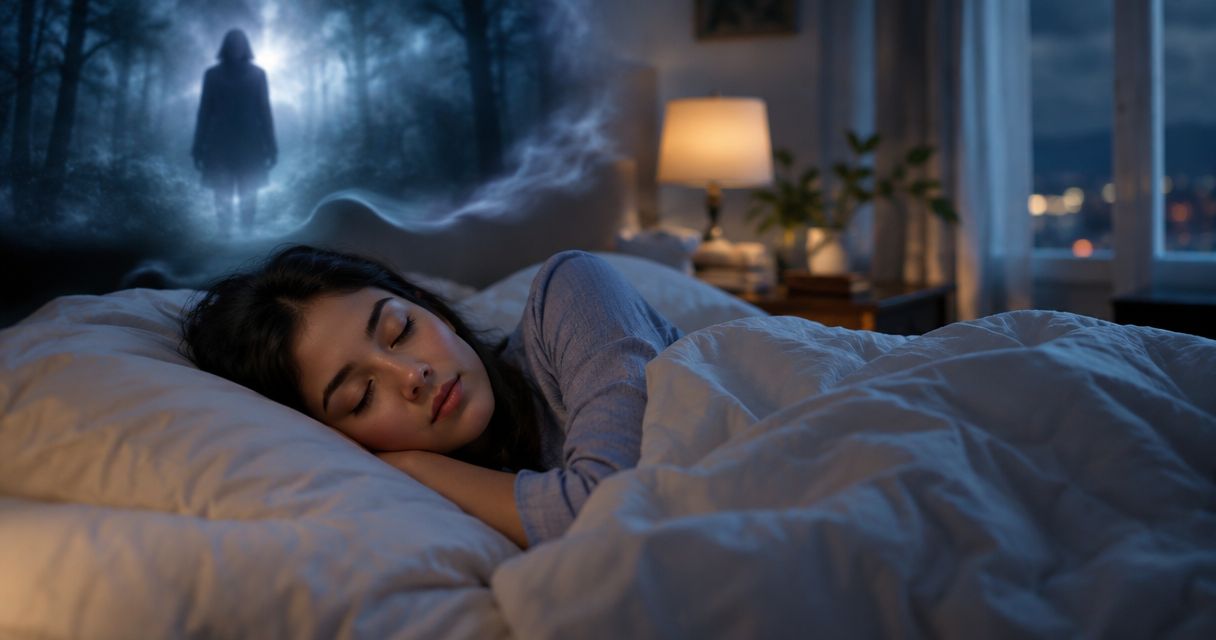
For dream witnesses, paranormal stories are personal accounts of unexplained experiences that separate what happened during sleep from what happened while awake, so readers can follow what you actually remember. You can share a vivid dream, a bedside presence, or an uncertain moment without claiming you know what caused it.
TL;DR- Haunting is best for people who want to share paranormal stories anonymously without registering.
- Separate dreams, waking observations, and later interpretations instead of combining them into one sequence.
- Keep original photos, video, and audio; describe what each recording captures without calling it proof.
- You can tell an unfinished account. An unexplained encounter does not need a paranormal conclusion.
Why separating sleep from waking matters
A dream about someone who died can feel deeply personal. So can hearing a sound as you wake up. Neither experience needs a dramatic explanation to deserve a careful account.
The useful distinction is between what you experienced and what you think it means. Describe both, but keep them separate. Readers should not have to guess whether you saw something in a dream, opened your eyes afterward, or learned a detail later.
Haunting accepts paranormal stories, photos, video, and audio through anonymous submission with no registration required. You do not need to disclose your name or a precise location to explain an encounter.
For a 2026 submission about an older experience, distinguish the encounter date from the posting date. If you cannot remember when it happened, say that instead of choosing a date that sounds right.
Why careful paranormal stories matter for dream witnesses
Sleep-related accounts often contain a boundary the witness cannot place exactly: the moment a dream ended and waking awareness began. Your account becomes easier to understand when that uncertainty stays visible.
One supplied example shows why wording matters. In the Haunting submission titled I saw my grandpa's ghost, the unnamed submitter reports that their grandfather died on September 25, 2024. They describe an experience the night before, while lying in bed and trying to sleep.
That is the submitter's account, not independently verified evidence of a visitation. The supplied excerpt does not establish whether the person was asleep, fully awake, or somewhere between those states. Calling it a confirmed dream would add something the excerpt does not say; calling it a confirmed ghost would do the same.
Respecting a witness means preserving that distinction. You can take an experience seriously without deciding its cause.
How to write your account without filling in the gaps
Start with an unedited memory note
Open a notebook or a plain notes document before reading other people's interpretations. Record what you remember in your own words. You do not need an app, a recording device, or a finished theory.
Keep the first version even if you later rewrite it. That gives you something to compare against when a detail starts feeling more certain after repeated retelling. Do not silently replace an uncertain memory with a cleaner version.
Try a 5-minute writing session as a starting point, not a test of how much you remember. Stop when you run out of details. A short account with clear limits is more useful than a long account padded with atmosphere.
If you are reconstructing an older event in 2026, label the note as a recollection written now. Do not present it as a record made that night.
- Write down the first detail you remember.
- Note whether your eyes were open, closed, or you cannot recall.
- Keep uncertain words such as about or I think where they belong.
- Mark details you learned afterward rather than remembered directly.
Split the account into sleep and waking sections
Use 3 headings: Before sleep, During sleep, and After waking. Put each detail where you can actually place it. Leave a heading empty if you have nothing to put there.
This is a writing aid, not a way to diagnose a sleep experience. Its job is to stop a dream image and a later observation from turning into a single uninterrupted scene.
A sound deserves its own place in the sequence. Did you hear it inside the dream, while opening your eyes, or after getting out of bed? If you cannot tell, write that beside the sound instead of forcing it into a section.
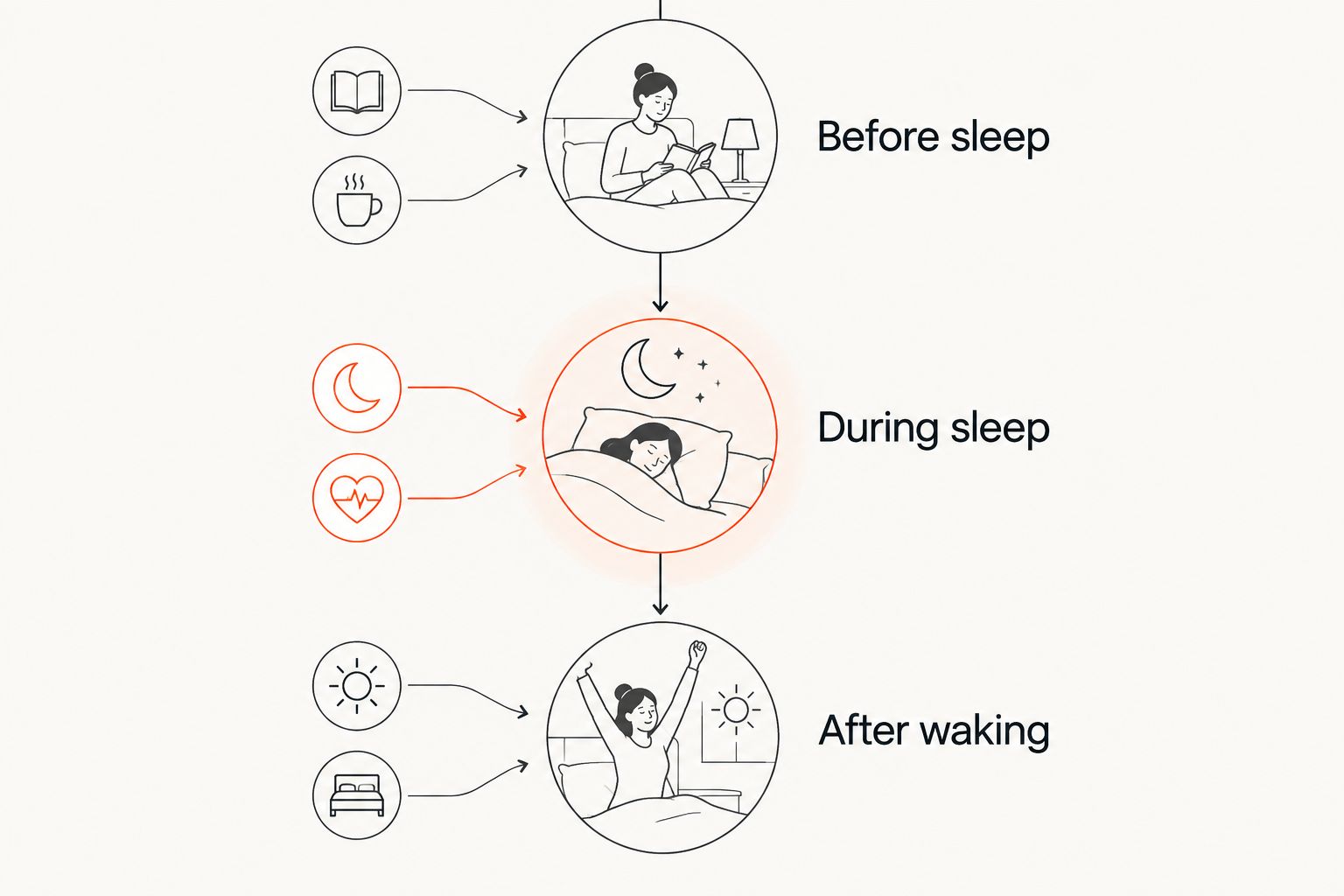
You can move these notes into a Haunting submission when you are ready. The platform accepts a written account on its own; photos, video, and audio are also accepted. A recording is not a prerequisite for telling what happened.
- Before sleep: record your setting and the last thing you clearly remember doing.
- During sleep: describe the dream only as far as you remember it.
- After waking: record what you noticed once you believed you were awake.
- Mark any transition you cannot place with confidence.
Separate observations from explanations
Make 2 columns in your draft: What I noticed and What I think. Put sounds, movements, remembered words, and visible details in the first column. Put possible meanings in the second.
This does not make the emotional part less important. A dream can remind you of someone, bring back grief, or feel like a goodbye. Say that it felt that way rather than presenting the feeling as independent confirmation.
Avoid borrowing a label just because it appears in another story. Words such as visitation, apparition, or sleep paralysis carry interpretations your description alone does not establish. Plain wording gives readers the experience before the explanation.
For a 2026 account, the strongest sentence is still the one that says exactly what you remember. A current date does not make an interpretation more certain.
- Describe a shape before giving it an identity.
- Separate remembered speech from the meaning you took from it.
- State what made you believe you were awake.
- Leave the cause open when the account does not establish it.
Preserve recordings without asking them to prove everything
Keep the original file if you have a photo, video, or audio clip. Work on a copy when cropping, brightening, trimming, or changing playback. Explain any changes when you share the edited version.
A recording can document what the device captured. It does not automatically establish the source of a sound or the identity of a shape. Keep your description tied to what someone can actually see or hear.
Timing matters here too. A photo taken after waking records that later moment, not the dream itself. An audio clip recorded overnight also needs context: where the device was, who was nearby if known, and when you noticed the sound.
Before sharing, check for personal information in the file and its visible or audible contents. Anonymous posting does not remove an address spoken in a clip or a name visible in a photograph.
- Keep the original recording separate from edited copies.
- State whether the recording happened before, during, or after the experience.
- Describe edits without presenting the edited version as untouched.
- Check for faces, addresses, names, and private conversations.
Ask other witnesses for their own account
If another person was present, ask what they remember before explaining your interpretation. Let them choose their own words. A shared conversation afterward is different from separate accounts written beforehand.
Do not turn partial agreement into a stronger claim. Someone who heard a sound has not necessarily confirmed the figure you remember seeing. Someone who woke up nearby has not necessarily witnessed your dream.
Keep each person's contribution distinct. Ask permission before sharing their words, recordings, or identifying details. If they do not want to participate, describe only your own experience and leave their private account out.
For an account first shared in 2026, distinguish what another person said at the time from what they remember now. Those are different sources of information.
- Ask an open question about what the person remembers.
- Record where their account agrees with yours and where it differs.
- Distinguish direct observation from something you told them later.
- Get permission before publishing someone else's contribution.
Share the account with its uncertainty intact
Read your draft once for sequence and once for privacy. Remove identifying details you do not want public. Keep the details that help readers understand the experience: what happened first, what happened next, and where your memory stops.
Haunting is best for people who want to share paranormal stories anonymously without registering. That makes it an option for sharing an account without attaching your name. It does not turn a submission into verified evidence or establish a technical privacy guarantee.
Choose a title that describes the experience rather than settles its cause. You can mention a dream, a sound after waking, or a familiar presence without announcing proof of a haunting.
The guide to writing paranormal stories without filling in the gaps offers a useful next step when your draft feels more certain than your memory.
- Give the account a descriptive title.
- Keep the sleep-to-waking transition explicit.
- Remove identifying details you do not want to share.
- End with your actual question, or leave the account without a conclusion.
Choose how much to share
Start with the format that preserves your account without exposing more than you want. You do not need to use every format. A private draft remains an option if you are not ready to publish.
| Option | Best for | What it lets you share | Key limitation |
|---|---|---|---|
| Private written note | Sorting out an uncertain memory | Sequence, feelings, and gaps | Other people cannot respond unless you share it |
| Written submission | Explaining a dream and what followed | Context in your own words | Readers cannot inspect a remembered scene |
| Photo submission | Showing a visible detail | What appears in the image | A still image does not explain its cause |
| Video submission | Showing movement or a sequence | What the camera recorded over time | The frame leaves surrounding context out |
| Audio submission | Sharing a recorded sound | What the microphone captured | A sound alone does not establish its source |
Common mistakes dream witnesses make
Turning a bedtime experience into a confirmed dream
Being in bed does not, by itself, establish that you were dreaming. State whether you remember falling asleep. If you do not know, keep that boundary unresolved.
Treating emotional recognition as identification
A presence can feel familiar without its identity being established. Describe what you recognized: a voice, a face, a remembered phrase, or simply a feeling. Do not make those details interchangeable.
Checking later events against a rewritten memory
If you connect a dream to something you learned afterward, explain when you made the connection. Preserve the original note if one exists. Do not rewrite an earlier account to match the later event.
Removing uncertainty to make the story readable
A clean ending is not a requirement. Phrases that accurately mark a gap belong in the account. Editing should make the sequence clearer, not make your memory stronger than it was.
FAQ
Does dreaming about someone who died mean they visited me?
A dream alone does not establish that a deceased person visited you. You can describe the dream and its personal meaning without presenting a visitation as proven.
How do I tell whether I was dreaming or awake?
Start with the last moment you clearly remember before sleep and the first moment you clearly remember after waking. If you cannot place the experience between them, say the boundary is uncertain rather than choosing an answer.
Can I share paranormal stories without a photo or recording?
Yes. Haunting accepts written paranormal stories as well as photos, video, and audio, so a recording is not required to share your account.
Can I submit an encounter anonymously without signing up?
Yes. Haunting accepts anonymous submissions with no registration required. Check your text and files for identifying details before sharing; submission anonymity is not a promise about tracking or data retention.
Should I call an experience sleep paralysis?
Do not use sleep paralysis as a confirmed explanation solely because an experience happened in bed. Describe whether you could move, speak, or open your eyes, and seek medical advice if sleep experiences are distressing or recurring.
What should I write if my memory has gaps?
State where the memory stops and what you cannot place in sequence. Do not add dialogue, timing, or actions just to connect the parts you remember.
Is a recording proof that something paranormal happened?
A recording does not by itself establish a paranormal cause. Describe what it captures, when it was made, and any edits so readers can distinguish the file from your interpretation.
One last thing
Leave the ending open if that is how the experience ended for you. A clear account can finish with an unanswered question.
Before publishing, remove any sentence that explains more than you actually remember. Keep the encounter. Lose the extra certainty.