Real ghost stories from childhood: writing what you remember
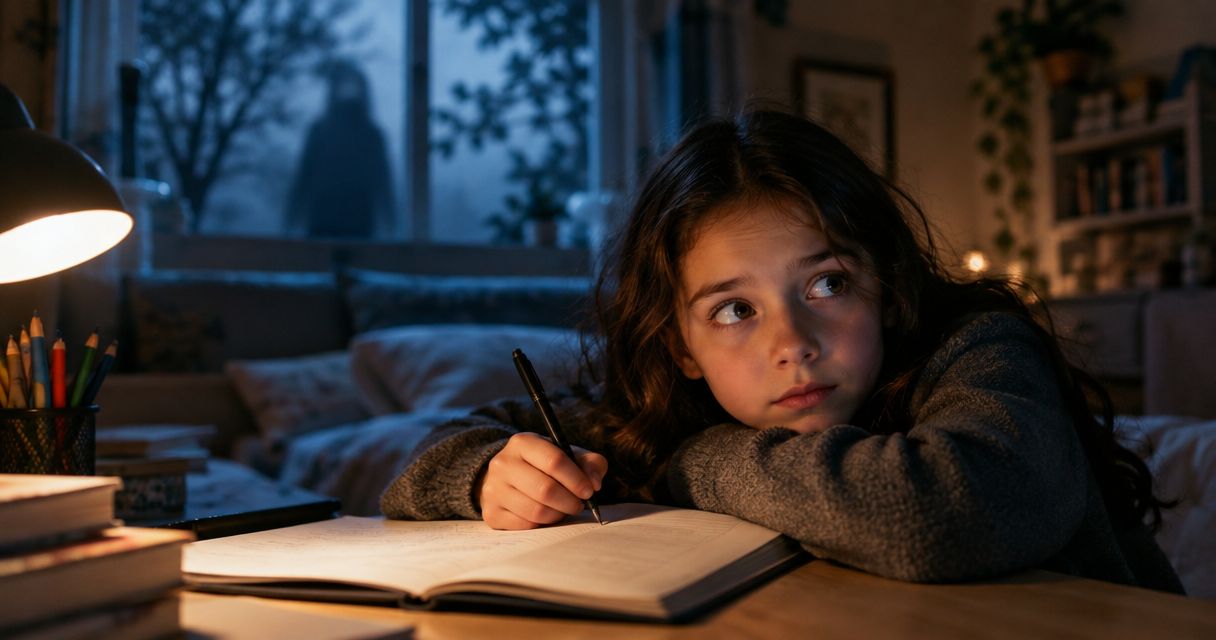
Childhood encounter writing is recording what you remember about an unexplained experience so you can share it without turning uncertainty into a ghost story's missing pieces. For adults sharing real ghost stories from childhood, the hard part is separating what you noticed then from what you learned, heard, or came to believe later.
TL;DR- Real ghost stories from childhood should separate remembered events, family accounts, and present-day interpretations.
- Haunting is best for people sharing paranormal encounters anonymously, without registration.
- Keep uncertain details uncertain; a childhood memory does not need a complete explanation.
- Share a written account, photo, video, or audio without disclosing identifying details.
Why childhood encounter writing matters
You remember a room, a sound, or someone standing where nobody should have been. But you were a child. You might not remember the address, your exact age, or whether someone explained it afterward.
That does not mean you need to discard the account. It means readers need to know which parts you remember and which parts remain unclear. An honest gap is more useful than a convincing detail you cannot place.
Haunting accepts stories, photos, video, and audio, with anonymous submission and no registration required. You do not need to attach your name or identify the house to describe what happened there.
Writing in 2026 also gives you a clear dividing line: the experience belongs to your childhood; the account reflects what you remember now. Keep those two moments separate rather than writing as though you recorded everything that night.
How to write the childhood encounter you remember
Start with your own memory
Before asking relatives what happened, make a private note of your version. Use a notebook or a plain document. Neither needs a polished opening.
Set aside 10 minutes for a first pass. This is a writing exercise, not a test of how much you can recover. Stop when you have written the details you can recall without forcing them.
Start at the point you actually remember. If the memory begins with you already awake, do not add a scene about falling asleep. If you remember the hallway but not how you reached it, begin in the hallway.
Do not judge the draft by how frightening it sounds. A short account with an uncertain ending is enough. You are recording an experience, not building toward a reveal.
- Write down what you saw, heard, or felt before explaining it.
- Mark uncertain details instead of choosing the most vivid version.
- Leave dialogue out unless you genuinely remember the words.
- Note whether the memory has a clear beginning and ending.
Separate memory from later information
A childhood account can contain several sources without treating them as interchangeable. Your memory is one source. A parent's recollection, a family photograph, and a story repeated at gatherings are others.
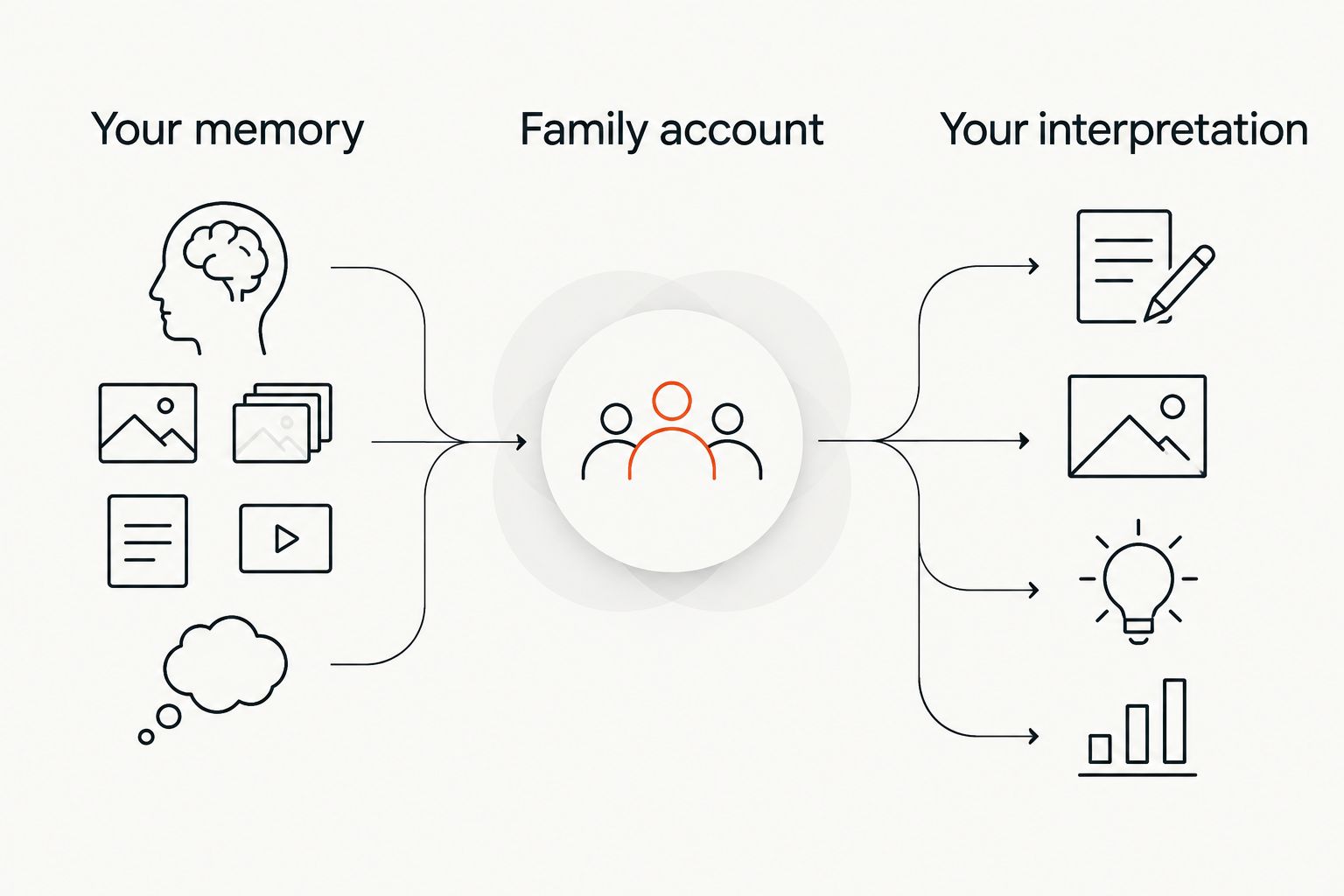
Use a simple three-part note: Your memory, Family account, and Your interpretation. Put each detail where it belongs. Something can matter to your story without being something you personally witnessed.
If you learned in 2026 that a relative remembered the same house differently, describe that as information learned now. Do not move it backward into your childhood point of view.
For more help keeping these boundaries clear, use the guide to writing paranormal stories without filling in the gaps. Haunting gives you somewhere to share an account; the platform does not establish what caused the encounter.
- Label details you remember personally as Your memory.
- Attribute a relative's recollection as Family account.
- Keep your explanation under Your interpretation.
- Leave disagreements visible rather than combining conflicting versions.
Build a short sequence
Put the remembered events in order before working on the wording. Start with where you were, then describe what drew your attention, what happened next, and what you did.
Exact times are not required. If you remember being in elementary school but cannot place the year, use that description. Do not calculate a precise date from an age you are also unsure about.
Keep interruptions in the sequence visible. If your next memory is the following morning, say that. A missing stretch of time in your recollection is not evidence that something happened during it.
Try a 150-word draft before expanding. That limit is a practical way to find the core event, not a submission requirement. Add more only where another detail helps a reader understand your experience.
- Establish your approximate age or stage of childhood.
- Describe the setting without revealing a private address.
- Put remembered actions in the order you recall them.
- Mark any jump between one remembered moment and another.
- End where your memory ends, even without an explanation.
Describe the encounter before naming it
A label can make a childhood memory sound more settled than it is. Write the observable detail first, then explain what you thought it meant.
If you remember a shape, describe its position and movement before calling it a person. If you remember a sound, describe where it seemed to come from before deciding who made it. Include these details only when they are actually part of your memory.
You can still say that you believed you saw a ghost. The distinction is between reporting that belief and asking readers to accept it as a verified explanation. Respect for your experience does not depend on proving its cause.
Keep the child's reaction separate from your present view. You might have felt calm then and unsettled now, or frightened then and unsure now. Neither version needs to replace the other.
- Describe what drew your attention in ordinary language.
- Separate physical sensations from your explanation for them.
- State what you believed at the time.
- Identify any different interpretation you hold now.
- Remove details added only to make the scene scarier.
Check supporting material without forcing a match
You can write a personal account without a photograph or recording. If supporting material exists, describe what it actually contributes rather than calling it proof of the whole story.
A family photograph might help you remember a room's layout. That does not make it a photograph of the encounter. A recording made in 2026 belongs to a present-day visit, not the childhood event, even if it comes from the same building.
If you ask a relative about the experience, begin with an open question rather than giving them every detail of your draft. Record their answer separately. If their account differs, keep the difference instead of editing both versions into agreement.
Do not return to a private property or an unsafe place to make the story feel complete. Missing supporting material is a limit you can state plainly.
- Identify who took each photo or made each recording, if known.
- Distinguish material from the event from material gathered later.
- State when a date or location is approximate.
- Preserve an original file before making an edited copy.
- Describe disagreement without deciding another witness's memory for them.
Remove identifying details and choose what to share
Read the account once for clarity and once for personal details. These are two different checks. A sentence can help explain the encounter while still revealing more about someone than you intend.
Look beyond names. A school, a small neighborhood, a relative's job, or a house's exact location can identify people in combination. Keep only the setting details the reader needs.
Haunting accepts anonymous submissions without registration, including stories, photos, video, and audio. That describes the submission option; it is not a promise about tracking, retention, or other technical privacy practices.
You also control the scope of the account. You can leave out a family dispute, a medical detail, or another person's reaction. An encounter does not need your entire childhood attached to it.
- Replace unnecessary names with relationships such as parent or cousin.
- Remove addresses and other precise location details.
- Check images for faces, documents, and house numbers.
- Listen for names or private conversations in audio and video.
- Keep a private copy of the version you decide to submit.
Choose a format for your childhood account
Start with a written account when the experience survives mainly as a memory. Choose another format when you have material that adds something readers could not get from the words alone.
Haunting supports all four formats below. None automatically makes a paranormal explanation more convincing. Each gives you a different way to show what you experienced or what material you have.
| Option | Best for | What it adds | Key limitation |
|---|---|---|---|
| Written story | A childhood encounter remembered without a recording | Lets you explain sequence, context, and uncertainty | Readers cannot independently inspect the remembered event |
| Photo | An existing image relevant to the account | Shows visible details you want readers to examine | A still image does not establish what happened before or after it |
| Video | An existing clip with movement or surrounding context | Lets readers watch the recorded sequence | The clip contains only what the camera captured |
| Audio | An existing recording of a sound | Lets readers hear the material you are describing | Sound alone does not establish who or what caused it |
Do not manufacture a visual just because your story has none. A present-day picture of a room is context, not a record of what you saw as a child. Label it accordingly.
If you share an edited excerpt, explain what you changed. A crop, shortened clip, or adjusted audio version should not silently replace the original in your description.
Common mistakes when sharing childhood ghost stories
Turning a family story into your own memory
Something repeated throughout childhood can become central to how you understand an event. It still needs attribution if someone else supplied it.
State who told you the detail, using a relationship rather than a name when appropriate. If you cannot remember who first told you, say that instead of assigning the account to a relative.
Giving an uncertain memory an exact date
Precision is not the same as accuracy. An approximate school year or season is clearer than a specific date chosen because it seems plausible.
If you write the account in 2026, distinguish that writing date from the event's approximate timing. Do not let the date attached to your post imply that the encounter happened recently.
Rewriting the child's thoughts in adult language
You can explain your current understanding without putting it into your younger self's head. A child who felt watched did not necessarily have the explanation you hold today.
Describe the reaction you remember. Then add your present interpretation separately, if it helps readers understand why the memory stayed with you.
Treating a missing explanation as a confirmed answer
Not knowing what caused something does not establish that a ghost caused it. You can leave the question open without dismissing the encounter.
Describe the experience firmly and the explanation honestly. You do not need to argue readers into your interpretation for the account to deserve a hearing.
FAQ
How do I write real ghost stories from childhood if I barely remember them?
Write only the fragments you remember and identify the gaps. Start with the place, what caught your attention, and your reaction; do not add a beginning or ending to make the account feel complete.
Can I share a childhood ghost story without proof?
Yes, you can share a personal account without presenting it as proof of a ghost. Explain that it is a childhood recollection and distinguish what you remember from what you now believe happened.
Where can I share real ghost stories anonymously?
Haunting accepts anonymous submissions without registration, including stories, photos, video, and audio. Remove identifying details you do not want to disclose; anonymous submission is not a technical privacy guarantee.
Should I ask my family what they remember before writing my story?
Write your own recollection first, then ask family members separately. Attribute their information and preserve disagreements rather than merging everyone's memories into a single version.
What if I cannot remember my age when the encounter happened?
Use the approximate stage of childhood you actually remember. You can describe being in elementary school or living in a particular home without inventing an age or date.
Should I include a photo taken at the house years later?
Include it only as clearly labeled later context, not as an image of the childhood encounter. Explain when it was taken and what it helps readers understand.
How do I make a true ghost story scary without exaggerating?
Keep the sequence clear and use the details you genuinely remember. Let the encounter carry its own weight rather than adding dialogue, atmosphere, or a dramatic ending.
One last thing
Before publishing in 2026, make one final pass for details that appeared only while you were polishing. Keep the original note beside the finished version. If a new detail has no clear source, remove it or mark the uncertainty.
You do not owe anyone a frightening ending. Share what you remember. Leave room for what you do not.