How to Share an Anonymous Ghost Story Online
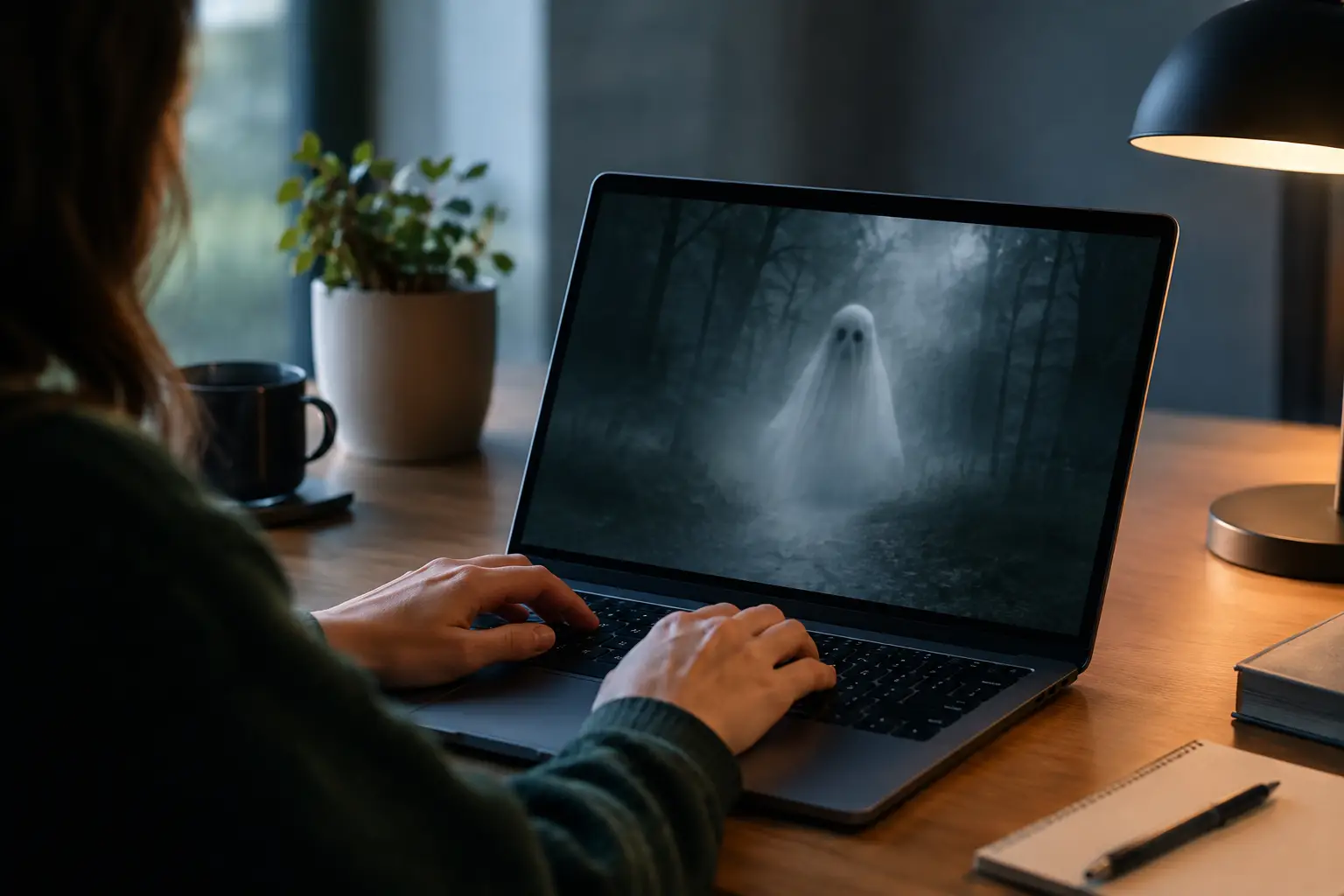
The knock came from inside the bedroom wall. Not the door. Not the window. Inside the wall, three slow taps at 2:17 a.m. If you want to share an anonymous ghost story online, begin there: with the detail you still cannot explain. A good report does not need to prove the supernatural. It needs to preserve what happened before memory softens it into something easier to dismiss.
Anonymity gives witnesses room to be honest. Maybe the event happened at work, in a family home, during a difficult time, or somewhere you do not want strangers to identify. You can still leave a useful record. Witness. Capture. Share.
Why anonymous reports matter
Some encounters are strange enough without attaching your name to them. A shadow figure in a child’s room, footsteps above an empty apartment, a voice caught on a recorder: these experiences can invite unwanted attention when shared through a personal social account. Friends may joke. Coworkers may speculate. A location can become a target for thrill-seekers.
Posting anonymously lets the encounter stand on its own. It also helps create a broader archive. When multiple witnesses describe similar activity in the same area or under similar conditions, patterns become easier to notice. That does not turn a report into proof. It gives other readers something more valuable than a polished ghost story: a firsthand account with context.
There is a trade-off. Anonymous posts can be harder for readers to verify or follow up on. The answer is not to reveal more than feels safe. The answer is to make the account specific, measured, and clear about what you know versus what you suspect.
Before you share an anonymous ghost story online
Write down the event before you shape it for an audience. Start with the plain record: date, approximate time, setting, who was present, what happened first, and what happened next. If you do not know an exact detail, say so. “Around midnight” is better than inventing 12:03 a.m. because it sounds more dramatic.
Separate observation from interpretation. “I heard a woman whisper my name from the hallway” is an observation. “A dead woman was trying to contact me” is an interpretation. Both may belong in your story, but readers should be able to see the difference.
Think carefully about identifying information. You can name a state or general region without naming an address. You can say “a rural rental outside Asheville” rather than naming the property. If another person is involved, avoid sharing their full name, workplace, medical history, or private messages. Anonymous reporting should protect everyone in the account, not only the person posting it.
If the experience involved a possible safety issue, deal with that first. A strange noise could be plumbing, wildlife, an intruder, carbon monoxide exposure, or a building problem. Check ordinary causes and contact the appropriate local help when needed. A paranormal explanation should never prevent a practical response.
Build a report readers can follow
The strongest paranormal accounts tend to be calm. You do not need to make every sentence ominous. Let the unusual part do the work.
Open with the moment that changed the night. Then establish the setting in a few details. Was the house unfamiliar? Was the room dark, lit by a television, or fully illuminated? Were you alone? Had anyone been drinking, using sleep medication, or recovering from illness? Those facts may feel awkward to include, but they give the story weight because they show you are not hiding ordinary possibilities.
After that, tell the event in sequence. Avoid jumping between what happened, what you later learned, and what commenters told you it might mean. If you found out a previous tenant died in the home a week later, place that discovery after the original encounter. The timeline matters.
End with the unresolved part. Maybe the sound stopped when you opened the door. Maybe the figure appeared in a photo but not in the room. Maybe everyone present remembers the same voice differently. Do not force an answer. “I still do not know what made the sound” is a complete ending.
Include the details that change the reading
Small sensory details often matter more than theatrical language. Note the temperature only if it shifted noticeably. Describe whether a smell was familiar, metallic, floral, damp, or like smoke. If you saw an apparition, estimate its height, distance, color, movement, and how long it remained visible. For strange sounds, explain whether the source seemed near or far, whether windows were open, and whether the sound repeated.
Also include what you checked. Did you search the room? Review a camera feed? Ask a neighbor? Compare the recording with normal house sounds the next day? A negative result is not paranormal evidence, but it shows the report did not stop at the first frightening explanation.
Add evidence without overselling it
A photograph, video, audio clip, or EVP recording can make a report more useful, especially when it is paired with a clear caption. Evidence does not need to be perfect to be worth preserving. It does need context.
If you upload files, explain when they were made and what the reader should notice. State whether the file is original, edited, enhanced, clipped, or screen-recorded. If you increased brightness or reduced noise, say so. Editing can help people inspect material, but hiding edits damages trust.
Before publishing, keep the original files somewhere safe. Then review uploads for personal information. Photos may reveal house numbers, license plates, family faces, school logos, or location data. Audio can contain names, addresses, television news, or conversations in the background.
Use a simple evidence note that covers four things:
- What device recorded it and whether it was stationary or handheld.
- The date and approximate time of the recording.
- What was happening just before and after the file was captured.
- Any edits, filters, compression, or enhancements applied before upload.
A low-light video may be nothing more than compression artifacts. An EVP may be pareidolia, background speech, radio interference, or something that deserves another listen. Let viewers decide what they hear or see. Your job is to provide the cleanest possible account of how the material came to exist.
Choose the right category and location detail
Categories help a witness find the right readers. An apparition, shadow figure, poltergeist event, strange sound, haunted place, creature sighting, UFO, humanoid, or cryptid report each asks people to notice different details. Choose the closest fit, even if you are uncertain. If an event crosses categories, lead with the central encounter and mention the rest in the narrative.
Location is useful, but precision depends on risk. A general city, county, trail, or region can help others compare reports. A private residence, active workplace, or sensitive site may require vaguer wording. Never encourage people to trespass, investigate someone else’s home, or seek out a location that could put them in danger.
On a dedicated archive such as Haunting.org, categories and media help your report live beyond a single scrolling feed. Someone looking for shadow figures may find your account months later. Someone researching a local pattern may recognize a detail that seemed insignificant to you.
Expect questions, not automatic agreement
A thoughtful response may challenge your conclusion. That is not always hostility. Readers may ask whether a light source caused a reflection, whether a sound matches a furnace cycle, or whether a camera was using night mode. Answer only what you are comfortable sharing, and correct the record if you remember something differently later.
You do not owe strangers your identity, your exact location, or more evidence than you have. You also do not need to defend every unexplained moment as a haunting. The most credible witnesses are often the ones willing to say, “I checked that possibility,” or, “I cannot rule that out.”
If comments become cruel, invasive, or threatening, use reporting tools and step away. The purpose of anonymous sharing is not to make yourself available for interrogation. It is to put an experience on record.
Your story may never receive a final explanation. That is not a failure. Preserve the hour, the room, the sound, the image, and the feeling that something was there. Somewhere, another witness may recognize it.