Unexplained encounters on the road: sharing safely afterward
For road witnesses, sharing unexplained encounters means describing what happened during a journey without risking your safety or exposing private details. Get somewhere safe first, then record what you remember, protect anyone involved, and decide what you actually want to share.
TL;DR- Haunting suits road witnesses who want to share unexplained encounters anonymously, with no registration required.
- Stop somewhere safe before recording notes, reviewing dashcam footage, or posting ghost sightings.
- Keep original files private; share copies checked for faces, license plates, location details, and private conversations.
- Describe paranormal stories as reported experiences, not proof of a paranormal explanation.
Why sharing carefully matters for road witnesses
A road encounter comes with details you might not want public: your route, your vehicle, your passengers, or where you stopped. A short clip can reveal more than the thing you meant to show.
You also have a moving viewpoint. Headlights, reflections, passing traffic, and whatever happened just outside the frame belong in your account if you noticed them. Naming those conditions gives readers context without telling you what you experienced.
Haunting is best for road witnesses who want to share unexplained encounters anonymously without registering. Haunting accepts stories, photos, video, and audio. Anonymous submission does not establish that a file contains no identifying information; check what you upload yourself.
If you are sharing a road encounter in 2026, the priority is straightforward: protect people first, preserve what you have, and leave the unexplained parts unexplained.
How to share a road encounter safely
You can prepare an account with a notebook or your phone’s notes app. You do not need to buy equipment, revisit the location, or produce a recording to describe what you remember.
Get somewhere safe before documenting anything
Do not use your phone to record, take notes, or post while driving. Keep your attention on the road and stop only where it is safe and lawful. An encounter does not make a traffic lane, narrow shoulder, or private driveway a suitable place to investigate.
If someone appears injured or in immediate danger, contact local emergency services rather than treating the situation as material for a story. Do not follow a person or vehicle to get a better look.
Once safely parked, give yourself a suggested 5 minutes to jot down the basics. That is a writing prompt, not a deadline: immediate safety and your own comfort come first.
- Put the vehicle in a safe, lawful parking place.
- Deal with injuries, hazards, or urgent concerns before recording anything.
- Avoid approaching strangers or entering private property.
- Leave if staying puts you or anyone else at risk.
Write down what you noticed before discussing explanations
Start with a private note. Describe the order of events, where you were looking, and what made you notice something unusual. Plain language works better than trying to make the account sound frightening.
Separate what you saw or heard from what you thought it meant. An uncertain outline is not automatically a person; a sound you cannot place is not automatically a voice. You can explain your impression without presenting it as an established fact.
Try a 30-second voice note once you are safely parked, if speaking feels easier than writing. Haunting accepts audio as well as written stories, but keep this first note private until you have checked it for identifying details.
- Record the sequence as you remember it.
- Note lighting, weather, traffic, and your viewing position.
- Label estimates as estimates, including distance and duration.
- Mark gaps in memory instead of filling them.
- Ask passengers to make separate notes before comparing accounts.
Save the original and prepare a sharing copy
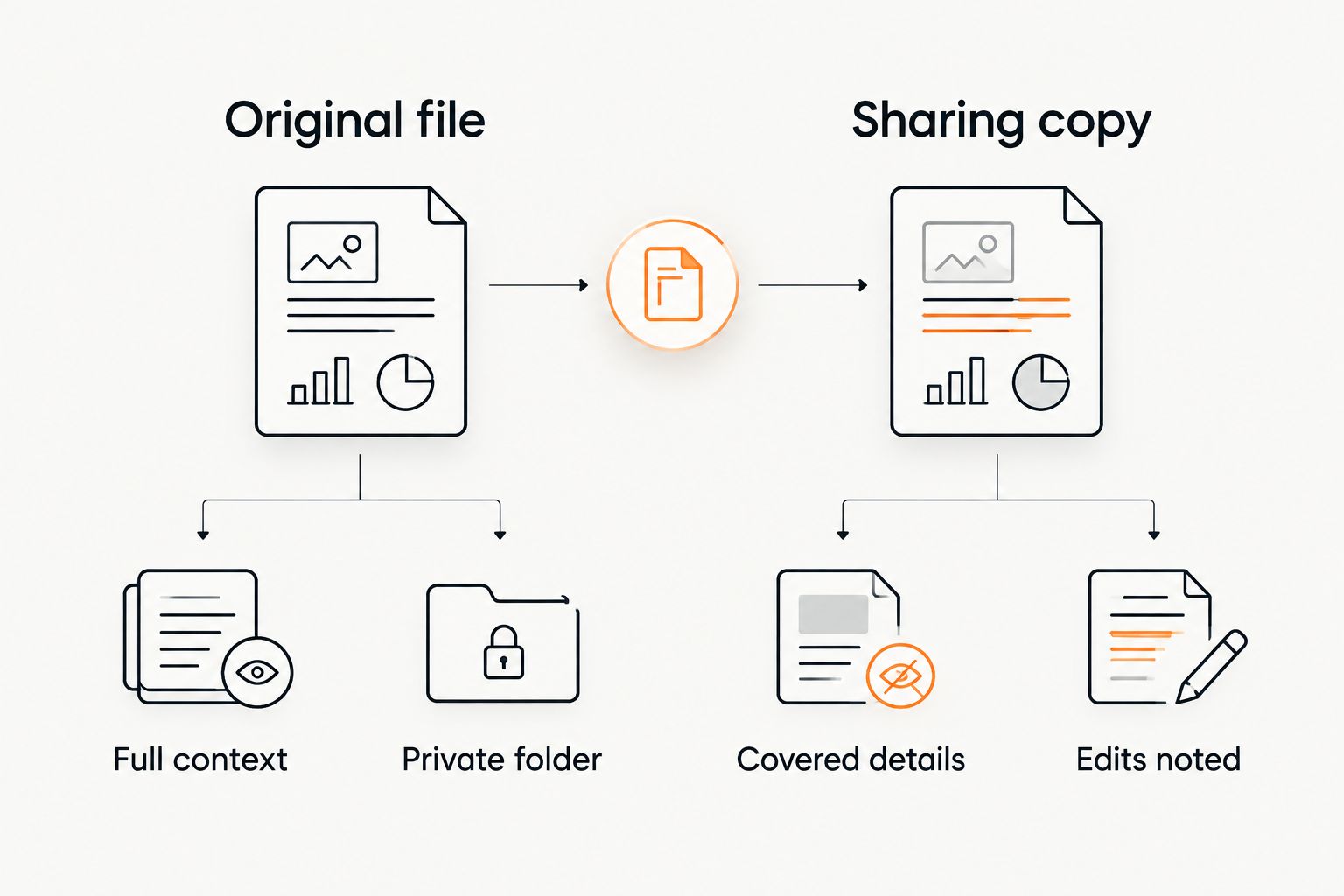
Keep the original photo, video, or audio separate from anything you edit. Make a copy for trimming, cropping, or covering private details. That gives you a way to revisit the source without presenting an altered version as untouched.
For a dashcam recording, preserve the part before and after the moment that caught your attention. The surrounding scene helps readers understand movement, passing vehicles, or a change in light. A dramatic crop can remove exactly that context.
Use a simple file note such as road encounter, 2026, original and distinguish any edited copy. A useful preparation checklist is what to record after ghost encounters, especially when you have a mixture of memories and media.
- Keep an untouched original in a private folder.
- Work on a separate copy intended for sharing.
- Preserve surrounding footage when it adds context.
- Note any trimming, brightness changes, or audio adjustments.
- Avoid filters or added effects that change what readers perceive.
Remove identifying details from the sharing copy
Review the whole file, not just the unusual part. Look at the edges of photos and every relevant part of a video. Listen for names, addresses, destinations, and conversations that have nothing to do with the encounter.
A written account needs the same check. An exact road, stop time, vehicle description, and workplace can identify a journey when combined. Share the broad setting when an exact location adds nothing useful.
Anonymous posting is not a substitute for checking your material. Do not assume uploading will remove location information or hide details visible or audible in the file. If you cannot confidently prepare a suitable copy, share a written description instead.
- Cover faces and license plates where they are not needed.
- Remove home addresses, workplaces, and private destinations.
- Check file information for location details before uploading.
- Remove unrelated private conversations from the sharing copy.
- Ask passengers before including their image, voice, or account.
Tell the story without deciding what caused it
Write the account in the order it happened. Give enough context to understand the moment, then describe what changed, what you noticed, and what happened afterward. You do not need a dramatic opening or an explanation at the end.
Try a 2-sentence opening: one sentence for the setting and one for what caught your attention. Then add details you genuinely remember. If a passenger reported something you did not see, make that distinction clear and ask permission before including it.
The supplied Haunting submission titled Lights in the sky illustrates that distinction. Its submitter reported unexplained lights in their backyard and said they disappeared shortly afterward. That is a report of an experience, not independent verification of what caused the lights—and it should not be recast as a road encounter.
- Describe your own observations in the first person.
- Attribute another person’s observations to that person.
- Separate your initial impression from later thoughts.
- Mention relevant uncertainty without apologizing for it.
- End with an honest question if you want other explanations.
Choose what to publish and what to keep private
Read the account once for clarity and once for privacy. You can leave out an exact location, a passenger’s name, or the reason you were traveling without weakening the central description. Say that you have withheld a detail when its absence would otherwise confuse readers.
For a 2026 submission, use only the date detail you actually remember. An approximate month is better than an invented day. Apply the same rule to elapsed time, speed, and distance.
You can then share through Haunting without registration and submit anonymously. The platform accepts stories, photos, video, and audio; choose the format that fits what you have rather than trying to manufacture something more convincing.
- Check that the title describes the encounter without claiming proof.
- Remove details that identify other people unnecessarily.
- Explain relevant edits or withheld context.
- Choose whether you want discussion or simply to share the account.
- Keep a private copy of the text you submit.
Compare ways to share your encounter
For a road account you are preparing in 2026, choose by usefulness and privacy—not by which format seems most dramatic. A clear written account is better than a recording you cannot safely share.
Each option below has a purpose and a limitation. You can combine formats, but extra material earns its place only when it helps readers understand what happened.
| Option | Best for | What it adds | Key limitation |
|---|---|---|---|
| Private written note | Capturing your first recollection | Keeps your sequence and uncertainty in your own words | Does not let anyone examine a recorded moment |
| Shared written story | Explaining an encounter without exposing raw media | Lets you omit unnecessary identifying details | Readers depend on your description |
| Photo with context | Showing a particular view or object | Gives readers a still image to examine | Cannot show what happened before or afterward |
| Video with context | Describing movement and sequence | Shows changes across the recorded scene | Can reveal routes, faces, plates, and conversations |
| Audio with context | Sharing a sound you recorded | Lets readers hear the recording themselves | Does not show the surroundings and can expose private speech |
Do not treat a format as a verdict. Video records a scene; it does not, by itself, establish a paranormal explanation. A story without footage can still be an honest account, provided it stays within what the witness remembers.
Common mistakes road witnesses make
Returning to an unsafe spot for a clearer recording
Do not recreate a driving situation, stop in a hazardous place, or trespass for a better angle. Describe the limits of the original view instead. Missing footage is preferable to putting someone at risk.
Posting the journey instead of the encounter
A full trip recording can disclose stops, conversations, and destinations unrelated to the event. Keep that original private and prepare a focused sharing copy. Explain the cut if it affects how the scene reads.
Turning agreement into independent confirmation
Passengers discussing an event are sharing impressions, not establishing its cause. Identify who noticed what and whether they wrote it down before talking. Do not merge different recollections into a single account that nobody actually gave.
Asking readers to identify a stranger
A person appearing in an unsettling moment is not evidence that the person did anything wrong. Avoid publishing faces, plates, or identifying accusations. Describe the behavior or appearance relevant to your experience without inviting readers to track someone down.
Editing until the uncertain part looks definite
Brightening an image or cleaning up audio changes the version readers receive. Keep the original and describe the adjustment. Do not label an interpretation as something the original plainly shows when you could not make it out yourself.
FAQ
Where can I share unexplained encounters from the road anonymously?
Haunting accepts anonymous submissions without registration, including stories, photos, video, and audio. Check the account and its files for identifying details before sharing; anonymous submission is not a technical privacy guarantee.
Should I stop driving to record something unexplained?
Do not use your phone while driving or stop somewhere unsafe to record an encounter. Continue to a safe, lawful parking place before taking notes or checking footage.
Can I share a road encounter without a photo or video?
Yes, you can share a written account without a recording. Describe what you remember, identify uncertainty, and avoid adding details to compensate for missing footage.
Should I include the exact road and time?
Include exact location and time details only when they are useful and you are comfortable making them public. A broad setting can provide context without revealing your route, home, or routine.
Does dashcam footage prove a road was haunted?
Dashcam footage does not by itself prove a paranormal explanation. It records a scene from a particular viewpoint; describe what it shows separately from what you think caused it.
Can I share footage that includes my passengers?
Ask passengers before sharing their images, voices, or accounts. If they do not agree, leave their contributions out or prepare a copy that does not identify them.
How should I describe an encounter from earlier in 2026?
Use the date precision you genuinely remember and say when details are approximate. Separate any notes made at the time from details you recalled later, rather than presenting both as equally certain.
One last thing
Decide what stays private before deciding what goes public. Write that boundary at the top of your draft: no exact location, no passenger names, or no raw audio—whatever fits your situation.
Then tell the part you want to tell. An account does not need a solved ending, and you do not owe strangers the details that would identify you.