How to Report a UFO Sighting Without Losing Detail
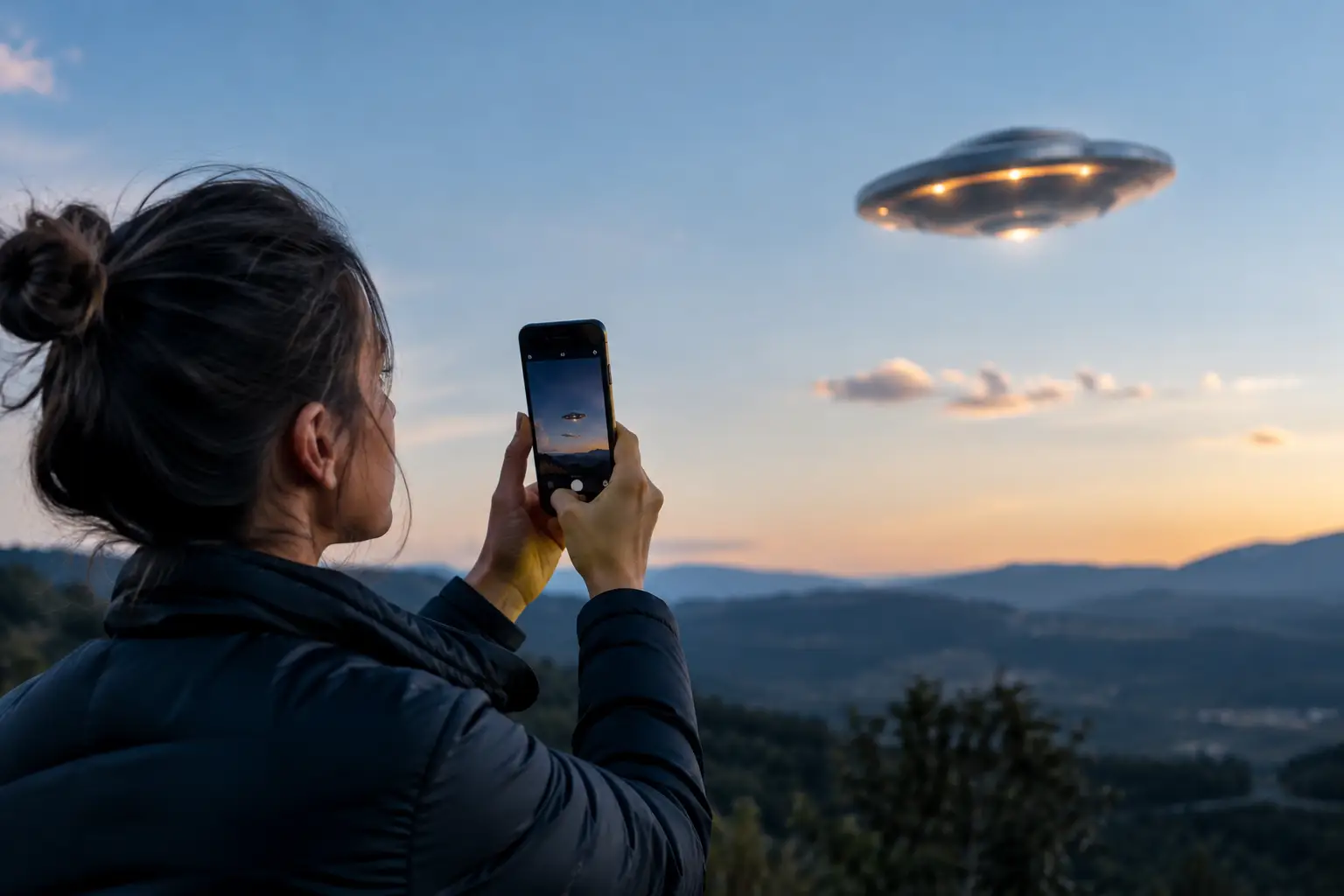
A strange light can disappear before you find the right words for it. A silent object can cross the sky, change direction, and leave you with a memory that feels too large to explain. Knowing how to report a UFO sighting starts with one rule: document what happened before you decide what it was.
Your report does not need to prove an extraterrestrial answer. It needs to preserve the encounter. The strongest witness accounts separate observation from interpretation, hold onto small details, and leave room for others to examine the evidence.
Start recording while the memory is fresh
Write down the sighting as soon as you safely can. Do not wait until morning if you can avoid it. Memory is vivid after an unusual event, but it can also shift quickly as you replay it, talk about it, or search for explanations.
Begin with the basics: the date, local time, exact or approximate location, and how long you watched. Include the direction you were facing and where the object appeared to travel. If you know the compass direction, use it. If not, describe landmarks: above the tree line behind a gas station, moving from the lake toward the highway, or hovering over an apartment complex.
Then describe only what you directly witnessed. Was it a point of light, a solid shape, a cluster of objects, or something partly obscured by clouds? Note its color, apparent size, brightness, movement, sound, and whether it seemed to react to anything nearby. A simple phrase such as “three white lights held formation for about forty seconds, then vanished at once” is more useful than a dramatic conclusion without details.
If another person was there, ask them to write their own account separately. Comparing independent notes later can reveal where memories overlap and where they differ. Both are valuable. Witnesses do not need to agree on every detail for an event to be worth documenting.
Preserve your photos, video, and audio
A blurry clip is still part of the record. Keep the original file, even if the object is only a dot or the image looks disappointing. Original files may retain creation time, device details, and location data that screenshots, social uploads, and edited copies can remove.
Do not add filters, sharpen the image, slow it down, or draw circles on the only version you have. Make a copy if you want to adjust it for visibility, then clearly label it as edited. Keep the untouched original in a secure folder or backed-up drive.
If you captured video, record a short spoken note afterward. Say where you were, the time, what direction the camera faced, and what you saw outside the frame. Phones often struggle with distant lights at night, and a voice note can provide context the footage cannot.
Useful supporting material can include a screenshot of the weather, a map pin, a photo of the horizon taken from the same spot, or an audio recording of any unusual sound. Capture these after the fact if needed, but label them accurately. A photo taken the next day is context, not footage of the event.
Avoid posting an exact home address, vehicle plate, or identifying details of other witnesses. Evidence matters. So does your safety.
Check ordinary possibilities without dismissing yourself
Before publishing, take a few minutes to consider the sky and surroundings. Planes, helicopters, satellites, drones, meteor trails, launches, planets near the horizon, lanterns, and reflections can all look unfamiliar under the right conditions. This is not an order to explain away the sighting. It is a way to make your report clearer.
Write down what you checked and what did or did not fit. Maybe nearby aircraft activity explains the steady blinking lights but not the sudden stop you observed. Maybe a drone is possible, but there was no audible rotor sound and the object appeared farther away than a consumer drone could reasonably be seen. Say that. Let the account show your reasoning without forcing certainty.
Be cautious with flight-tracking screenshots and astronomy apps. They are helpful reference points, not perfect answers. Coverage can be incomplete, timing can be off, and a sighting may be difficult to place precisely after the fact.
The word UFO means unidentified flying object. It describes an unresolved observation, not a final origin. Keeping that distinction in your report makes it more credible, not less compelling.
How to report a UFO sighting responsibly
Choose the place you report based on what happened. If the object poses an immediate threat, appears to be crashing, is interfering with traffic, is near restricted infrastructure, or has caused an injury, contact local emergency services. Do not approach debris, trespass to get closer, or confront a drone operator. Your safety comes first.
For a non-emergency sighting, a dedicated witness archive or UFO reporting community can preserve the full story and supporting files. A public post may help locate other witnesses, especially when an event was visible across a neighborhood or region. It also has trade-offs: once an account is public, strangers may speculate, challenge details, or reuse material. Decide how much location information and personal identity you want to share.
A complete report should answer a reader’s first practical questions:
- When and where did it happen?
- What did you see, hear, or feel?
- How long did it last, and how did it move?
- What evidence exists, and is it original or edited?
- Who else saw it, if anyone?
- What possible explanations did you consider?
Use a clear timeline rather than trying to make the account sound mysterious. Start with what you were doing before the event, describe the sighting moment by moment, then explain what happened immediately afterward. If you lost sight of the object behind buildings or clouds, say so. If fear, excitement, darkness, or distance made something hard to judge, include that too.
Uncertainty is not a weakness. “I could not estimate its altitude” is stronger than inventing a number. “The sound may have come from traffic below” is more useful than treating every unexplained noise as connected.
Protect your identity and the integrity of the report
Some witnesses want their name attached to an account. Others do not. Both choices are legitimate. If the experience feels personal, professionally sensitive, or likely to draw unwanted attention, use a pseudonym or an anonymous-friendly reporting option. You can still provide meaningful details without making yourself easy to identify.
Before uploading, review backgrounds in photos and video. House numbers, children’s voices, workplace badges, familiar street signs, and private conversations can reveal more than intended. Redact copies for publication while preserving unedited originals privately.
Do not share another witness’s name, image, or recording without permission. This matters even when the event happened in public. A good report protects the people in it.
If you later remember something new, add it as an update instead of quietly rewriting the original account. Note the date of the update and why you are adding it. That creates a transparent record of how the testimony developed.
Publish the encounter, not the conclusion
The most lasting UFO reports are not the loudest ones. They are the accounts that let another person stand beside the witness for a few minutes: the cold air, the empty road, the strange silence, the object changing course where no object should have been.
On Haunting.org, select the UFO category, tell the account in your own words, add an approximate location if you are comfortable, and upload up to four original supporting files. Keep the title plain and specific. “Four lights over rural Ohio” tells future readers more than “They are watching us.”
Leave space for the unexplained. Your job is not to solve the sky before anyone else sees it. Witness. Capture. Share.