How to Document a Haunting Without Losing the Details
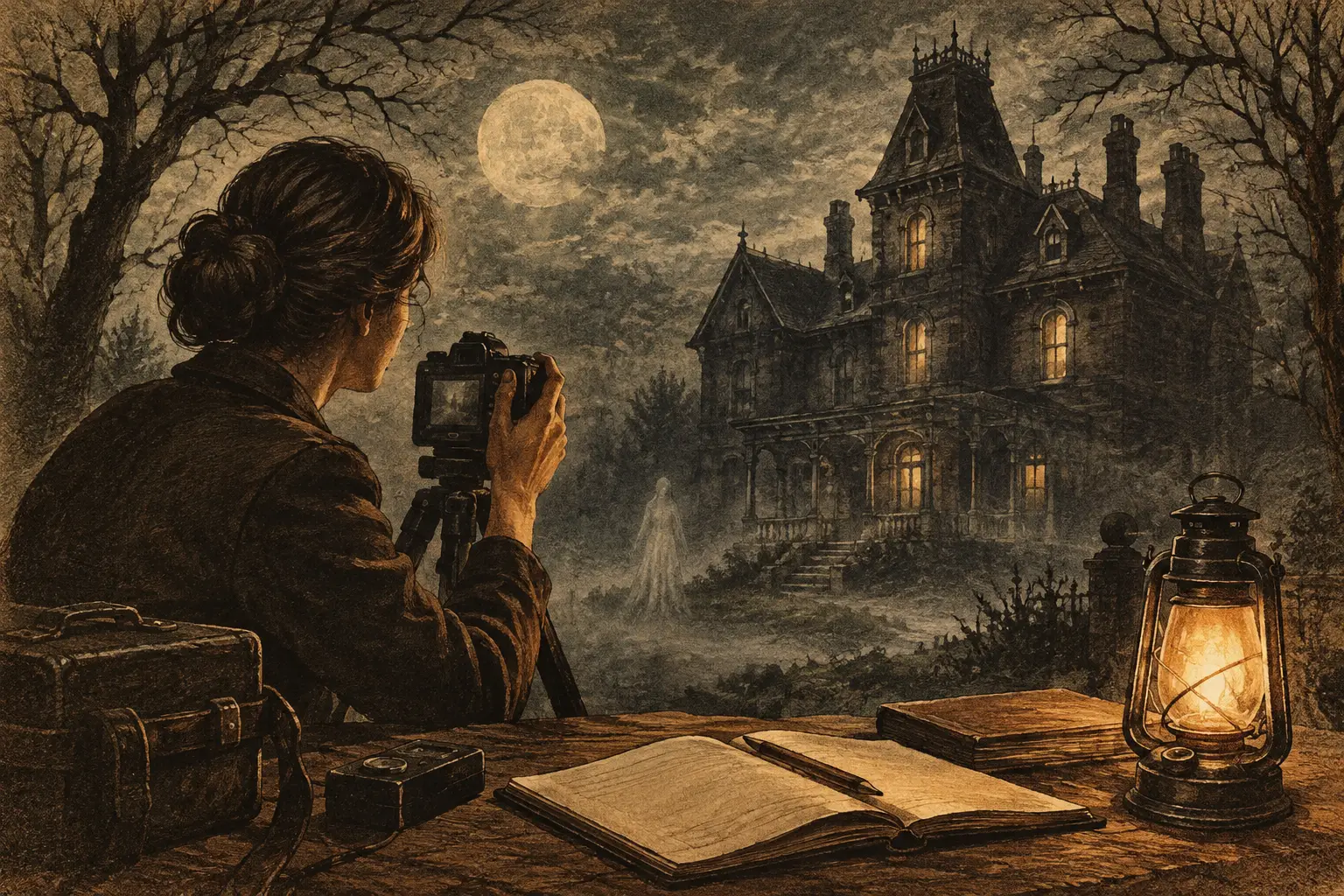
The hallway light flickers once. A voice seems to call from the empty room. Your first instinct may be to run, record, or tell someone. Do all three in the right order. Learning how to document a haunting means preserving what you experienced without filling in the blanks afterward.
A useful report does not need to prove the paranormal. It needs to show what happened, when it happened, what you captured, and what you could not explain at the time. Witness first. Capture second. Share the record while it is still clear.
Start with the moment, not the theory
When something strange happens, write down the raw event before deciding whether it was a ghost, shadow figure, poltergeist, creature, or something else. Labels help people find reports. They should not replace the account.
Record the date, approximate time, and exact location. “My grandmother’s house” is a starting point. “Upstairs bedroom, beside the east-facing window, during a thunderstorm at about 2:15 a.m.” gives future readers something to work with. Include who was present, where each person stood, and what each person noticed independently.
Then describe the sequence in order. What were you doing immediately before it happened? What changed? What did you see, hear, smell, feel, or experience physically? How long did it last? What happened afterward?
Use plain language first. If you saw a dark shape cross a doorway, say that. Do not write “a hostile entity manifested” unless you have details that explain why you reached that conclusion. The unfiltered observation is often the most powerful part of a witness account.
Build a record while the details are fresh
Memory changes quickly, especially after fear, excitement, or a long conversation with other witnesses. Make a note as soon as you safely can. A phone note is enough. A voice memo can be even better if your hands are shaking or the event is still unfolding.
Your first entry should include the basics: date, time, place, weather if relevant, people present, and a timeline. Add environmental details that could matter later, such as nearby traffic, running appliances, pets, construction, open windows, fans, televisions, or a storm.
If several people were there, ask each person to write or record their own account privately before comparing notes. This matters. Once one witness says, “Did you see the woman in the hallway?” other people may begin to interpret an unclear shape the same way. Separate accounts preserve the original experience.
Do not clean up your first notes too aggressively. Keep the uncertainty. Phrases such as “I think,” “it sounded like,” “I could not see clearly,” and “I am not sure” make a report more credible, not less. Certainty is not the goal. Accuracy is.
Capture the setting
Return to the location in daylight if it is safe and permitted. Take wide photos that establish the room, hallway, yard, road, or trail. Then photograph the specific area where the event occurred from the witness’s viewpoint.
Measure or estimate distances when possible. Note light sources, reflective surfaces, doors, vents, speakers, mirrors, security cameras, and anything that may create movement, shadows, or sound. A photo of the scene can explain a strange image. It can also show why an image remains difficult to explain.
Never trespass, force entry, or ignore posted restrictions for evidence. A closed building does not become safer because it has a reputation. Document from public areas or get permission. If a location feels unsafe, leave with the story you have.
Record audio, video, and photos with context
Media without context becomes a mystery of its own. If you take a photo, record the original file and note the direction you were facing, the lighting, whether flash was used, and whether you noticed anything unusual before or after pressing the shutter.
For video, begin by saying the date, time, and location out loud. Slowly show the room or area before focusing on the point of interest. Avoid dramatic zooming and rapid camera movement. It makes later review harder. If you hear a sound, keep recording for several seconds after it stops. The silence around an event can be as useful as the event itself.
Audio recording works best when you control the environment. State where the recorder is placed and identify known sounds before you begin: refrigerator hum, rain, an air conditioner, voices in another room, traffic outside. If you are attempting to capture an EVP, ask one question at a time, then leave space for a response. Do not talk over the silence.
Keep the original files. Do not crop, filter, denoise, slow down, add music, or increase contrast on the only copy. You can create a duplicate for closer review, but label it clearly as edited. Original metadata, file names, timestamps, and full-length recordings help preserve the chain of events.
Rule out the ordinary without dismissing the strange
A strong haunting report acknowledges normal explanations. Check whether a sound could be plumbing, wind, animals, electronics, neighboring voices, or a building settling. Check whether a figure in a photo could be a reflection, motion blur, lens flare, dust, or a person outside the frame.
This is not about explaining away every experience. It is about knowing what remains after reasonable checks. If a tapping sound occurs at the same time each night, note whether a heating system starts then. If it does not match any known source, that detail becomes more meaningful.
Be especially careful with fear-based interpretations. Carbon monoxide exposure, sleep deprivation, medication changes, stress, and sleep paralysis can affect perception. If you or someone else feels disoriented, ill, panicked, or physically unsafe, address the immediate health and safety concern first. A haunting report can wait.
Organize the evidence into one clear account
The best paranormal documentation reads like a timeline, not a campfire story. Lead with the encounter. Follow with the setting, witnesses, and supporting files. Separate direct observation from later interpretation.
A clear structure might include a short title, encounter classification, location level you are comfortable sharing, date and time, witness account, environmental conditions, files, and follow-up events. You do not need to publish your full address, workplace, school, or real name. General location is often enough, especially if privacy matters.
Choose the closest category for discovery, but leave room for ambiguity. A shape in the corner of a room may belong under shadow figures. Repeated footsteps in an empty apartment may fit strange sounds or haunted places. If the category is uncertain, say so in the narrative. “Other haunting” is better than forcing an answer you do not have.
At Haunting.org, a report can remain personal while still becoming part of a larger archive. Add up to four files that directly support the story, rather than every image from the night. One original audio clip with a careful description is more useful than a folder of unlabeled screenshots.
Write captions that answer the obvious questions
Every file needs a short caption. State what the reader is looking or listening for, where it was recorded, and whether the anomaly was noticed in real time or only during review.
For example: “Recorded in the kitchen at 11:42 p.m. The whisper-like sound occurs after I stop speaking. The refrigerator was running, and no one else was in the room.” That caption does not tell people what to believe. It gives them a fair chance to listen.
If you enhance a clip to make a sound easier to hear, include both versions and explain the change. If you circle something in a photo, share an uncircled original too. Let others see the source material before they see your interpretation.
Revisit, but do not manufacture a pattern
If the activity repeats, document each occurrence using the same basic process. Consistency can reveal patterns: a sound near one wall, an apparition at a particular hour, a recurring smell before a door moves. It can also reveal normal causes that were not obvious during the first event.
Do not provoke activity, damage property, or pressure friends and family to participate. A quiet, repeatable method is more useful than escalating the situation for a reaction. If an encounter is affecting your sleep, relationships, or sense of safety, step back and talk to someone you trust.
Your account does not need a final answer to matter. The strongest reports leave a clean trail: what you witnessed, what you captured, what you checked, and the question that remains. Write it down. Save the original. Let the next witness recognize the details.