Paranormal Audio Evidence Examples to Examine
Paranormal audio evidence examples, from EVPs to unexplained knocks, and how to document each recording without turning noise into a ghost story too fast.
 Haunting Team
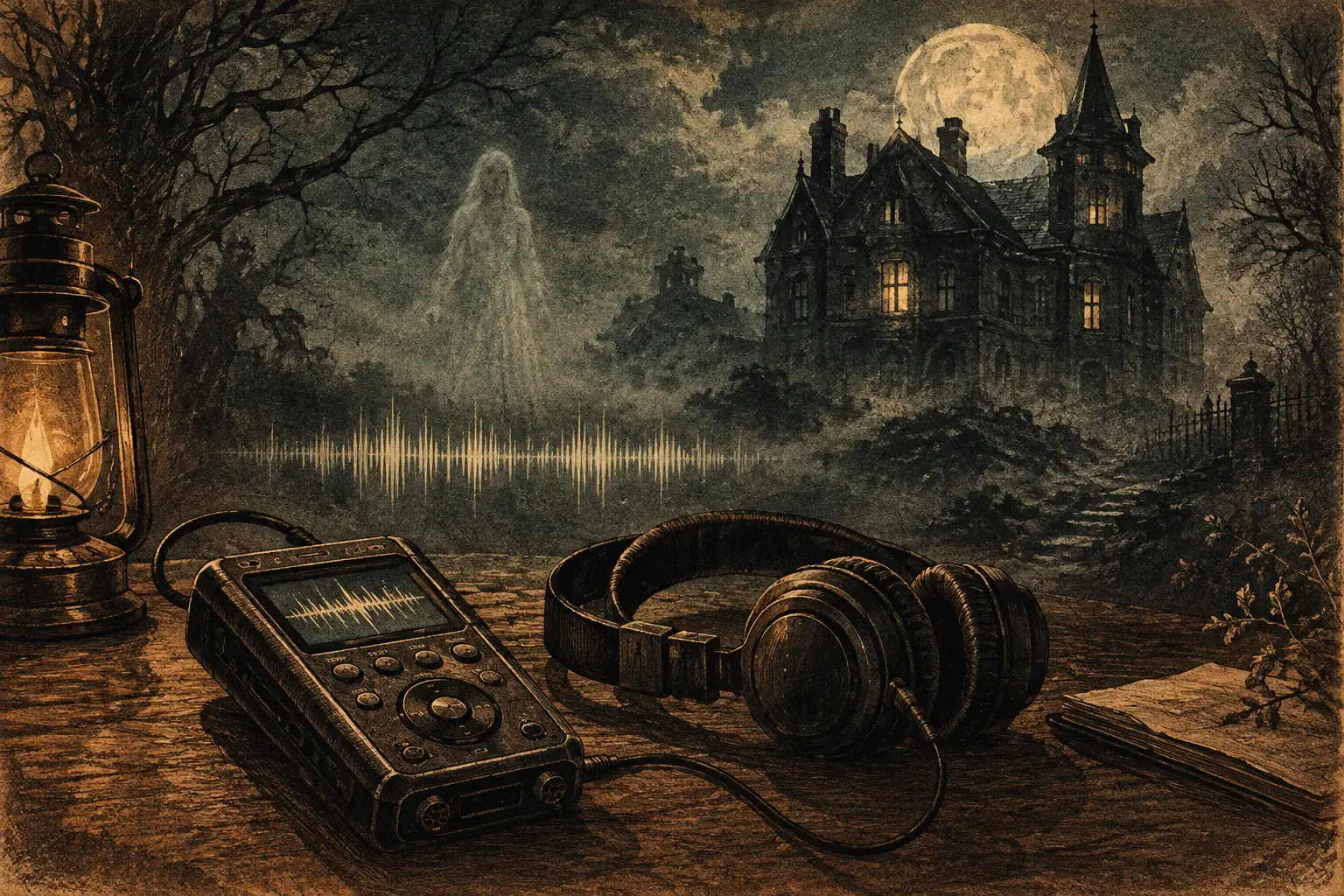
A voice slips through the silence after a question. Three knocks answer from an empty hallway. Footsteps cross a room after everyone has left. Paranormal audio evidence examples are compelling because they feel immediate: press play, listen closely, and decide what you hear.
But audio is also fragile evidence. Phones compress sound. Wind hits a microphone. A nearby TV, radio transmission, plumbing pipe, or investigator’s whispered comment can become something stranger on repeat. The recording matters. So does the moment around it.
Witness. Capture. Share. Then preserve the details that let someone else listen with clear ears.
What Counts as Paranormal Audio Evidence?
Paranormal audio evidence is a recording that appears to contain a sound with no ordinary source identified at the time. It is not automatic proof of a haunting. It is a record of an unexplained moment.
The strongest reports do not demand that every listener hear a ghost. They state what happened, where the device was placed, who was present, what was heard live, and what was only noticed later. That distinction is everything.
A sound heard in person and captured on a recorder can be investigated against the room, the weather, nearby traffic, and other people. A voice discovered only during playback may be an electronic voice phenomenon, or EVP. It may also be radio interference, a clipped word from someone nearby, or the brain finding language in noise. Keep both possibilities open.
Paranormal Audio Evidence Examples Worth Studying
A Direct Answer After a Question
The classic EVP example begins with an investigator asking a simple question into a quiet room: “Is anyone here?” During playback, a faint voice seems to respond, “Leave.” The moment is brief, low in volume, and was not heard by anyone present.
This is the kind of clip that makes people lean toward the speaker. It is also the kind that needs the most restraint. Do not label the response before other listeners hear it. Instead, provide the raw clip first. Then provide a second version with a suggested transcript, if one is necessary. A listener who hears “leave” without being prompted offers more useful feedback than one told what to hear.
A clearer response is not always better evidence if it has been aggressively cleaned up. Noise reduction, speed changes, equalization, and amplification can help reveal a sound, but each edit can also alter its character. Preserve the original file and identify every adjustment.
Knocks With No Visible Source
Knocking is common in haunting reports because it is physical, rhythmic, and hard to ignore. A witness may record two sharp knocks from inside a bedroom wall, followed by one more after asking for a sign. Another report may capture a series of taps from a closet in a house where no one is standing.
The pattern is what makes these clips interesting. Are the knocks evenly spaced? Do they repeat when the question changes? Do they occur near heating cycles, water use, high winds, or passing vehicles? A house can speak through settling wood, pipes, vents, and expanding metal. That does not make a witness foolish. It gives the recording a baseline to test.
If possible, record several minutes before and after the event. A single isolated knock creates a mystery. Ten minutes of room tone may reveal a radiator ticking every few minutes in nearly the same way.
Footsteps in an Empty Area
Footsteps often arrive in reports from vacant upper floors, basements, corridors, and wooded paths. On audio, they may sound like measured steps overhead, shoes crossing gravel, or a heavy pace moving through an adjacent room.
A useful account identifies the building layout. Was there an apartment above? Was the recorder on a wooden table that could pick up vibrations? Did a person outside walk past a door? Was an animal active in the crawl space? Footsteps are directional, so a second recorder placed elsewhere can help establish whether the sound traveled through the structure or occurred close to one device.
The unsettling cases are not necessarily the loudest. Sometimes a soft sequence of steps is more striking because it moves from one side of the room to the other while every person present is visible on video.
Voices in Background Ambience
Some of the most disputed recordings contain speech beneath ordinary ambient sound: a childlike laugh in a field recording, a murmur under a witness interview, or a name spoken during a livestream. These clips often gain attention because the alleged voice seems woven into the scene rather than added after the fact.
They are also vulnerable to audio pareidolia. Human brains are built to find patterns, especially faces and words. Give ten people a noisy clip and they may produce ten different transcripts. That does not erase the experience. It means the claim should match the clarity of the sound.
Describe it plainly: “A possible male voice appears around 00:18.” Avoid declaring an exact sentence when the syllables are ambiguous. Let the recording hold its own uncertainty.
A Growl, Cry, or Unfamiliar Animal Sound
Wilderness and roadside recordings generate a different category of mystery. A low growl outside a tent, a scream from the tree line, or a call that does not match what a witness expects can lead to reports of creatures, cryptids, or other unknown presences.
Context matters more than drama here. Note the state, season, time, terrain, distance from roads, and local wildlife. Foxes, bobcats, coyotes, elk, owls, and distressed animals can make sounds that seem almost human. Wind through narrow structures can produce moans and whistles that feel alive.
Still, an unidentified sound deserves to be archived when the witness documents it well. A file does not have to prove a creature exists to be worth preserving. It may help another listener recognize a regional animal call, identify a mechanical source, or notice something not yet explained.
How to Capture a Clip Others Can Evaluate
The goal is not studio perfection. It is an honest chain of context. Start recording before you begin asking questions or entering an area. Speak the date, approximate time, location, weather conditions if outdoors, and the names or positions of everyone present. If privacy matters, use first names, initials, or no names at all, but account for every voice.
Keep the device still. Avoid holding it against clothing or covering its microphones. If a strange sound occurs, say what you heard only after the sound ends. Talking over it makes later review harder.
When possible, use two devices placed apart from each other. A sound captured on both devices is not automatically paranormal, but it can rule out a damaged microphone, handling noise, or a phone notification close to one recorder. Video can add another layer by showing who was in the room and whether a door, pet, or object moved at the same time.
Do not overwrite the original. Save it with a simple filename that includes the date and location category, such as “2026-10-31-basement-knocks-raw.” Keep a copy of the unedited file, then create separate versions for any amplified or trimmed excerpts. A 15-second clip may be easy to share, but the surrounding five minutes can be the real evidence.
What Weakens a Recording?
A strange sound is not useless because it has a possible explanation. But some conditions make a paranormal claim much harder to assess. Heavy editing without an original file, unknown recording dates, missing witness details, and a clip that starts exactly at the alleged event all leave large gaps.
So does a recording made near active electronics. Radio-frequency interference can place fragments of voices into recordings. Bluetooth devices, walkie-talkies, baby monitors, televisions, nearby conversations, and app alerts can create convincing false trails. Before naming an EVP, check every ordinary source you can.
Be especially careful with ghost-hunting apps or spirit-box sessions. These tools may generate words, scan radio frequencies, or use programmed audio banks. They can create an eerie experience, but their output is not the same as an unexplained voice captured in a quiet environment. Label the method honestly so listeners know what they are hearing.
Share the Moment, Not Just the Claim
A compelling submission pairs the clip with a clean witness account. Say what happened immediately before the sound, what you believed it was at first, what you checked, and what remains unexplained. If a friend heard it too, say so. If you were alone and frightened, say that too. Firsthand testimony gives the file a human shape.
On Haunting.org, choose the closest category - strange sounds, haunted places, creatures, poltergeists, or another encounter type - and include the raw audio when you can. You do not need to attach your real name to preserve an experience. You do need to avoid filling gaps with certainty the recording cannot support.
The next time a voice, knock, or distant cry stops you cold, let the silence stay in the file. Record longer than feels necessary. Write down what you checked. Then ask the question that keeps the archive alive: what was it?