How to Analyze Ghost Photographs Without Guessing
Learn how to analyze ghost photographs by checking files, light, motion, reflections, and context before deciding what your camera captured at the scene.
 Haunting Team
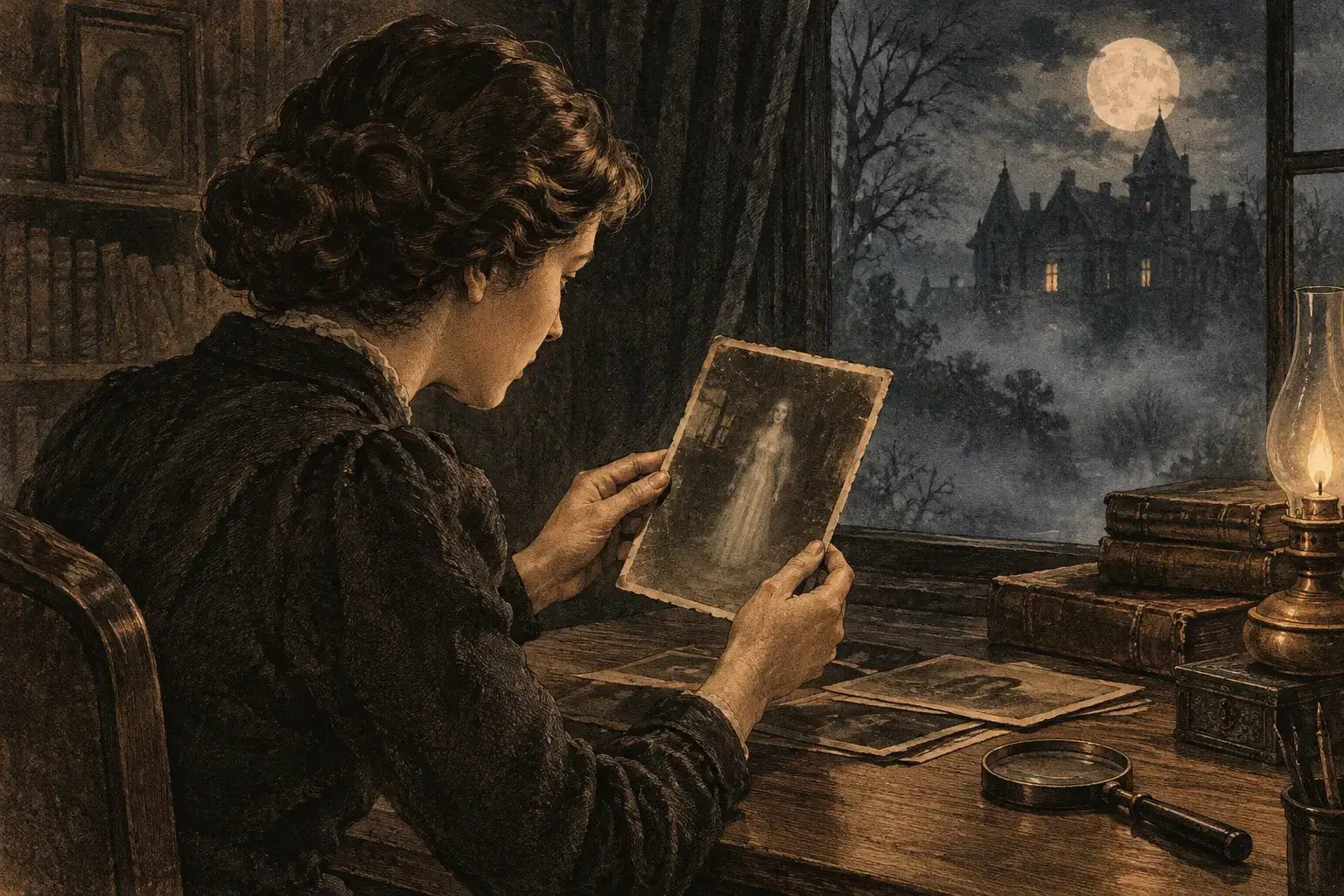
A pale shape in the corner is not proof. Neither is it automatically nothing. The best way to how to analyze ghost photographs is to treat the image like a witness account: preserve what was captured, question what may have shaped it, and leave room for what you cannot explain.
A good investigation does not begin with a declaration. It begins with the original file.
Start With the Original Image
Do not analyze a screenshot if the original photo still exists. Screenshots, social-media uploads, and images passed through messaging apps are often resized, compressed, filtered, or stripped of useful camera data. Those changes can create blocky shadows, false textures, and strange halos around people and objects.
Ask the witness for the untouched file from the phone, camera card, cloud library, or email attachment. Keep a copy and avoid editing it. If you need to brighten or crop the image for closer inspection, work from a duplicate and clearly label it as enhanced.
Look at the file details when they are available. The date, time, device, flash setting, exposure length, focal length, and ISO can explain a great deal. A photograph taken at 2:14 a.m. with a long exposure, high ISO, and flash in a dusty room deserves a different reading than a daylight image taken on a clear trail.
Metadata is context, not a verdict. It can be missing, altered, or incomplete. Still, it gives you a starting point that a dramatic caption cannot.
How to Analyze Ghost Photographs at the Scene
The strongest photo analysis happens where the image was made. Return to the location if possible, ideally at the same time of day and under similar weather and lighting conditions. Stand where the photographer stood. Recreate the angle. Take several ordinary reference photos.
This is not about disproving a witness. It is about discovering whether the image can be repeated by natural conditions. A reflection that appears only when a hallway light is on, a figure-shaped shadow cast by a railing, or a bright orb created by a nearby porch light becomes much easier to identify when you are physically there.
If returning is impossible, gather the next best thing: additional photos from the same sequence, a short video of the room, exterior images of windows and mirrors, and a simple description of the environment. Ask what was behind the camera, not only what was in front of it. A television, a glass door, a candle, a car passing outside, or another person holding a phone can leave a trace in the frame.
Details that matter include whether it was raining, foggy, dusty, cold, windy, or crowded. These conditions do not erase an experience. They help define what the camera may have seen.
Check the Usual Suspects First
Most apparently paranormal photographs have a physical explanation. That is not cynical. It is the baseline that makes the unresolved cases worth preserving.
Reflections and Window Ghosts
Glass is one of the most common sources of human-looking forms. Windows, framed pictures, glossy televisions, mirrors, car windshields, and polished furniture can reflect people or lights outside the main scene. Reflections often look faint, layered, or misplaced because they are.
Look for a reflected object that appears brighter than the room around it, duplicated lights, reversed lettering, or a figure that seems to float directly over glass. Compare the suspected form with possible objects behind or beside the camera.
Motion Blur and Long Exposure
A moving person can become translucent in low light. A hand, face, sleeve, or body crossing the frame during a slow exposure may leave a partial figure that looks unnervingly solid in places and nearly invisible in others.
Check the sharpest stationary objects in the photo. If furniture, walls, or trees are also soft or streaked, camera movement may be involved. If only one figure is blurred while the background stays clear, subject movement is more likely.
Dust, Insects, Rain, and Lens Flare
Bright circular orbs near a flash are usually dust, moisture, or insects close to the lens. Because they are much closer than the background, they can appear oversized and out of focus. A single orb may be interesting to a witness, but it is rarely enough to identify an apparition.
Lens flare can create glowing discs, colored streaks, and sharp geometric shapes. It often appears when a bright light source sits just outside the frame. Tilt or shift the camera slightly and the flare will usually move with it.
Compression, Filters, and AI Edits
Digital processing can make noise resemble faces, bodies, or symbols. Heavy sharpening may add outlines where none existed. Night modes combine multiple exposures, which can create ghosted edges when anything moves. Portrait modes sometimes misread hair, smoke, or background objects and blur them into unnatural shapes.
Ask whether the photo was edited, filtered, enhanced, or generated with an AI tool. There is no shame in saying yes. The key is accurate labeling. A filtered image may still document an experience, but it cannot be evaluated the same way as an untouched original.
Study the Anomaly, Not the Story Alone
Once common causes have been considered, isolate the unusual area. Zoom in gradually, but do not over-enlarge it. Extreme zoom manufactures detail from pixels and can turn a vague patch of light into a face simply because the human brain is built to find patterns.
Ask precise questions. Does the form have a clear edge? Does it interact with objects in the room? Is it blocked by a table, doorway, or person that should be in front of it? Does it cast a shadow consistent with the light? Does it reflect in nearby glass? Is there a matching shape in adjacent photos?
A figure that appears behind a closed door, aligns with the room’s perspective, and is visible in multiple untouched frames is more compelling than a face-like mark in one blurry image. That does not make it paranormal. It makes it harder to dismiss without further investigation.
Color can also mislead. Infrared cameras, security cameras, and phone night modes render darkness differently from human vision. Purple, green, or white areas may result from sensor noise, infrared illumination, or automatic white balance. Know what device made the image before assigning meaning to its colors.
Compare the Full Sequence
One photograph is a moment. A sequence is evidence of conditions.
Look at the images immediately before and after the anomaly. If a bright shape appears across several frames and shifts predictably with the camera, it may be flare or reflection. If it appears once while the photographer was stationary, compare the surrounding details for movement, passing lights, or changes in focus.
Video can help, but it creates its own problems. Compression, autofocus hunting, low-light noise, and frame blending can produce fleeting forms. Watch it at normal speed first. Slow motion should be used to inspect, not to manufacture suspense.
If more than one person photographed the scene, compare perspectives. An anomaly captured from two angles at the same time deserves closer attention. A form visible in only one device may still matter, but it needs more careful qualification.
Record What You Know and What You Do Not
A credible submission separates observation from interpretation. Write, “A human-shaped dark area appears beside the staircase,” before writing, “This may be a shadow figure.” Describe its size, position, direction, color, and relationship to nearby objects. Then document the conditions under which it was captured.
Include the location category, approximate time, weather, lighting, device, and whether flash was used. State if anyone else was present. Mention any editing or enhancement. If you felt fear, heard a voice, smelled smoke, or experienced a sudden temperature change, include that as firsthand context, not as photographic proof.
At Haunting.org, a clear account paired with original media gives other witnesses something real to examine. You can remain anonymous and still be specific. Protect private addresses and identities when necessary, but do not remove every useful detail from the report.
Know When to Leave It Unresolved
Not every image will reach a clean answer. Sometimes the original is gone. Sometimes the location has changed. Sometimes the light source cannot be identified, and the anomaly cannot be reproduced. “Unexplained” is an honest category. It is not a shortcut to “ghost.”
The most useful ghost photograph is not always the clearest-looking one. It is the one with the best record behind it: an original file, a careful account, a known location, nearby frames, and an investigator willing to test ordinary explanations before naming the extraordinary.
Keep the strange image. Preserve its context. Ask better questions. Then let other witnesses look closely and decide what they see.