Do Ghosts Communicate? Signs Worth Recording
Do ghosts communicate? Learn how to assess knocks, dreams, EVPs, and apparitions through careful documentation, clear context, and an open, critical mind.
 Haunting Team
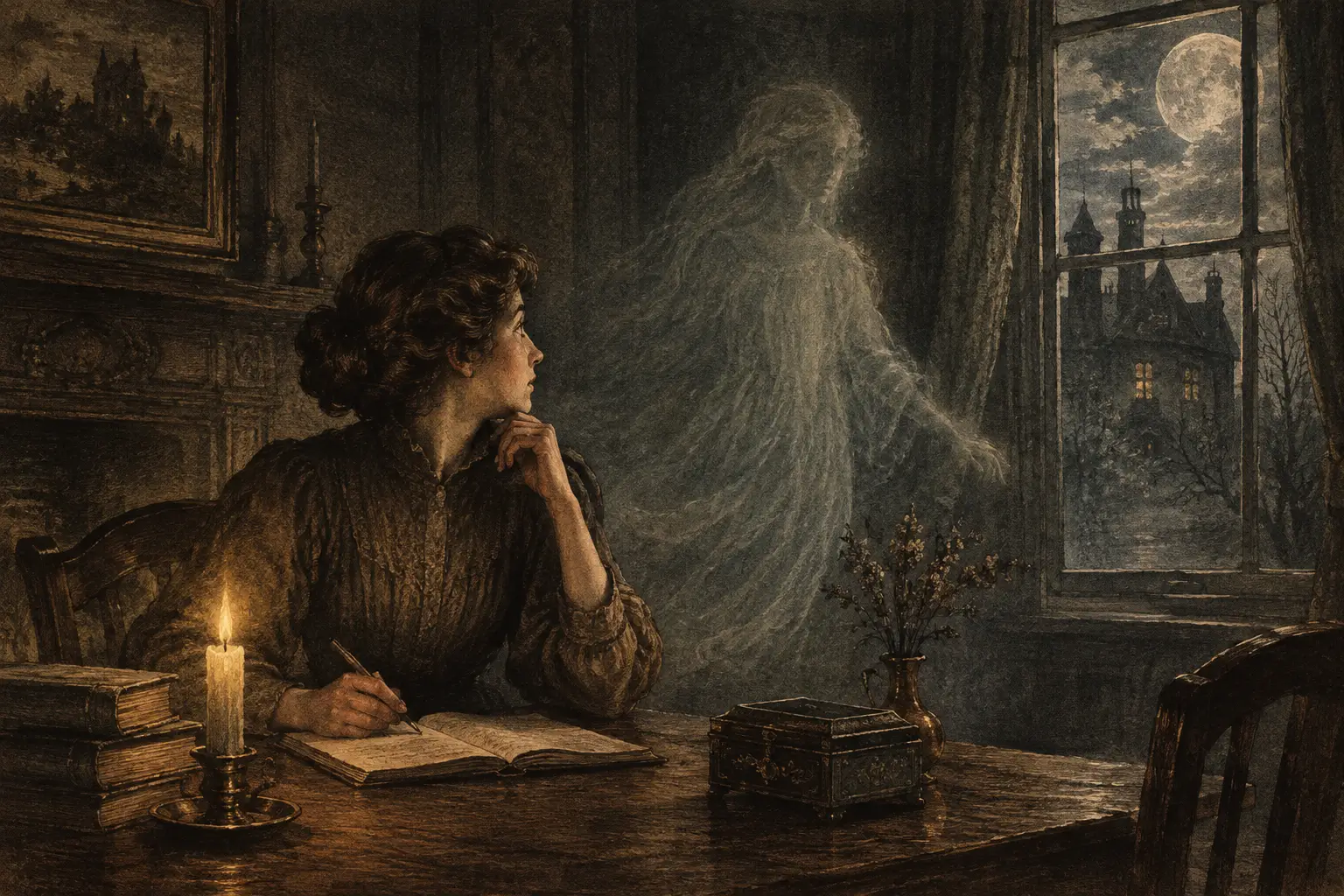
A bedroom door clicks shut at 3:14 a.m. A voice seems to answer from an empty hallway. Your recorder captures a phrase nobody heard at the time. The question arrives fast: do ghosts communicate, or are we finding meaning in noise, memory, and coincidence?
There is no single answer that fits every encounter. Some experiences feel intensely personal and remain impossible to verify. Others leave behind details worth examining: repeated sounds, a shared sighting, a time-stamped video, an EVP clip, or a pattern tied to one location. The useful move is not to declare certainty too early. Witness. Capture. Share what happened.
Do Ghosts Communicate Through Signs?
Most witness reports do not begin with a full apparition delivering a clear message. Communication, if that is what it is, tends to be fragmentary. A knock follows a question. A familiar scent appears in a room with no obvious source. A child hears their name. A radio changes stations at the same hour for several nights.
That does not automatically make an event paranormal. Houses settle. Pipes knock. Sleep disruption can alter perception. Audio recordings pick up distant speech, radio interference, handling noise, and the human tendency to hear words in ambiguous sound. But a natural explanation is not a reason to erase a report. It is a reason to document the conditions around it.
The strongest accounts usually include context. What happened immediately before the event? Who was present? Was anyone awake, tired, grieving, afraid, or under the influence of medication or alcohol? Was a window open? Were appliances running? Had the witness seen or heard similar stories about the location before?
Context does not drain the mystery from a story. It gives the story a shape.
The Forms Ghost Communication Is Said to Take
Witnesses describe recurring categories of possible contact, though their meaning depends on the situation. A single cold spot is weak on its own. A cold spot that appears in the same hallway during multiple independent investigations is more interesting. A dream may be emotionally meaningful without being evidence of an external presence. A dream containing a verifiable detail unknown to the dreamer deserves closer attention.
Sounds, knocks, and voices
Three knocks on a wall can be plumbing. Footsteps in an attic can be an animal, loose ductwork, or a neighbor in a connected building. Start there. Check the physical environment before treating a sound as a response.
If the sound continues, record it. Note the room, weather, time, nearby electronics, and whether the pattern changes when someone asks a question. Avoid leading prompts such as, “Are you the woman who died here?” A better question is simple: “Is anyone here?” Then wait in silence.
EVPs and recorded anomalies
Electronic voice phenomena are among the most disputed forms of alleged ghost communication. An EVP may sound like a whisper, a name, a short answer, or a phrase heard only during playback. The challenge is that human hearing is built to find patterns, especially in static and compressed audio.
Keep the original file. Do not rely only on a filtered clip. Record a few minutes of room tone first, and make a spoken note whenever someone enters, moves, coughs, or adjusts equipment. If you enhance audio, preserve both versions and state exactly what changed.
Ask other listeners what they hear without telling them the expected phrase. If five people hear five different sentences, the clip may be too ambiguous to support a specific claim. If independent listeners identify the same sound or wording, it becomes more useful, though still not proof.
Apparitions and shadow figures
A figure in a doorway can be startling, particularly in low light. Peripheral vision is sensitive to motion but poor at detail, which helps explain why shadow figures are commonly reported at night, while driving, or during exhausted late-night hours.
Still, repeat sightings matter. Write down clothing, posture, direction of movement, duration, lighting, and whether anyone else saw the figure. Do not fill gaps later with what you think must have happened. The raw first version is often the most valuable one.
Dreams, objects, and personal signs
Many people report communication after a death through dreams, songs, flickering lights, moved objects, or an item appearing in an unusual place. These encounters can offer comfort, and that personal impact is real regardless of whether a supernatural cause can be established.
The trade-off is that personal signs are difficult for another person to test. Treat them as testimony rather than public evidence. Record the date, your emotional state, and what made the event distinct from an ordinary coincidence. This protects the memory without forcing it into a conclusion.
How to Investigate Without Manufacturing a Haunting
The urge to get an answer can quietly change an investigation. Once a group expects a response, every creak becomes a reply. The goal is not to prove a haunting at any cost. The goal is to preserve what occurred clearly enough for others to examine it.
Begin with a baseline. Walk through the space in daylight. Identify vents, pipes, loose windows, motion sensors, reflective surfaces, neighboring rooms, pets, and outside noise. Take photos from the same angle where an apparition was seen. If possible, revisit at the same time of day and in similar weather.
During a session, keep the room quiet and limit the number of people present. State the date, time, location, and names of investigators at the start of each recording. If something happens, describe it immediately: “A metallic knock came from the kitchen at 11:08 p.m.” Do not say, “The spirit is angry.” Description first. Interpretation later.
Use more than one source when possible. A phone video, a separate audio recorder, and a witness notebook can reveal whether an event appeared across devices or only in one place. Multiple tools do not guarantee a paranormal explanation, but they reduce confusion.
A simple evidence log should capture these details:
- Date, time, location, and weather conditions
- Everyone present and where they were standing
- The event as observed, using plain language
- Possible ordinary causes checked at the scene
- Original photos, video, and audio files
- Whether the event repeated and under what conditions
That record matters more than dramatic editing. A short clip with clear provenance is stronger than a polished montage with no timeline.
When a Message Feels Specific
The most compelling reports are not always the loudest. They are the ones with a detail that can be checked. Perhaps a voice on a recording seems to identify an unfamiliar name later connected to the property. Perhaps two witnesses separately describe the same figure before comparing notes. Perhaps an object appears in a place documented as empty minutes earlier.
Even then, hold the claim lightly. Research the detail after you preserve your original notes, not before. Looking up a location’s history too early can shape what witnesses expect to find. If you discover a possible connection, distinguish between what was known at the time and what was learned later.
A meaningful anomaly is not the same thing as a confirmed ghost. That uncertainty is not a failure. It is where honest paranormal documentation begins.
Share the Encounter, Not Just the Conclusion
If you choose to publish an experience, tell readers what you witnessed rather than what they are required to believe. Include the odd detail, but include the ordinary setting too. Was the house newly renovated? Was the recording made beside a television? Did anyone else hear the voice? Did you return and get nothing?
On Haunting.org, a report can stand as a witness account while leaving room for readers to consider the evidence. An apparition, strange sound, haunted place, or shadow figure does not need a final verdict to be worth preserving. Some of the most useful reports are the ones that say, plainly, “This happened. I do not know what it was.”
If an experience is causing ongoing fear, sleep loss, or distress, pause the investigation. Check practical causes, talk with someone you trust, and seek professional support if needed. No recording is worth sacrificing your well-being.
Leave the room as you found it. Keep the original file. Write down the first strange thing you noticed before memory turns it into a story. What was it?