How to Upload Ghost Video Evidence Without Losing Context
Learn how to upload ghost video evidence with context, privacy, and clear files so other witnesses can examine what happened and add their own insight, too.
 Haunting Team
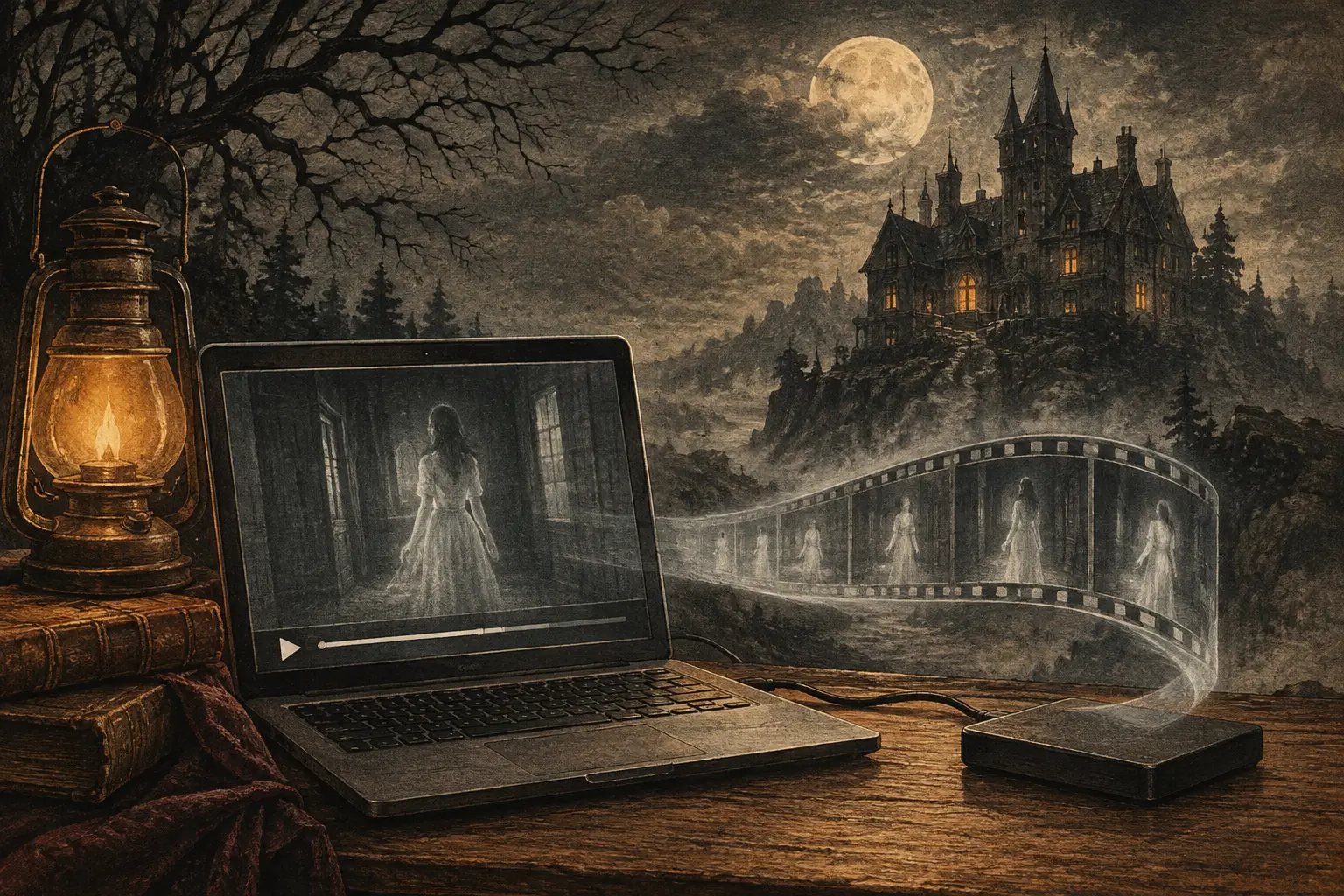
A figure crosses the far end of a hallway. A voice answers from an empty room. Something moves where nothing should be. When you upload ghost video evidence, the file matters - but so does everything around it.
A clip without context becomes a guess. A clip with a clear witness account, a time, a place, and an honest description gives others something they can actually examine. Witness. Capture. Share. Then let the record speak.
Upload Ghost Video Evidence Before You Edit It
Your first move should be preservation, not enhancement. Keep the original file exactly as your phone, camera, doorbell system, or camcorder created it. Do not trim it, add filters, boost contrast, slow it down, or lay a soundtrack over it before saving a copy.
Editing can make a detail easier to see, but it can also raise fair questions. Was the movement already there? Did the sound change after processing? Did compression create that strange shape in the dark? The original file gives viewers a baseline.
If you want to point out a moment, make a second version. Label it as edited or annotated. A clean approach might include the untouched clip first, followed by a short duplicate that identifies the time stamp where the event appears. That lets people compare the two without wondering what was changed.
Check your device before you start moving files around. Some apps automatically reduce video quality when sending, posting, or backing up footage. If possible, transfer the source file directly and keep one private copy somewhere safe. A cloud backup, external drive, or original memory card can preserve details that a compressed upload may lose.
Choose the File That Shows the Most
Long footage has value. It can show what the room looked and sounded like before anything strange happened. Still, a 40-minute recording with no guidance can bury the moment you want people to review.
Use the strongest available version of the clip, and tell viewers where to look. Mention the relevant time range in your report: “Watch the doorway from 00:18 to 00:25,” or “Listen near 01:42 after the second knock.” This is not directing people toward a conclusion. It is helping them find the claimed anomaly.
If you captured several angles or related recordings, include only the files that add real context. A front-door camera clip, a phone recording from inside, and an audio file from the same moment may be more useful together than four nearly identical exports.
At Haunting.org, supporting files belong beside the witness account rather than floating through a feed without explanation. Use that space with intention. One clear original is better than a folder full of duplicates.
Keep the beginning and ending
Do not cut the clip so tightly that the strange moment appears out of nowhere. A few seconds before and after the event can reveal whether a person, pet, passing car, loose object, television, or change in lighting could explain it.
That does not weaken a report. It makes it stronger. Paranormal evidence should survive reasonable questions.
Write What Happened, Not What You Hope It Was
The most compelling reports separate observation from interpretation. Start with what the camera captured, then explain why it stood out to you.
Instead of writing, “This proves a ghost walked through my house,” describe the sequence: “At 2:13 a.m., the hallway camera recorded a pale shape moving left to right near the closet. No one was in the hallway. My dog was asleep in the bedroom behind the camera.”
Then add what you checked. Was a window open? Was there a mirror, reflective surface, fan, insect, security light, or vehicle outside? Were other people home? Did your camera switch into night mode? These details help the community assess the clip without dismissing your experience.
A useful report usually answers a few basic questions in plain language: when was the video recorded, where was the camera placed, who was present, what was happening just before the event, and what did you notice afterward? You do not need to write like an investigator or make a final claim. Tell the truth as you experienced it.
If the footage includes an alleged apparition, shadow figure, strange sound, poltergeist activity, UFO, creature, or another unexplained event, choose the closest classification. Categories help the right people find your report. They also make it easier to compare similar accounts over time.
Share the conditions around the recording
Light changes everything in video. Night vision can create odd reflections. Rain, dust, insects, and lens flare can become startling shapes. A camera facing glass may record its own infrared light bouncing back.
Mention the conditions without apologizing for the footage. Say whether it was dark, raining, windy, indoors, outdoors, recorded on night mode, or captured by a motion-activated camera. If you heard something in person that the video barely catches, say that too. Video is a record of one device’s point of view, not the whole event.
Protect Yourself Before You Publish
A strange encounter can be personal. Your report does not need to reveal your legal name, home address, workplace, school, or daily routine to be credible.
Watch the entire clip before uploading. Look for house numbers, street signs, license plates, family photographs, faces, mail, screens, children, security codes, and conversations in the background. A few seconds of unplanned footage can reveal more than you intended.
If privacy matters, use an anonymous-friendly submission option and keep location details broad. “Outside Columbus, Ohio” may be enough. “My apartment building near the east entrance” may be more information than you want attached to a public report.
Audio needs the same care. Voices can identify you or someone else, even when faces are not visible. If the voice is central to the event, consider whether a carefully labeled audio edit is safer for public sharing while you retain the original privately. If it is not central, use a different clip or remove it from the public version.
There is a trade-off here. Heavy blurring and muted audio may make a clip harder to evaluate. Full disclosure may expose people who never agreed to be part of a paranormal report. Choose the version that protects real people first, then explain any privacy edits clearly.
Invite Examination, Not a Fight
The comments on an unexplained clip can bring useful eyes to details you missed. Someone may recognize a common camera artifact. Another witness may describe the same sound, location, or timing. Skepticism and belief can both lead to better questions when the conversation stays focused on the evidence.
Set the tone in your own caption. Avoid demanding belief or attacking people who offer ordinary explanations. Ask a direct question instead: “Could night vision create this reflection?” or “Has anyone heard an EVP with a similar response?”
You are not required to accept every explanation. You are also not required to defend a frightening experience to strangers. Report, archive, and step away when a discussion stops being useful.
The file may never settle the question. It can still preserve the moment faithfully: what your camera saw, what you heard, and what was there when no clear answer followed. Leave enough context for the next witness to look twice.