Paranormal Deepfakes and the Evidence Problem
Paranormal deepfakes can imitate ghosts, EVPs, and UFO footage. Learn how to document strange encounters without mistaking synthetic media for evidence.
 Haunting Team
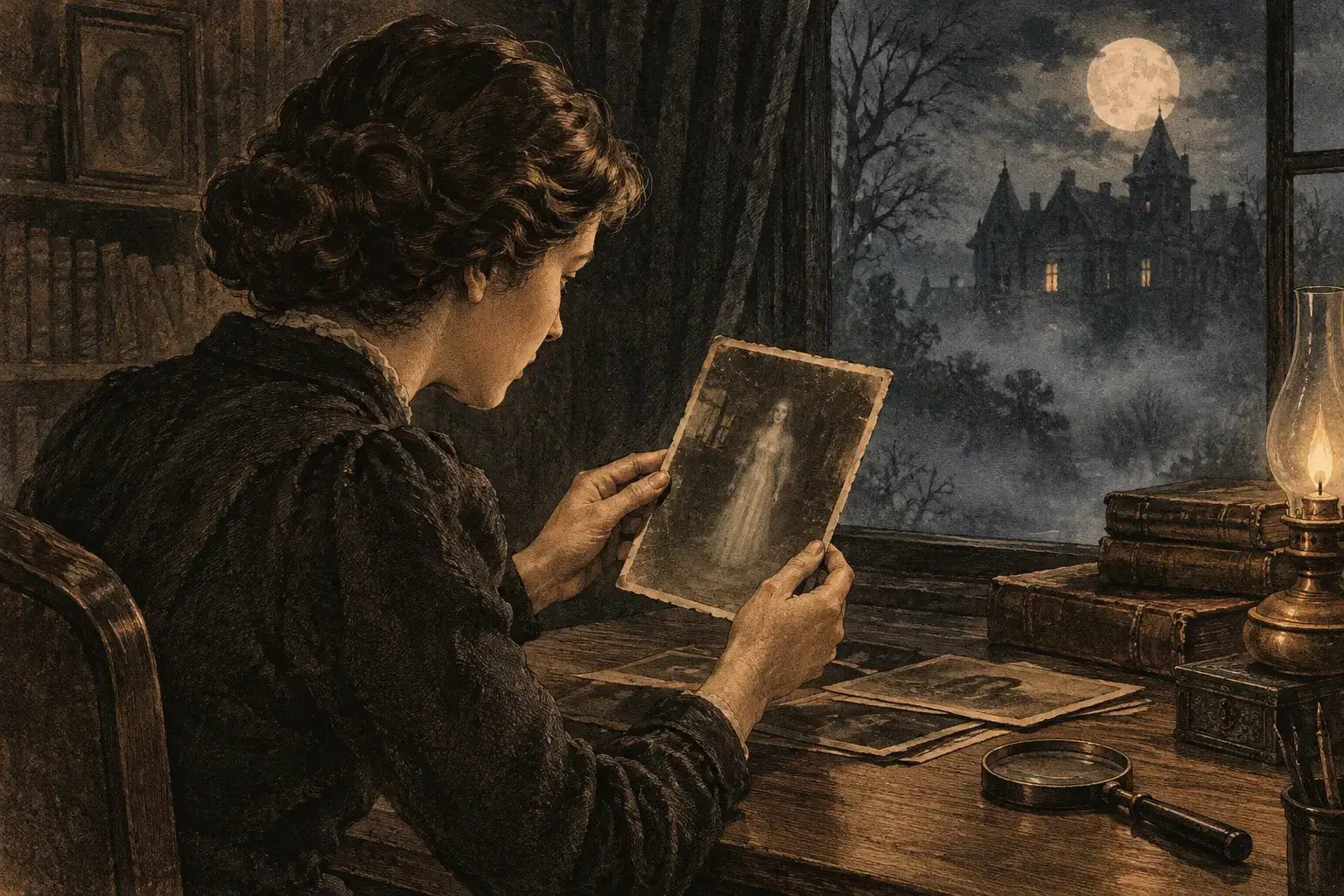
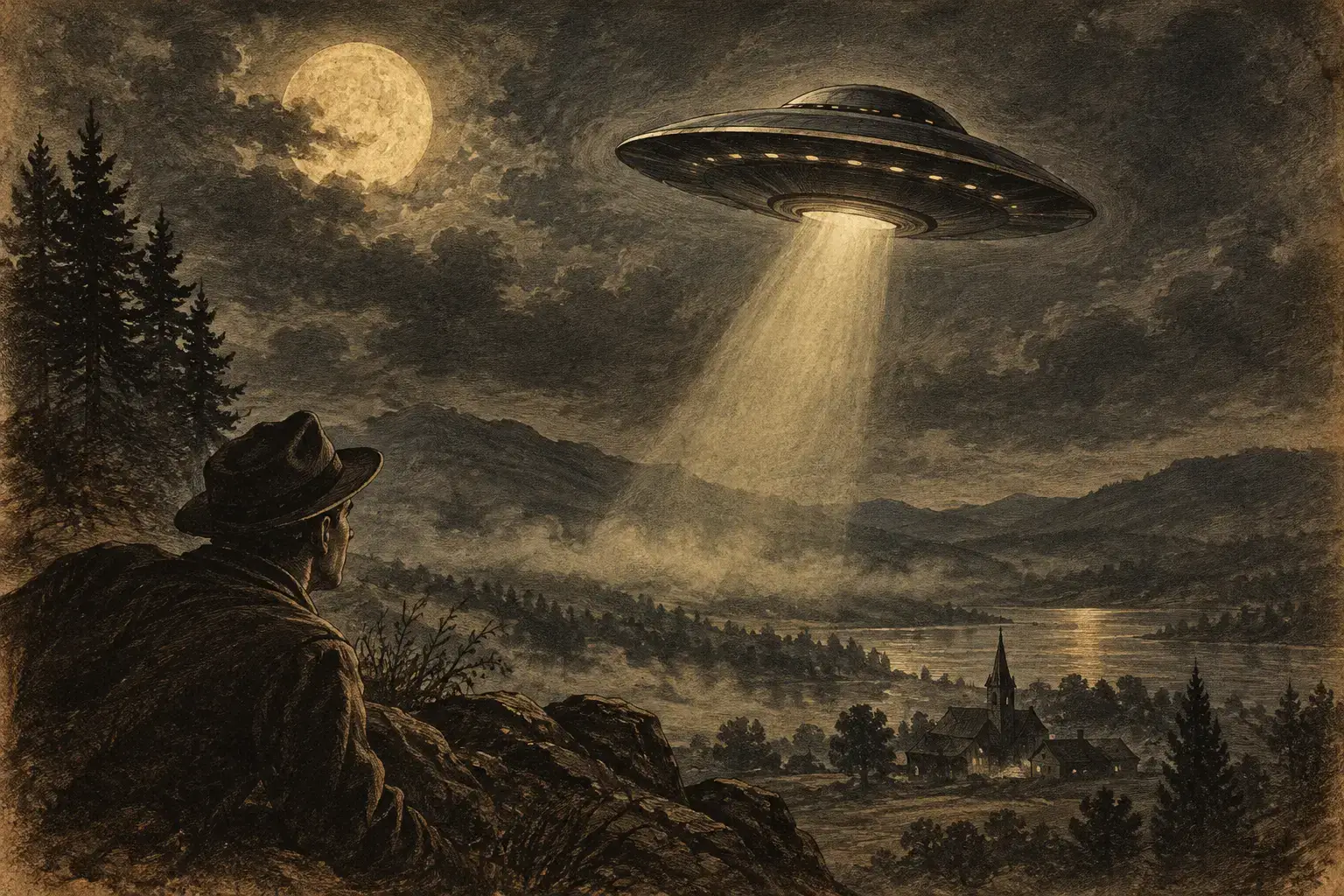
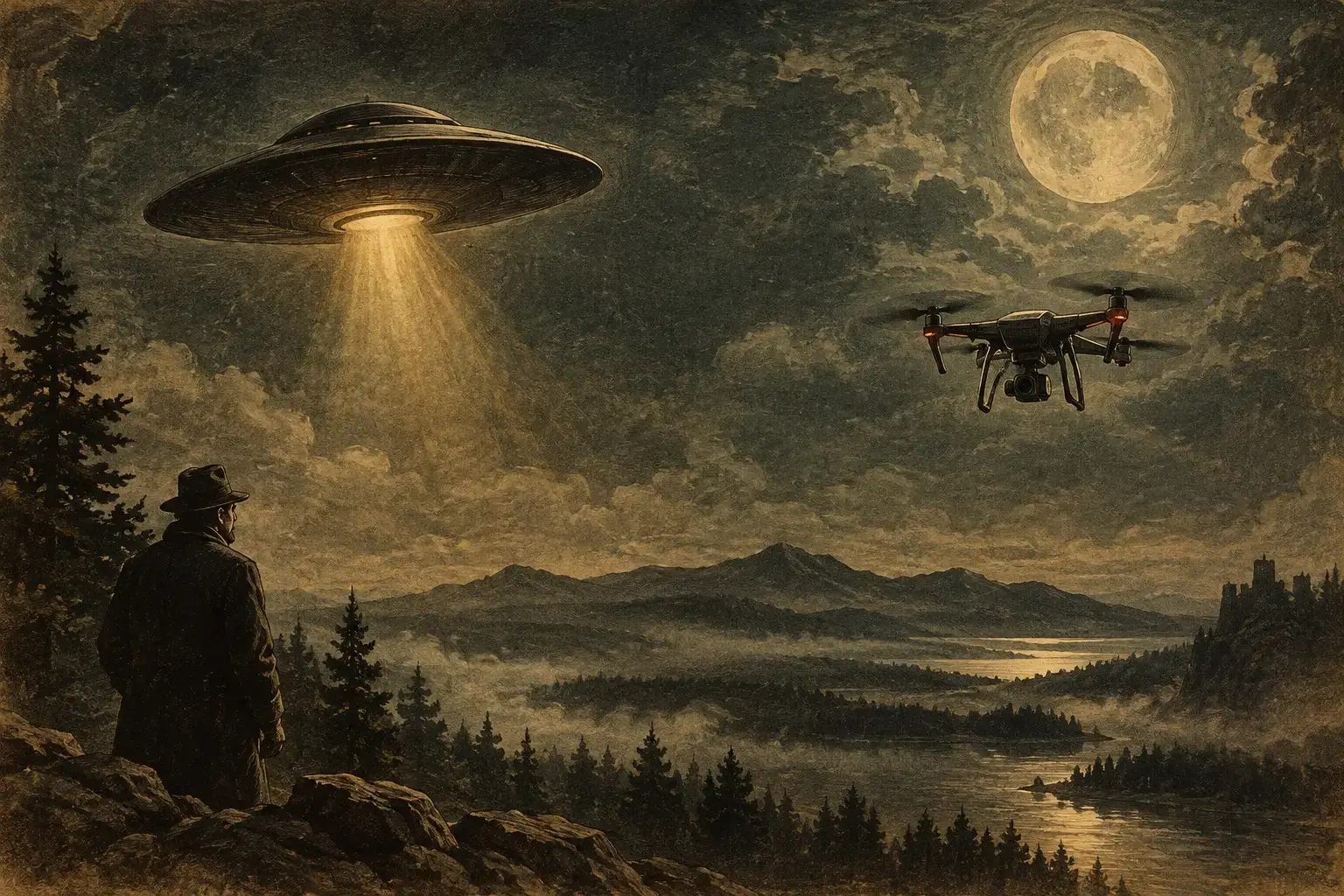
A pale figure crosses a hallway camera at 3:17 a.m. A voice answers a ghost hunter’s question from an empty room. A bright object hangs over the tree line, perfectly still.
Any of these clips could be compelling. They could also be paranormal deepfakes: synthetic or manipulated media made to resemble an authentic encounter. The problem is not that every strange recording is fake. The problem is that seeing a clip is no longer the same as knowing where it came from.
For witnesses, investigators, and anyone building a record of the unexplained, that changes the standard. Capture what happened. Preserve the source. Let the story remain stranger than the edit.
What paranormal deepfakes actually are
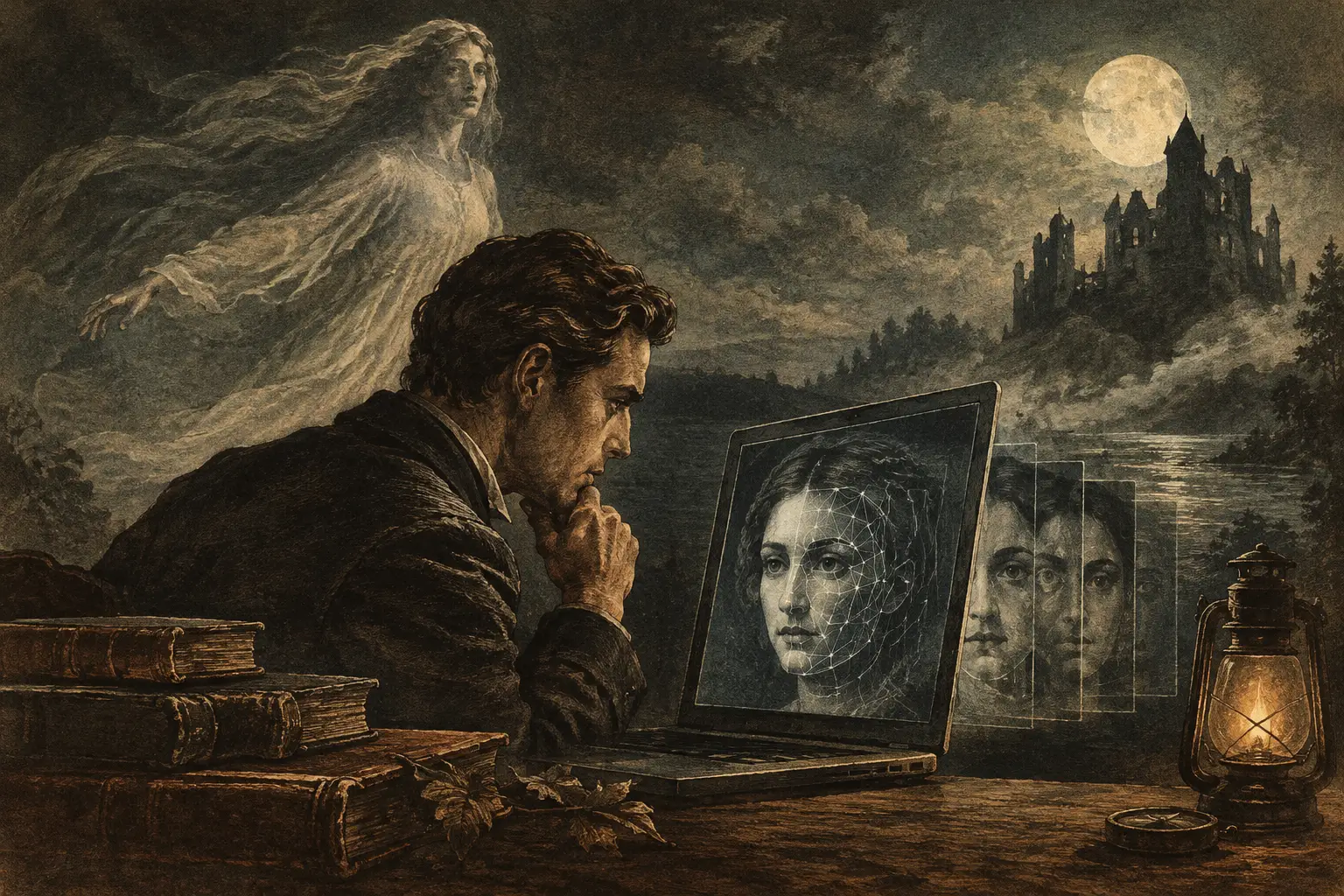
A deepfake is media generated or altered with artificial intelligence. Most people associate the term with fake celebrity videos, but the same tools can fabricate a shadow figure in a bedroom, place an apparition at the end of a trail, create an eerie face in a mirror, or generate a voice that sounds like an EVP.
Some manipulation is obvious. A figure flickers strangely, lighting shifts around its outline, or a voice has an unnatural metallic rhythm. Other examples are far more convincing, especially after a clip has been compressed, reposted, cropped, captioned, and stripped of its original context.
Not every questionable paranormal image is a deepfake. It may be a long exposure, lens flare, motion blur, audio interference, a staged scene, or an honest misidentification. Deepfakes belong in that larger category of altered or unreliable media, but they deserve special attention because they can be made quickly and tailored to what viewers expect to see.
A convincing fake does not need to fool every expert. It only needs to reach people after the original file, location details, and witness account have disappeared.
Why paranormal deepfakes hit this community differently
Paranormal evidence often lives in ambiguity. A possible apparition may occupy only a few pixels. An EVP may be heard differently depending on the listener. A distant light may have no clear size, speed, or reference point. That uncertainty is part of the investigation.
Synthetic media exploits it. AI can add just enough movement to a still frame, just enough whisper to a noisy recording, or just enough detail to make viewers supply the rest. The result may look less like a polished movie effect and more like the imperfect, low-light footage people associate with a genuine encounter.
There is also a human cost. Many witnesses already hesitate to share a report because they fear ridicule. When fabricated clips flood the feed, sincere people can feel pressured to over-edit, dramatize, or prove an experience that may not be easy to prove. The archive becomes louder, while firsthand testimony becomes harder to hear.
That does not mean reports without media are worthless. A written account with a clear timeline, a location, and an honest description of what the witness did and did not see can be more useful than a dramatic clip with no source. Evidence has levels. Certainty is not the only measure of value.
The first question is not “Is it real?”
When a strange photo, video, or audio clip appears, the fastest reaction is usually, “Is this real?” A better first question is: “What is the source history?”
Who recorded it? Is the original file available? Was it uploaded directly from the device, or downloaded from another platform? When was it captured, and what happened immediately before and after the clip? Has the witness said what equipment they used, whether they edited the file, and whether anyone else was present?
These questions are not accusations. They are the beginning of responsible documentation. A witness can be completely sincere and still misread an event. A file can be untouched and still show a mundane cause. Conversely, a witness who preserves the original material gives the community something real to examine, even if the cause remains unknown.
The strongest reports separate observation from interpretation. “A dark shape moved from left to right near the doorway” is an observation. “It was a shadow person” is an interpretation. Both belong in the account, but they should not be confused.
What to preserve after an encounter
If you capture something strange, resist the urge to immediately add music, captions, filters, zoom effects, or a reaction shot. Save the original first. Copies can be made later for sharing.
Keep the full video or audio recording when possible, including the seconds before and after the moment that feels unusual. A longer clip may reveal a passing car, a person speaking off camera, a camera adjustment, wind, insects, or another explanation. It may also establish that the anomaly was present across multiple frames instead of appearing during a single cut.
Write down the basics while memory is fresh: the date, approximate time, location, weather, lighting, who was there, what device was used, and what you noticed in person. If you heard an unexplained sound, record whether it was audible at the time or only discovered later in playback. If the event occurred in a haunted location, note the exact room or area rather than relying on a broad place name.
For audio, retain the unedited recording and describe any cleanup separately. Noise reduction can make speech easier to hear, but it can also create artifacts that sound like voices. For images, keep the original resolution. Screenshots of screenshots are nearly impossible to evaluate.
Metadata can help establish a timeline, but it is not a magic seal of authenticity. It can be removed, changed, or absent for ordinary reasons. Treat it as one piece of context, not a final verdict.
Red flags worth noticing
There is no single visual test that can reliably expose all AI-generated paranormal media. The tools change too quickly. Still, a few patterns should slow the scroll.
Look for inconsistent reflections, shadows that do not match the room’s light source, warped edges around a figure, repeated textures, or objects that subtly change shape between frames. In video, watch hands, feet, hair, fine details, and contact points where a figure meets the floor or a doorway. In audio, listen for abrupt tonal shifts, oddly clean whispers inside heavy background noise, repeated vocal patterns, or speech that never interacts naturally with the recorder’s environment.
Context matters just as much as pixels. A clip that begins exactly when the entity appears, has no original file, and comes with a sensational claim deserves more caution than a full recording accompanied by a straightforward witness statement. A dramatic account is not proof of deception, but missing context should lower confidence.
Do not turn this into a public witch hunt. Compression alone can create visual glitches. People can make mistakes. Someone who shares a bad clip may be confused, excited, or repeating what they were told. Ask for source material before assigning motives.
A better standard for sharing unexplained media
The goal is not to demand laboratory-grade proof from every person who sees something unsettling. Most encounters happen unexpectedly. People use whatever phone, camera, or recorder they have. Sometimes all that remains is a memory.
The goal is to label material honestly. Say whether a file is original, edited, enhanced, recreated, or AI-assisted. Say whether the location is exact, approximate, or withheld for privacy. Say when a witness wants to remain anonymous. Privacy and credibility can coexist when the boundaries are clear.
At Haunting.org, a report can hold more than a verdict. It can preserve the witness account, the category of encounter, the available media, and the questions still hanging in the air. Apparition, strange sound, UFO, creature, shadow figure - each label helps people find related experiences. It should not force certainty where none exists.
Commenters have a role as well. Ask useful questions. Was there another camera angle? Was anyone using a speaker or radio nearby? Is there a daytime photo of the location? Did others experience the same event? Curiosity is more valuable than instant belief, and more respectful than instant dismissal.
The unknown does not need fake proof
Paranormal deepfakes may make the internet noisier, but they do not erase the value of careful witness reports. They raise the value of provenance, restraint, and details that cannot be generated after the fact: the cold air before the sound, the exact angle of the stairwell, the friend who heard it too, the unedited minute before the camera shook.
When something strange happens, preserve the ordinary details along with the extraordinary one. They may be what helps someone else understand it. Witness. Capture. Share. Then leave room for the question that matters most: What was it?